US' new tariffs worsen global prospects







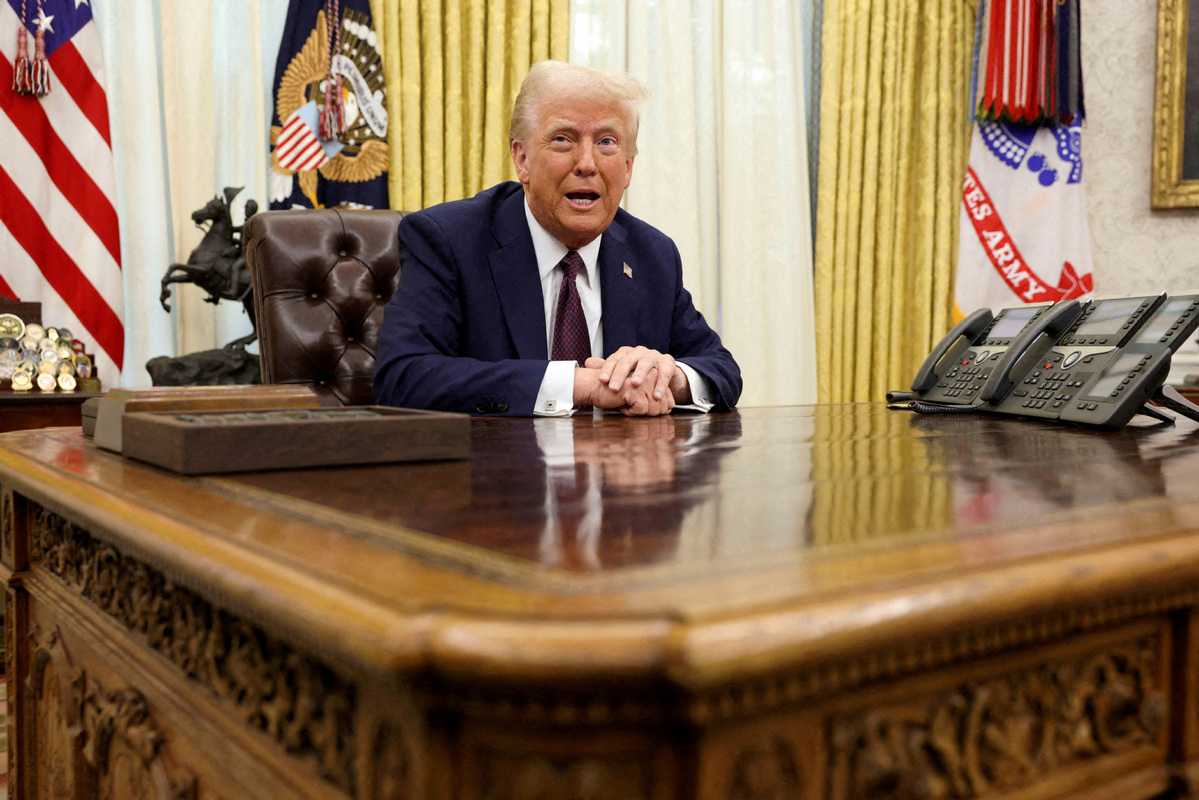
After US President Donald Trump's first punitive tariffs targeted the United States' major trade partners — Mexico, Canada and China — tariff threats are shifting to the European Union, even the rest of the world. The tariff threats are also shifting from steel and aluminum to computer chips and pharmaceuticals.
In the latest move, Trump said on Tuesday he intends to impose auto tariffs "in the neighborhood of 25 percent" and similar duties on semiconductors and pharmaceutical imports.
The US has a major trade deficit with many other trading economies, including Germany, Japan, the Republic of Korea and Vietnam, which are likely to be in the firing line later, if not soon.
A tariff is a tax levied on imported goods and services. In its haste to target the three countries, the Trump administration has ignored concerns about these tariffs fostering inflation or snarling global supply chains. This is a serious mistake on the part of the administration. In the US, wholesale prices are already rising on higher food and energy costs, adding to the growing pile of bad inflation news ahead of more US tariffs. Globally, these risks are real, costly and damaging.
As the new US administration has been launching another tariff war, China's economy has been showing progressive signs of stabilization — especially since the fourth quarter of 2024, as the impact of the November stimulus measures has kicked in. During this period, growth accelerated from 4.6 percent to 5.4 percent to reach 5.0 percent year-on-year in 2024, which prompted the International Monetary Fund to recently upgrade China's GDP growth.
But what's fueling these gains?
China's industrial production has proved resilient on the back of both domestic and international demand, particularly in electric vehicles and solar panels. The most prominent part of the growth story is the strong expansion of China's advanced technology, electronics and automobile sectors. The pace of development in industrial robotics is almost as strong, while consumption is being fueled by equipment and durable goods upgrade.
Yet two main challenges remain. At home, the nearly 11 percent decline in real estate investment suggests the property market is still ailing. But in about 300 Chinese cities, the decline of residential inventory is slowing.
The external challenges China faces include the impending trade and tech wars, which the first Trump administration launched in 2017, the Biden administration expanded and the new Trump administration is broadening worldwide.
On Feb 1, Trump imposed 25 percent tariffs and 10 percent duties on energy products imported from Canada and Mexico, and 10 percent tariffs on Chinese goods. The three countries are the US' biggest trade partners and the US has a trade deficit with each one of them. These tariffs alone would cost an average US household more than $1,200 a year.
After separate talks between Trump and the Canadian and Mexican presidents, the US agreed to delay levying the extra tariffs for 30 days. But the threatened tariffs on Canadian and Mexican goods, if they are imposed, could reduce long-run GDP by 0.3 percent.
Moreover, a trade war between the US and its two largest trading partners would hit incomes in the US, impact employment and accelerate inflation. As Trump's tariffs went into effect against China, Beijing announced a broad package of economic measures against Washington on Feb 10. And more countermeasures are likely to follow.
Half a decade ago, the US' punitive tariffs on Chinese goods covered goods worth $396 billion, or more than 90 percent of the total trade. But the first round of Trump's tariffs against Canadian, Mexican and Chinese goods alone will cover far more traded goods in dollar terms.
Trump's four tranches of tariffs on Chinese goods in 2018-19 covered imports worth $360 billion. Today, Canada and Mexico and China account for more than two-fifths of all US imports. New tariffs on the goods imported from the two countries plus additional tariffs on Chinese goods would likely cover imports valued at more than $1.3 trillion. That's more than 3.5 times the value than half a decade ago.
This might be just the opening salvo in a series of tariffs the Trump administration is likely to announce in the coming weeks. Factor in the potential/likely retaliatory tariffs and duties by the affected countries and the Trump administration's "reciprocal tariff" plan, and the final toll could be much higher.
Ironically, US tariffs are legitimized by a flawed victimization narrative in which Washington is portrayed as a target of wrongful economic and geopolitical measures. In reality, the US' imposed tariff levels are about geopolitical coercion, not economic factors.
The threatened wave of tariffs could further heighten trade tensions, reduce investments, hit market pricing, distort trade flows, disrupt supply chains and undermine consumer confidence. In fact, much worse could happen.
Due to the new US tariffs, we are in for a far costlier, global déjà vu all over again.
The author is the founder of Difference Group and has served at the India, China and America Institute (US), Shanghai Institutes for International Studies (China) and the EU Center (Singapore).
The views don't necessarily reflect those of China Daily.
If you have a specific expertise, or would like to share your thought about our stories, then send us your writings at opinion@chinadaily.com.cn, and comment@chinadaily.com.cn.