



Germany needs to recalibrate its geopolitical compass







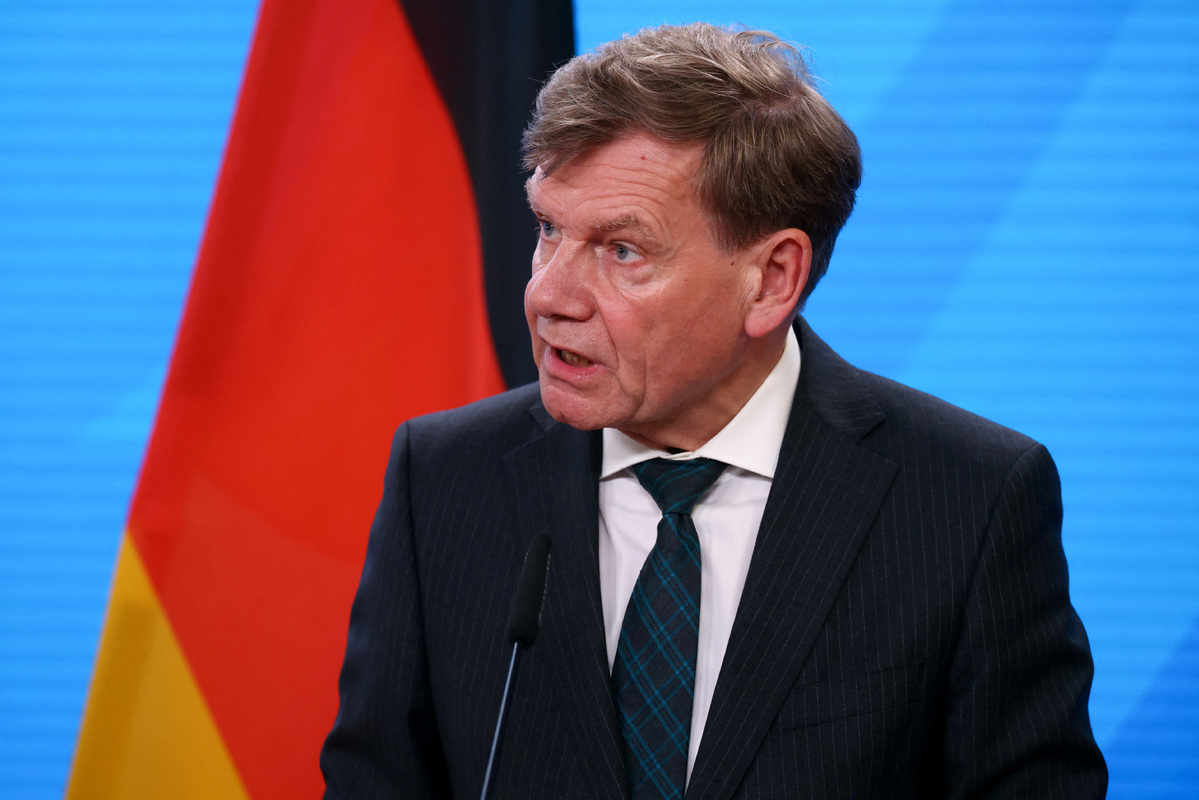
German Foreign Minister Johann Wadephul has made a blunder worthy of his predecessor Annalena Baerbock by indicating that China is supporting Russia in the latter's conflict with Ukraine in his speech to mark the 40th anniversary of the Japanese-German Center Berlin recently.
Wadephul's faux pas was clumsy not only because of its lack of evidence but also because of the setting. The German foreign minister was warning the country's most important trading partner in front of a Japanese audience. The irony is unmistakable. Eighty years after the end of World War II, Germany accuses China — a country that suffered more than 35 million military and civilian casualties in its war against Japanese aggression — of seeking global dominance.
This is not only embarrassing but has serious implications. Wadephul seems to be unaware that Germany and Europe are highly dependent on trade with China. This is clear from the case of Dutch chip manufacturer Nexperia, a company in which Chinese investors now own a majority stake.
Citing security reasons, the Dutch government took control of the company in September 2025, applying a law that had previously been considered the last resort of Dutch economic policy. China reacted quickly and imposed a strict export ban on Nexperia products, which hit numerous European companies, including Volkswagen.
Here are some sobering facts. Rare earths are needed for almost every high-tech component. China mines around 70 percent of the world's rare earths and processes around 90 percent. The country plays a dominant role on metals and many other raw materials. Rare earths can also be found in Saxony, Germany, but mining them is economically unviable.
The mobility, energy and AI revolutions are inconceivable without raw materials from China. The success of these huge transformations is necessary for countries like Germany if they do not want to be left behind by developments in the Global South. Long story short: the West can neither manage without rare earths nor without China as a supplier.
We must not be fooled by the protectionist tendencies of the past three years. Trade barriers, extra-territorial sanctions and technology embargoes are on the rise, but these political projects are doomed to failure. In an increasingly interconnected and intertwined world, it is impossible to reverse globalization or decouple supply chains.
This is backed by facts. The World Trade Organization forecasts that global trade will grow by 2.4 percent this year, which is a new record. It shows that the global economic community is unimpressed by the protectionist ideas of some politicians.
Germany's problem is not its dependency on China but its denial of it. After decades of economic interdependence, China can rightly expect a partnership of equals with Germany. Instead, the world power — many times the size of Germany in every respect — was reprimanded on a Berlin stage.
It's unlikely that Germany would treat the US the same way. Unmindful of the risks that this entails, Germany follows the US unreservedly, including in its dealings with China, in the vague hope that at some point the US-German relationship will be restored to its pre-Trump state. If the US loses the trade war against China, Germany also stands to lose a big source of raw materials, money, security and a reliable partner.
Germany does not know its geopolitical position and there is a clear lack of strategy. It first needs to formulate a functional procurement strategy to secure Germany's supply of important raw materials for critical infrastructure and future technologies. Which resources are vital today and relevant in the future? How secure are the supply lines? Which raw materials can be produced domestically and which need to be imported and from where? Answers to these will help Germany not only draw up a diversified procurement strategy, but also offer guidelines for a realistic and objective foreign trade policy that will contribute to securing Germany's territorial and economic sovereignty and prosperity.
To make this possible, Germany must rethink its global partnerships. Programmes such as the European Union's Global Gateway initiative, which aims to link the EU with emerging and developing countries, cannot work because they come too late, are underfunded and not formulated on an equal footing with the partner countries. Categorizing potential partners as "good" and "bad" is a mistake. Nobody has ever built bridges with a "raised index finger".
That brings us back to Wadephul. The strategy process outlined here — from an overarching geopolitical and economic strategy to a functional procurement strategy based on new partnerships — clearly presupposes one thing: Germany must finally recognize where it stands. The diplomatic displeasure that followed Wadephul's faux pas should have made the opportunities, risks and dependencies clear to everyone. China has always been a reliable partner and Germany should do everything to keep it that way.
The author is president & global CEO of the Wilo Group.
The views don't necessarily represent those of China Daily.
If you have a specific expertise, or would like to share your thought about our stories, then send us your writings at opinion@chinadaily.com.cn, and comment@chinadaily.com.cn.





