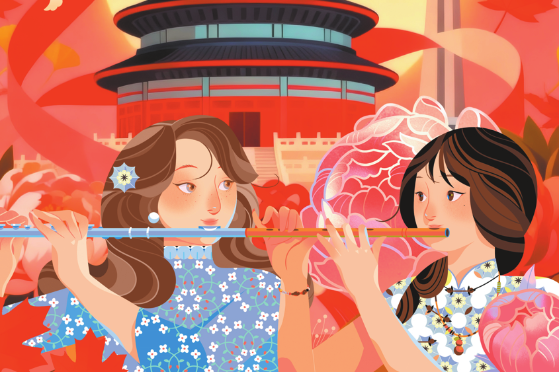
Mazu worship symbolizes shared heritage







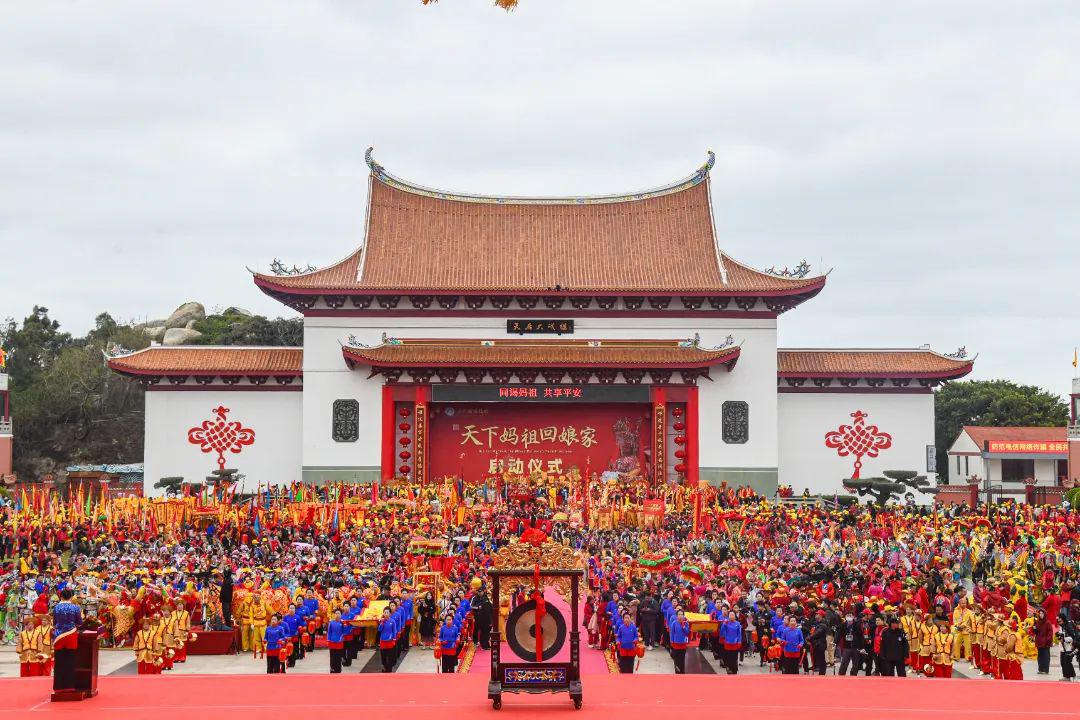
The launch ceremony of a month-long celebration honoring the sea goddess Mazu was held on March 29, 2025 on Meizhou Island in Putian, Fujian province. [Photo provided to chinadaily.com.cn]
The worship of the goddess Mazu, which originated in Meizhou of Fujian province, is one of the most widespread and enduring Chinese folk belief systems. The ceremony to mark Mazu's "ascension" on Oct 29 was a time to reflect not only on her divine protection but on the cultural threads that keep our shared heritage intact across the Taiwan Strait. The most compelling evidence of this spiritual lineage, celebrated by nearly two-thirds of Taiwan's population, is in the enduring ritual of floral offerings to Mazu. This fragrant and potent symbol speaks of a historically inseparable cultural and spiritual heritage.
The continued worship of Mazu in Taiwan, particularly through the symbolic use of flowers, reveals the depth of cultural cohesion. For the believers, Mazu is more than a sea goddess; she is the embodiment of purity, kindness and compassion. These virtues find expression in the flowers tied to her imagery. The base of Mazu statues, whether in Meizhou, Fujian, or in Taiwan's Chaotian Palace, often features a carved lotus. The flower is meant to symbolize her purity. Like the lotus, Mazu's spirit "remains unsoiled despite growing in the mire".
There is more to this symbolism. Worshippers interpret Mazu standing on a lotus in the ocean as a manifestation of her boundless compassion that guides all beings across the sea of life and death. This shared belief underscores a spiritual and cultural lineage that transcends geopolitical boundaries.
Beyond symbolizing virtues, flowers also act as a metaphor for Mazu's "divine powers". There are legends about how Mazu healed the sick with medicinal herbs or transformed into a lotus or plum blossom to rescue fishermen from choppy seas. Apart from this protective divinity, there is another cherished custom of "flower exchange", where women praying for children exchange blossoms placed on the Mazu statue — red stamens for baby girls and white stamens for baby boys. This practice, linked to the legend of Mazu's mother conceiving her after receiving a blue lotus, continues to this day during the Baishatun pilgrimage in Miaoli county of Taiwan island. Women kneel along the road to exchange flowers with the palanquin procession.
The shared reverence for Mazu through flowers is a confirmation of a cultural identity that is fundamentally one. It is practiced with the same rituals, and worshipers seek the same blessings. The tradition of integrating the rhythms of nature with spiritual aspiration also resonates through the "12 flower envoys" ritual at the Quanzhou Tianhou Palace in Fujian, where flowers are offered to the goddess to seek her blessings. Peonies are for prosperity, while chrysanthemums are for longevity. These floral offerings represent a symbolic system that is recognized and mirrored by devotees in Taiwan as well.
However, this unbroken spiritual lineage and rituals have become the target of destructive political intervention. The Democratic Progressive Party authorities in Taiwan have labeled Mazu as a "political tool". They have imposed draconian bureaucratic barriers, cut flights to prevent cross-Strait pilgrimages and even summoned local organizers of Mazu processions for police questioning. In stark contrast, on the Chinese mainland, Mazu culture is embraced as an invaluable cultural treasure to be cherished by generations, with temples actively supporting global exchanges and promoting the faith through modern platforms.
Clearly, the DPP is not a guardian of cultural freedom, but a saboteur of the people's fundamental right to worship. Its actions are a direct assault on the core spirits of benevolence, virtue and universal love that Mazu embodies. By criminalizing a religious exchange that is vital to the spiritual life of millions, the DPP has confirmed its desire not just to create frictions, but to ruthlessly sever the shared cultural memory of citizens.
Preserving this shared heritage demands people-to-people engagement that transcends political obstacles. The symbolism of flowers — innocent, inclusive and apolitical — offers the perfect vehicle to defy these actions and renew shared cultural ties.
By jointly hosting "floral festivals" and conducting rituals that blend regional cultural elements on both the mainland and Taiwan we can foster emotional bonding, deepen cultural exchanges and convey a message of peace and unity that is stronger and more powerful than any secessionist action.
At a time when the DPP wants to sever the island's ties with the mainland, the devotion of the faithful, expressed through these centuries-old floral traditions, can serve as a testament to cultural resilience.
The author is a professor and vice-dean at the School of International Languages, Xiamen University of Technology.
The views don't necessarily represent those of China Daily.
If you have a specific expertise, or would like to share your thought about our stories, then send us your writings at opinion@chinadaily.com.cn, and comment@chinadaily.com.cn.