Why China's new plan key to globalization







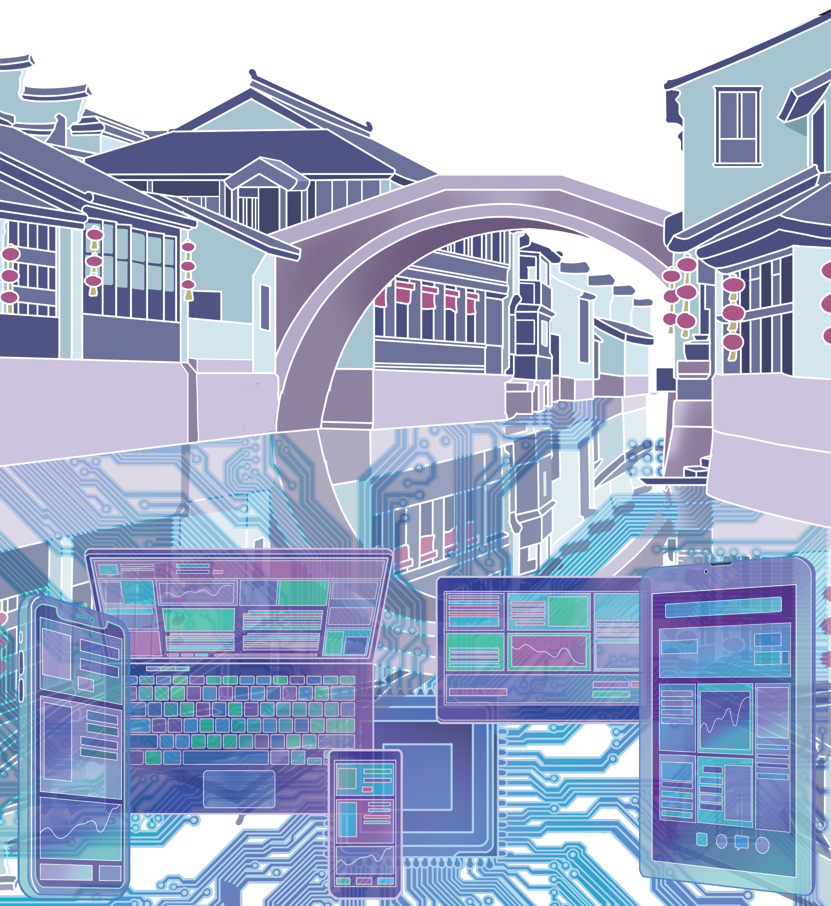
As the World Internet Conference takes place in Wuzhen, China is once again at the center of the global conversation about the future of connectivity. In just over a decade, this gathering — often described as the "Davos of the digital world" — has evolved from a national showcase into a global platform for technology governance, cybersecurity and artificial intelligence. Amid Wuzhen's ancient bridges and ultra-modern networks, the outlines of China's next digital era come into view: an era shaped by a vision grounded in cooperation rather than competition, and guided by the recommendations for the 15th Five-Year Plan (2026-30), which marks the beginning of a decisive phase in the country's economic and technological evolution.
China is not simply upgrading its economy; it is reprogramming it. It is shifting from the paradigm of mass production to one centered on creation, knowledge and the coordination of resources into a coherent design of modernization. The new five-year plan is not just an administrative road map but an effort to weave technology, sustainability and cooperation into the fabric of a new modernity that reconciles national ambition with global interdependence.
In this orchestration, the country acts as conductor rather than controller, aligning science, capital and talent toward a common goal. In an age when technology defines the hierarchy of power, China has chosen to embed innovation within a sense of shared responsibility, showing that progress and cooperation are not opposites, and that leadership must also inspire.
In a world too often fragmented by zero-sum logic, Beijing proposes a narrative of convergence. It is building platforms instead of walls, designing ecosystems instead of empires and seeking prosperity founded on balance rather than supremacy. It is rewriting the very grammar of globalization.
The new strategy rests on three pillars. The first is industrial resilience, understood as the ability to innovate within global networks while reducing systemic vulnerabilities and turning supply chains into learning streams in which machines, data and people evolve together. China is leading in advanced robotics, new materials and smart manufacturing, with millions of active invention patents and a growing share of global high-tech exports.
The second pillar is the construction of next-generation digital infrastructure, the invisible nervous system of the future economy. China is already testing 6G networks that will link terrestrial and satellite systems and pave the way for full commercial deployment around 2030. These distributed cloud-edge architectures aim to interconnect mobility, healthcare, and energy into a single dynamic organism in which every object becomes a node of intelligence.
The third pillar is the pursuit of frontier science — from quantum communication to synthetic biology and new energy materials. China is consolidating its global leadership and marking the transition from the "factory of the world "to the laboratory of the future, where knowledge itself becomes the new form of capital.
No place embodies this vision more vividly than Shenzhen, the living code of China's digital civilization and its most advanced window on the future. Shenzhen has become the operating system of innovation where intelligent factories synchronize production, logistics and energy in real time, while algorithms design circuits, robots design other robots and designers collaborate with code.
The convergence between digital innovation and ecological responsibility is perhaps the most distinctive feature of the new plan. It outlines an economy in which clean energy, hydrogen, electric mobility and circular production form an integrated, data-driven system where environmental sustainability is no longer a constraint but the very logic of growth. The philosophy underpinning this vision — the "dual circulation" — promotes domestic innovation while remaining open to the world and transforms interdependence from a source of fragility into a foundation of strength.
Delivering this vision requires more than capital and scale. China's enduring strength lies in its capacity for mobilization, the ability to translate long-term vision into coordinated execution, aligning public policy, private enterprise, and social purpose around shared technological missions. This coherence between intention and implementation is one of China's most decisive strategic advantages in the global arena.
For Europe, China's transformation represents not a threat but an invitation — a call to redefine partnership in the age of intelligence. Competition will intensify, but so will the space for constructive complementarity. Europe excels in regulation, precision and sustainability; China in speed, scale, and transformation. Between these two models lies the most promising frontier of our time: co-innovation, where difference becomes a resource and collaboration a multiplier of progress.
The green transition is the most fertile field for this cooperation. European companies contribute excellence in environmental engineering, hydrogen electrolysis and sustainable urban planning, while China brings manufacturing capacity, executional speed and continental-scale deployment. Joint projects such as the EU-China green industrial parks in Jiangsu and Guangdong or the Sino-European hydrogen corridors demonstrate that competitiveness and collaboration can coexist, turning diplomatic language into industrial reality and accelerating global decarbonization.
A second field of synergy is intelligent manufacturing, where Europe's heritage in automation and design meets China's agile engineering culture. Collaborative robotics, AI-based logistics, and circular industrial parks can become the new Silk Roads of the digital era. Even in the sensitive areas of data governance and AI ethics, dialogue remains essential: Europe's human-centric model and China's applied pragmatism are not opposites but complementary approaches to a fairer and safer digital civilization.
However, the most powerful engine of this transformation is not silicon; it is the human mind. Across China's innovation ecosystem — from Shenzhen to Shanghai, from Chengdu to Hangzhou — universities, startups and enterprises are building open laboratories in which talent defines competitiveness; knowledge flows freely as capital once did, and networks of minds replace the empires of trade. China-Europe joint research centers show how the next phase of globalization will not be written in treaties or tariffs but in shared code and scientific collaboration.
Balance and trust are essential to realize this potential. Europe must protect its strategic autonomy and safeguard critical technologies, yet closure would be more harmful. In a century governed by data and ideas, isolation doesn't lead to protection but paralysis. The alternative is mutual interdependence and recognizing that innovation flourishes when openness and diversity meet.
Ultimately, China's new five-year plan will be an attempt to unite technology and sustainability, innovation and cooperation, ambition and responsibility. It marks the country's transformation from a manufacturing China to a creative China, and perhaps from a competitive world to a civilization of collaboration, where technology connects rather than divides, leadership enables rather than dominates, and the most intelligent form of competition is the one that allows both sides to advance together.
The author is the president of ChinaEU, a Brussels-based association promoting China-Europe business cooperation in the digital area.
The views don't necessarily represent those of China Daily.
If you have a specific expertise, or would like to share your thought about our stories, then send us your writings at opinion@chinadaily.com.cn, and comment@chinadaily.com.cn.