Not the time for zero-sum games








Common threat of pandemic calls for solidarity of all countries and a collective response
With countries being overwhelmed by the rapid spread of the novel coronavirus and the pandemic having a severe impact on individuals and society, on March 26, the G20 leaders held an extraordinary virtual summit to discuss concerted actions. This virtual summit sent a clear message to the world: Combating this pandemic calls for a transparent, robust, coordinated, large-scale, and science-based global response in the spirit of solidarity.
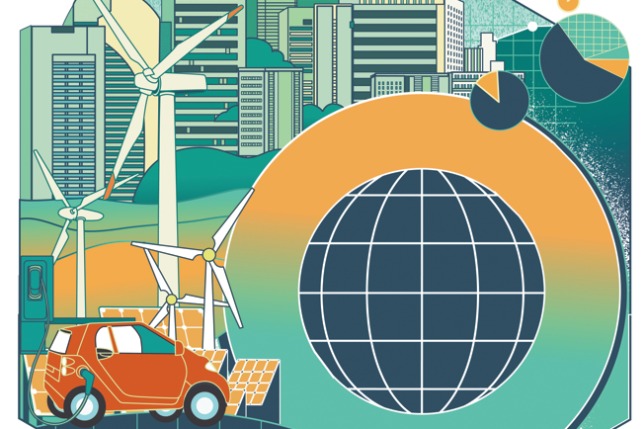
Countries should join forces to scale-up macro-economic policies to prevent the world economy from recession. The G20 statement stressed the importance of safeguarding the global economy, and made a commitment to use all available policy tools to minimize the economic and social damage caused by the pandemic, restore global growth, maintain market stability and strengthen resilience.
The Chinese government responded quickly to mitigate the economic impact of the virus in China. It made timely adjustments to macro-economic policies and realized successful counter-cyclical effects with its measures. The first step was to adopt a more proactive fiscal policy, including fiscally subsidizing the interest rate, extensive tax and fee cuts, postponement of tax payments, larger scale local government special bond issuance quota, and increased financial transfer payments to affected sectors and areas. Meanwhile, monetary policy has become more flexible and accommodating to actively support the real economy. This has been done through increasing the amount of credit available, and reducing the interest on loans to small and micro enterprises. In the face of rising unemployment, China has made employment its policy priority. It has gradually lowered social insurance fees, increased the unemployment insurance fund, and concentrated its efforts to support the recovery of individual businesses. Then, in order to stimulate the consumption that has been suppressed, China has combined the resumption of work and production with the expansion of domestic demand. Moreover, China has been innovative and creative in promoting the growth of the new-type consumption that emerged from the outbreak, thus promoting the upgrading of consumption patterns and replenishing the consumption of traditional goods and services. Finally, China has been accelerating the construction of major national projects and infrastructure, especially new infrastructure such as 5G networks and data centers, so that private investment can be fully mobilized.
The economic stimulus package outlined above has played an important role in stabilizing China's growth and employment. China will not only take the lead in effectively controlling the pandemic, but will also forge a path for the recovery of its economy, employment, and consumption in the second quarter, offsetting the negative impact on its society, economy, trade, and finance. This is in line with the central idea of revitalizing the global economy proposed by the G20 summit. China's economic stimulus plan also constitutes an important part of the G20 initiative, an injection of $5 trillion into the global economy. In addition, China will provide more practical suggestions for the formulation of the G20's COVID-19 Action Plan. In 2009, China actively expanded domestic demand and maintained a growth rate of 9.2 percent, which saved the world economy by reversing its negative growth in 2009 to positive in 2010. Hence, China was the main stabilizer of the global economy. Given that the total size of China's GDP in 2019 was equivalent to 2.08 times that of 2009, it can be expected that China will once again act as the economic stabilizer of the world and be its largest engine for growth in 2020-21.
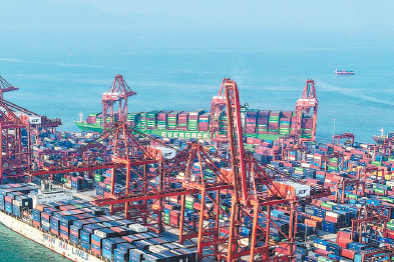
The G20 is as an important platform for economic governance; it includes both major advanced and emerging economies, and has already fulfilled a crucial role in responding to the 2008 international financial crisis. By reaching a consensus on strengthening coordination and cooperation, the extraordinary summit of the G20 leaders sent a strong signal of shared purpose and bolstered confidence that the countries would jointly stabilize the world's macro economy, restore international order and secure global supply chains.
However, the G20 members must first manage their own affairs. They can neither evade responsibility nor transfer it to other countries, and they must avoid producing negative spillover effects. Instead, they must unite and support each other, so as to exert positive energy, and play a guiding role in stabilizing the global economy. It should be noted that both the World Health Organization and the broader international community have clearly opposed any attempts to associate the novel coronavirus with a specific country.
Facing the pandemic, a G20 COVID-19 assistance initiative was proposed, and it was agreed that a meeting of G20 health ministers should be convened as quickly as possible. Both of these proposals were incorporated into the G20's Statement on COVID-19.
China has taken the lead in battling the virus, and is now supporting the international community in the fight. At the extraordinary summit meeting of G20 leaders, the proposal that the international community should be resolute in its fight against COVID-19 was positively received. Viewed from the perspective that it is a common threat to all, the pandemic transcends any zero-sum games. We are all part of a global community that shares a common future, where the most powerful weapon we can utilize to fight the pandemic is the solidarity of people of all countries.
Hu Angang is the dean of Institute for Contemporary China Studies at Tsinghua University. Li Zhaochen is a PHD candidate of School of Public Policy and Management at Tsinghua University. The authors contributed this article to China Watch, a think tank powered by China Daily. The views do not necessarily reflect those of China Daily.