|
|
|
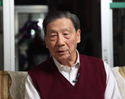
Reporter: Hello, everyone. Welcome to Dialogue: Cities on the Low Carbon Road, by the China Daily website. Today we are honored to feature an interview with well-known economist Mao Yushi. Reporter: The concept of a low carbon economy is popular, and so are discussions on how to create low carbon cities. How would you describe a 'low carbon city'? Mao: I did not address the 'low carbon city' concept before, so it is hard to define this. Usually, people recognize 'low carbon' as 'carbon emissions at a low level'. Reporter: A city's development sometimes conflicts with the need for carbon emission cuts. For those cities that have a long history of developing energy intensive industries, what must they do to restructure their economies to become low carbon cities? And how should governments support their efforts? Mao: A 'low carbon' target is not a specific target. To what extent can a carbon emission level be labeled as a 'low carbon' target? Generally, energy savings are necessary. But shall we save the energy just so that other resources can be consumed extravagantly? What we have to save is not only energy, but also labor, land, capital and raw materials. We need to reduce the consumption of other resources while reducing energy consumption. The best solution is to save all resources without causing conflict. However, questions would be brought up when conflicts arise between cutting the consumption of energy and other resources. We should think about which resource deserves a cut in consumption. Energy savings cannot take place in a vacuum. It comes with a cost, which is the consumption of other resources. Let's take the energy-saving light bulb as an example. An energy-saving (compact fluorescent) light bulb is expensive compared to a regular light bulb, since the energy-saving light bulb uses other substitute resources. So some calculations are needed to figure out whether we should use the energy-saving light bulb. How much money does the light bulb make from saving energy? And how much does it cost in using other resources? Money represents a relative amount when comparing various costs and resources. When it costs less, it uses fewer resources. So when it is cost-saving, it is energy-saving with low carbon emissions and uses fewer other resources. Reporter: When a city is heading toward becoming a 'low carbon city', a list of the city's carbon emission data may be required. Do you think it is possible to make such a specific list? Mao: It t is unnecessary, but it can be meaningful. We cannot say it is meaningless, but the list is not relevant to energy-saving behavior in our daily life. One thing that really matters is the price of energy. China's energy price is now low compared with energy prices in other countries. So people have no initiative to save energy, but to use energy regardless of the price. Some countries charge higher prices for residential electricity than in Beijing, and the same applies to car gasoline. The majority of other countries charge higher fees, except for Russia. Even in Hong Kong, energy prices are much expensive than on the mainland in Beijing. Low energy prices will not help achieve energy-saving targets. Are higher prices necessary? Yes, absolutely. But our government is of two minds concerning citizens and hesitates to raise the price, even though low price and low carbon contradict each other. Reporter: The country is expected to restrict energy emission by quotas during the period of the 12th Five-Year Plan (2011-2015). How do you think the quotas should be allocated? And for provinces, it will be the first time for them to face such a challenge. What role should a local government play? Mao: To allocate quotas is not a proper approach. The energy price should be leveled up to force the marketplace to conserve energy. To employ quotas could actually result in extravagance. Some provinces might need to use less energy but could fail to do so if quotas did not demand it. Some provinces which require higher energy consumption might waste other resources to meet their energy saving quotas. Quotas are not the way to achieve low energy consumption or low carbon emissions, but the marketplace is a way to achieve that goal. Now we see that many countries are using carbon trading. One can benefit in exchange for a certain amount of carbon emission cuts. Each ton of carbon emission reduction has its market value. Reporter: In recommending that the market set the prices for energy, do you think the government should launch any policies for providing somefinancial supports? Mao: Subsidies such as direct payments and price subsidies exist, but with some side effects. The most effective way of achieving a lower carbon economy remains an increase in the price of energy. Some countries are charging a carbon emission tax; I recognize it as effective. Without higher energy prices, a carbon tax might apply. It could be charged according to each ton of carbon emissions, no matter whether they originate from coal, gasoline or natural gas. Once carbon emissions happen, the tax can be charged. Taxis in some countries offer a carbon receipt at the end of a trip, showing the carbon emission of the trip and the corresponding tax that should be paid. This is one approach towards achieving low carbon goals. Reporter: China has considered proposals for a carbon emission tax and energy tax. Could you share information on this? Mao: I don't have the details, but it has been a long discussion. It is good from the economic point of view. However, it must be noted is that neither emission taxes nor high-energy prices benefit economic growth. Environmental protection interferes with economic growth. It is impossible to have both; we have to drop one of them. Because sacrificing the environment is unacceptable, we have to slow GDP growth. The environment is terrible now, and the previous GDP growth mode made for low-quality development. We destroyed the environment for development, but we have to restore it in the future. Our offspring will spend money on restoring the environment, which will restrain our future GDP growth. Our GDP growth is actually borrowed from our offspring and unsustainable, obviously. Instead of being blind to the quality of GDP growth, we need high-quality GDP growth that includes protecting the environment. Protecting the environment contradicts how we now define economic growth. It slows industrial output, and lowers GDP growth. Is this a positive thing or negative? It's positive. Growth slows, but the environment will be protected and our offspring will not have to shoulder the burden. This is what we should do. China's environment has been severely devastated. It is not a challenge that can be solved solely with low carbon initiatives. Reporter: People usually talk about the need to achieve a balance between economic growth and energy saving goals. Will it be hard to find a balance? Mao: To be specific, the balance must be achieved through price. Once energy prices rises GDP growth will slow, and the environment will become better. To find the balance is to define how high the price should be. It will be hard to get acceptable results for both GDP growth and environmental protection. Many people consider the country's energy prices as low, and they believe a carbon emission tax is also necessary. As soon as actions are taken, GDP growth will slow down. We have some emergent pollution emission cuts as a target, in addition to carbon emission cuts. I believe cutting pollution emissions is more critical. |
|