|
|
|
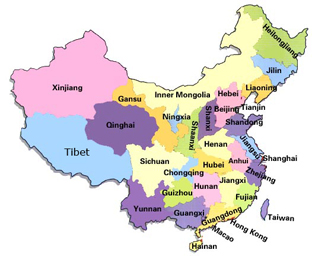
Jointly presented by chinadaily.com.cn Cai (C): Welcome to China Daily Web Chat, broadcasting from the Great Hall of the People. I am your host Cai Muyuan. Today we are very honored to have Mr Ragnar Baldursson to join us to share his knowledge of low carbon cities. Welcome Mr Baldursson. Baldursson (B): Thank you! C: Thanks for joining us, so the first question is, what is your definition of low carbon city? B: Well, the definition, by definition, must be flexible, is ever changing. Basically a zero carbon emission city doesn't exist, so a low carbon city, must be a city which is in every field is decreasing the green house gas emissions and each time has the minimum green house gas emission possible, and that may mean different things in different countries. It means a different thing for China, it means a different thing for Iceland. C: So, Iceland, as we know, is not a very big country, but you have done very impressive job in developing new energy and building low carbon cities. What drives your country to go further and earlier than many other large economies in the world. B: Well, actually (in) Iceland, the majority population lives in the capital city, the Iceland population is very small, only about 300 thousand, but around 200 thousand are living in the capital city, or the Reykjavik area. And for us, we did not really aim -- on purpose -- for being a low carbon city. It happened because it was the most economic way to solve the energy problems of the cities of Reykjavik. It all happens in Iceland we do have an abundant resources of geothermal energy. Even within the city boundaries of Reykjavik. And two generations ago, in the 30's, Iceland politicians, local politicians, decided that they would use this geothermal energy to heat the houses. Now as you may know, in cities that build in the northern hemisphere, a large part of the energy consumption is for space heating. In the early last century, we've been using coal, imported coal, for space heating. But when we started using the geothermal energy for space heating, the energy cost for the Reykjavik city area, became lower. And as a result, a lower energy cost -- because we were using the renewable energy, the geothermal energy -- the emissions also decreased. But we didn't really realize the importance of that time. Today, all the houses in Reykjavik area, and I think about 80-some-percent houses in Iceland are heated with egotistical energy with subterranean warm waters. Actually I think the figure was something like 88 percent. And that's about 60 percent of our energy consumption, I mean, it's just hot water coming from the earth. Another cities like in Beijing, when in winter, gets cold, then you need to heat water to heat your houses. Usually what you use to heat water with would be coal, or possibly gas. That will cause green house gas emissions. C: As you were talking about the heating system, as I know China and Iceland have been cooperating together in this filed, in clean energy. Especially terrestrial-heat technology. So, what is the latest development of this technology? B: Yes, even though we are the first to utilize geothermal heat on a big scales for house heating, in reality, geothermal heat or geothermal energy are sit in many places. Many locations in Beijing have actually names that refer to hot springs. Before all these people moved into Beijing area, there were hot springs in many locations. They are still there, there still spas that use hot springs, so in many places in Beijing and all over China, you have hot springs. But people are not really using them too much except maybe for spas. Now, by using this energy, using the hot springs in the cities, you would be able to decrease the use of coal or gas for heating the houses. Now, it would be possible in some districts of Beijing, in the northern part of Beijing, and its possible in many cities like for instance, the Xianyang city in Shaanxi, the suburb of Xi'an. Iceland is cooperating with a Chinese company to build that district's heating system based on local geothermal resources. In Baoding in Hebei, there is a place (named) Xiongxian. They have an extremely efficient water heating system based on geothermal energy which was developed in cooperation between Iceland and China. And now, for the future, we have the aim of increasing the space heating in all over China in the coming five years. So that's why Iceland will be participating in the new Five-Year Plan for China. C: This year is the 40th anniversary of China and Iceland establishing our diplomatic relations. And it's also the first year of China's 12th Five-Year Plan. What do you think the future prospect on cooperative level between the two countries, and in which field do you particularly think are the most promising? B: Actually I do think that it is the filed we have been talking about. I think the development of geothermal resources and in China, Iceland can actually contribute its knowledge and experience to China's development of its own geothermal resources, that is a very important filed. In other filed, I believe that Iceland and China may possibly cooperate in third countries in where you have geothermal energy, Africa, or some other developing countries where China, presently is already providing developing aid. And if there is geothermal energy in some of those countries, then we may, and are, intending to cooperate together for this field. Of cause there are going to be other field that we will be cooperating in China. For instance, Iceland is an Arctic country. Its close to the Arctic Circle and with the warming of the decreasing ice in the Arctic, there will be great changes and also because of new technologies that make it possible to travel through ice, we believe in the future it will be a new shipping route, as a passive between the Pacific Ocean and the North Atlantic, and that would shorten the distance between China and the old economies around the Atlantic Ocean, the US and the Europe. And for developing that shipping route, that would also give the possibility or cooperation in the future. That is one field we have already started discussion with China. And there are all of these. C: Are there any highlights regarding to low carbon cities' development or low carbon economy? B: I think the main thing is that it has put on some general theme, so, because when you are developing a low carbon economy, it is not a one solution. It is a comprehensive approach to the theme. If you have a big city like Beijing which has say 20 million people now, then, to make Beijing a low carbon city, okay, we can move some of the industries to some other places. But it's not really a solution, because industries still exists in some place, they still create the green house gas emissions. The main thing is that in every step in the urban planning, the aim should be to go for the minimum, minimal, or the low carbon solution. For instance in public transport and the road system, you go for low energy intensity solutions. Also in space heating, you know, you take care how you acquire your heat when you get it, what kind of boilers you are using, what kind of energy you are using, do you use gas, do you use coal? And then you will build energy efficient houses. It's a solutions, it's not one magic word or magic policy that can solve all the questions. C: Yes, so, as China is much bigger and more populous than Iceland, we can learn from your past experience and we can get all your technology in this low carbon filed, but any adoption you think is necessary for China in this regard to develop low carbon cities? B: I do think there is, for instance, when we are approaching the development of geothermal resources, we know about many cities in China that have geothermal resources, but usually the people's traditional attitude is that this cannot be an important factor, but it's not true, it actually can be in many places. Think out side of the box, not only think what I have done until today, that is the way to do things. You really have to be open-minded, you really have to listen to new proposals, new ideas and then actually look into it, what is possible. Many cities do not have geothermal energy, so there you have other solutions, it's not one solution for these places, you really have to look at the local conditions, and you have to find a solution which is best to that location. C: Okay, thanks again for joining us, Mr Baldursson. And thanks everyone, bye. |
|