|
|
|
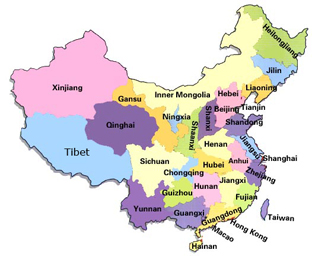
Host: Hello, everyone. This is chinadaily.com.cn. Welcome to our interview series program. Our two guests today are experts in constructing energy efficient buildings who have made great contributions in this field. They are Xin Xiaoguang, Chinese energy-saving model, former deputy director of the central bank's energy-saving office, and Jiang Yongdong, the inventor of the cloud computing energy management platform. Today they will share some of their opinions on building low-carbon cities, including how to design a low-carbon development plan more scientifically and how to draft policies to support low-carbon development and accelerate the establishment of an industrial system featuring low-carbon emissions. They will also share ideas on the construction of greenhouse gas emissions data and management system as well as how to promote a green lifestyle and consumption patterns. Before we start the interview, I want to share some information with you. This year, China will launch a low-carbon construction pilot project in five provinces and eight cities. Building low-carbon cities is becoming a new trend in urban planning. So I want to ask our guests here, how do you define a low-carbon city? Jiang: Thank you. I will share some of my ideas on this question. The definition of a low-carbon city can be explained in both macro and micro ways. Judging from the macro perspective, low carbon is not a concept but a need and a goal that we pursue. From the micro standpoint, a more stringent and measurable indicator or standard should be made for something to be called low carbon. There are common principles for the indicator and standards globally, which are output indicators, consumption indicators, low-carbon resource indicators and policy indicators. Output indicators refer to the productivity and energy consumption of carbon. Consumption indicators refer to the per capita carbon emissions in the society. Resource indicators refer to the proportion that carbon takes in all primary energies, forest coverage and the ratio of unit energy consumption. And "policy indicators" means the supporting policies the government made to stimulate the low-carbon life, which are very detailed and cover every aspect of people's lives. Host: What policies and technologies should be provided in a bid to support the development of low-carbon cities? Jiang: Low-carbon life relates to all aspects. It's not a problem of a person, a family or a company. It's something that's on the national level and relates to every person in a society. In order to develop low-carbon cities, two factors are needed. One is support for policies, and the other is the technology development strategy. The government should issue policies to support and lead the way in low-carbon development and provide benefits for the people. The technology development strategy is mainly reflected in technologies like alternative energy, energy efficiency and carbon capture. The low-carbon concept should follow a "government leads, enterprises act, people enjoy" mentality, and it can form a healthy circle in which the development of low-carbon cities can be realized. Host: China will launch a low-carbon construction pilot project in five provinces, which include Guangdong, Liaoning, Hubei, Shaanxi, Yunnan, and eight cities, which are Tianjin, Chongqing, Shenzhen, Xiamen, Hangzhou, Nanchang, Guiyang and Baoding. When we carry out energy-saving practices in cities, the most important element is to save energy in the architectural complex. I want to ask you: How can we carry out the practice of architectural complex's energy-saving practices and develop low-carbon cities? Jiang: We have mentioned that low-carbon development is an activity and goal of the whole society. Low-carbon urban development tops the priority of city planning. In a city, as we know, transportation and building construction are the main sources of energy consumption. Saving energy in the architectural complex can not be realized in a single building, since it meets the need of the society and a city. Energy consumption in China is relatively huge; on average, it's three or five times – or even more than that – of developed countries, especially from public construction. We have public construction and resident houses in cities. Host: How about residential houses? Jiang: The overall consumption behavior at residential houses in China is within the low-carbon range. That's because Chinese people believe in harmony between the heaven and human, and they usually take full advantage of the environment. The residential houses in Western countries are mostly built through external energies. But when it comes to public construction – the measures, materials and designs – Western countries are ahead of us. That doesn't mean we can not surpass them. The concentration of our work is to save energy in architecture. There are lots of experts in China, like Xin Xiaoguang here, who are quite experienced in this field. We have successful examples of buildings saving energy. Some results even exceeded the Western standards in this field. Our main job or responsibility is to promote those experiences and let more people know about them. Host: From a resident's point of view, when I hear the concept of saving energy at an architectural complex, the first thing that comes to my mind is saving water and electricity. Are there any experiences that we can learn from the Western countries? Jiang: Water, electricity and natural gas are commonly used energy sources in cities. In a city, the main energy support is electricity. Water is part of energy consumption. The transfer of electricity in buildings is just a part of the whole process, which includes electricity generation, transmission and use. In the processes of transmission, energy can be saved by optimizing the grid. When it comes to the generation period, we have thermal power, hydropower, nuclear power, wind power and solar power. The users may think the energy they are consuming is mainly electric, however, there are many types of energy behind it. |
|