Local roots, global brands
China's green transformation path of geographical indications for forest products offers a successful reference model for Global South countries








As China enters the closing stages of the 14th Five-Year Plan (2021-25), the country's green development is accelerating across the board: national forest coverage had risen to more than 25 percent at the end of 2024, the share of the green economy in GDP has expanded significantly, and the total import and export value of China's green and low-carbon products has been increasing rapidly in the past years. This year marks the fifth anniversary of the dual carbon goals of peaking carbon dioxide emissions before 2030 and achieving carbon neutrality before 2060, during which China's green transition has advanced from a "Chinese initiative" to "Chinese practice", and is continuously progressing toward becoming a "Chinese brand".
Meanwhile, global demand for products that are low-carbon, traceable, safe and culturally unique continues to surge. Under multilateral governance frameworks such as the United Nations 2030 Agenda for Sustainable Development adopted in 2015 and the Kunming-Montreal Global Biodiversity Framework adopted in December 2022, green trade is becoming the main theme of global economic growth. As a globally recognized system for sustainable branding, geographical indications (GI) are emerging as a strategic pivot linking ecological protection, trade equity and the safeguarding of cultural diversity.
Among them, China's GIs for forest products have experienced particularly rapid development. At the end of 2024, there were more than 1,500 regional public brands for forest products nationwide, helping over 6 million forest farmers achieve stable income growth. With ecological civilization as its foundation and forest-product GIs as a key driver, China is transforming its "lucid waters and lush mountains" into globally competitive "golden brands" — bringing local resources onto the world stage and turning the beauty of nature into a dynamic force in international markets.
Deeply rooted in the nation's ecological civilization philosophy, China is transforming its forest-based GIs by treating them not as exploitable natural goods, but as critical components of ecological systems requiring conservation and sustainable management. Through institutional design, industrial collaboration, market innovation and cultural empowerment, resources once hidden deep in the mountains are translated into sustainable brand assets, making ecological value visible and convertible into economic value.
In this way, forest products have evolved from being purely physical goods into brands with emotion and identity. With GI mechanisms driving the process, China is achieving a systemic transition — from ecological conservation to regional revitalization, from industrial development to cultural transmission — by creatively transforming local culture, traditional craftsmanship and rural heritage.
The success of China's forest-based GI brands lies in establishing a comprehensive value-upgrade mechanism, forming a progressive and closed-loop branding logic from origin to production to market.
First, in the upstream, origin authentication and quality assurance — supported by ecological standards, green cultivation and regional brand governance — ensure irreplaceability and identity recognition.
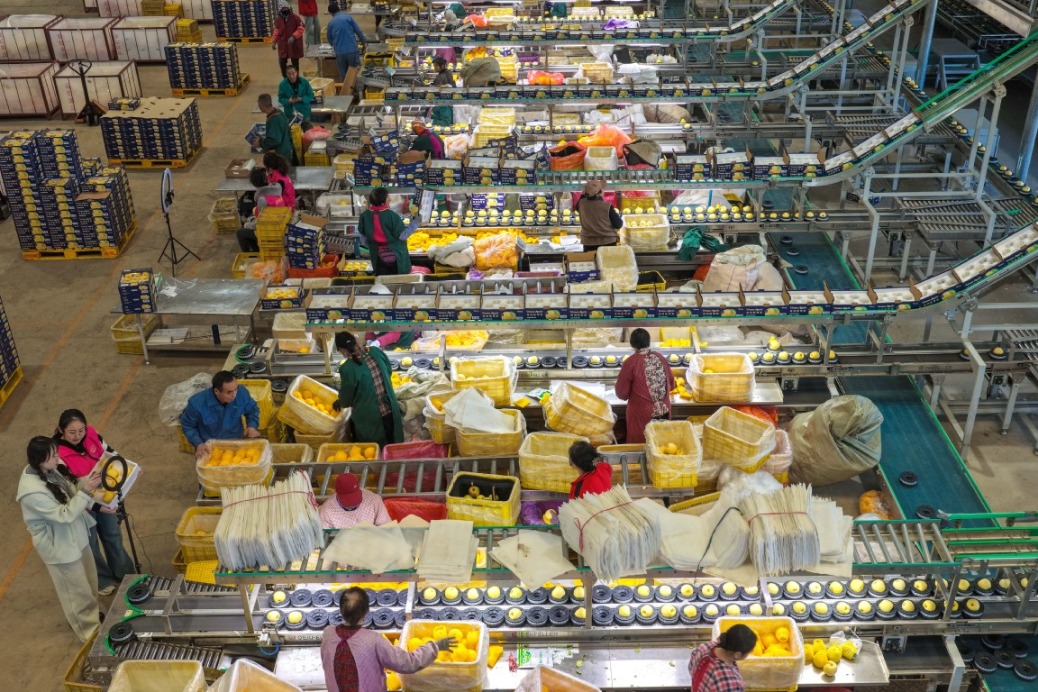
Second, in the midstream, technological innovation, processing improvement and digital traceability enhance product stability and value creation, enabling forest products to be not only marketable but competitive.
Third, in the downstream, cultural storytelling, experiential promotion and global marketing gain social recognition and emotional premium, expanding brand influence across territories.
This progression has driven the transformation of forest-based GIs from local products to regional brands, and then to global brands, and has produced a strategic advantage in the global competition.
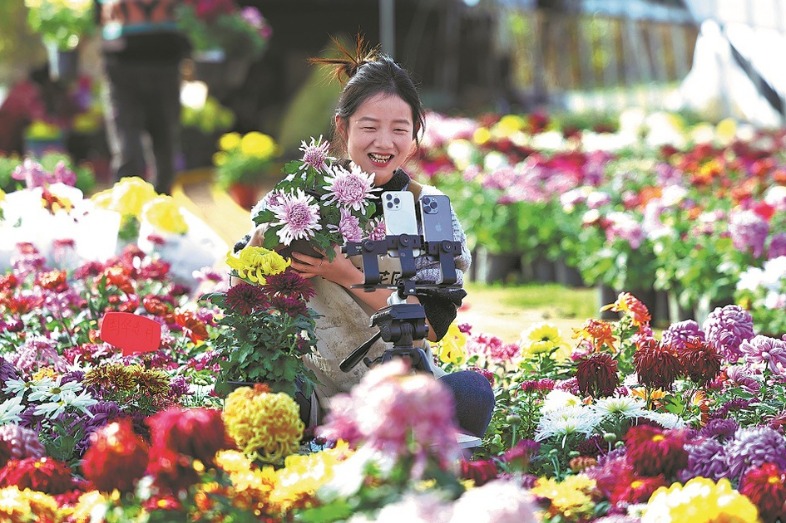
Guided by this mechanism, numerous forest-based GI brands with international influence are emerging across China. Jinzhou pear from Northeast China's Liaoning province, supported by scientific breeding, standardized cultivation and cold-chain logistics, has been exported under the framework of the Belt and Road Initiative, reaching over 40 countries and regions. Events such as pear culture festivals have turned a single fruit into a cultural symbol, extending the value chain from orchards to tourism and services. Laishui walnut from Hebei province, empowered by e-commerce and craftsmanship-based cultural narratives, has evolved from a small mountain specialty into a pillar industry for rural prosperity, commercializing the cultural value of "wisdom at the fingertips".
Compared with global models, China's approach differs from the European Union's exclusivity-based luxury trajectory and Japan's domestic demand focused on standardization. Instead, China has developed a shared and ecological brand development system — grounded in ecological rules, co-constructed benefits and cultural communication — ensuring that brands truly belong to the region, the producers and global consumers alike.
Looking ahead, the significance of China's forest-based GI brands extends far beyond economic returns. Their deeper value lies in contributing to global sustainable governance. China is transforming GIs from local public goods into globally shared values, enabling ecological achievements to be shared across borders and empowering more countries — especially in the Global South — to enhance development capability. Through cooperation with Belt and Road partners, China is exploring mutual recognition frameworks, digital traceability standards and green trade mechanisms, supporting fair trade and brand co-creation through openness and win-win collaboration. Moreover, the cultural-diversity essence of GIs aligns naturally with the United Nations' vision of mutual learning among civilizations — positioning China's experience as a valuable institutional contribution to the global green trade system.
The story of China's forest-based GI development is one of rural economies embracing the global market, of green growth intertwined with cultural confidence and of China offering governance wisdom to the world. From deep mountain villages to international dining tables, from local memories to global sharing, China is cultivating "global brands" from "local roots" — turning green value into a powerful force in the new global economy, and preserving the beauty of nature as a timeless heritage shared by all humankind.
The author is a professor and doctoral supervisor at the School of Economics and Management at Beijing Forestry University. The author contributed this article to China Watch, a think tank powered by China Daily.
The views do not necessarily reflect those of China Daily.
Contact the editor at editor@chinawatch.cn.