Birth pangs
A stable and more equal global order that benefits all will not form by itself; it requires concerted efforts to arrive at consensus







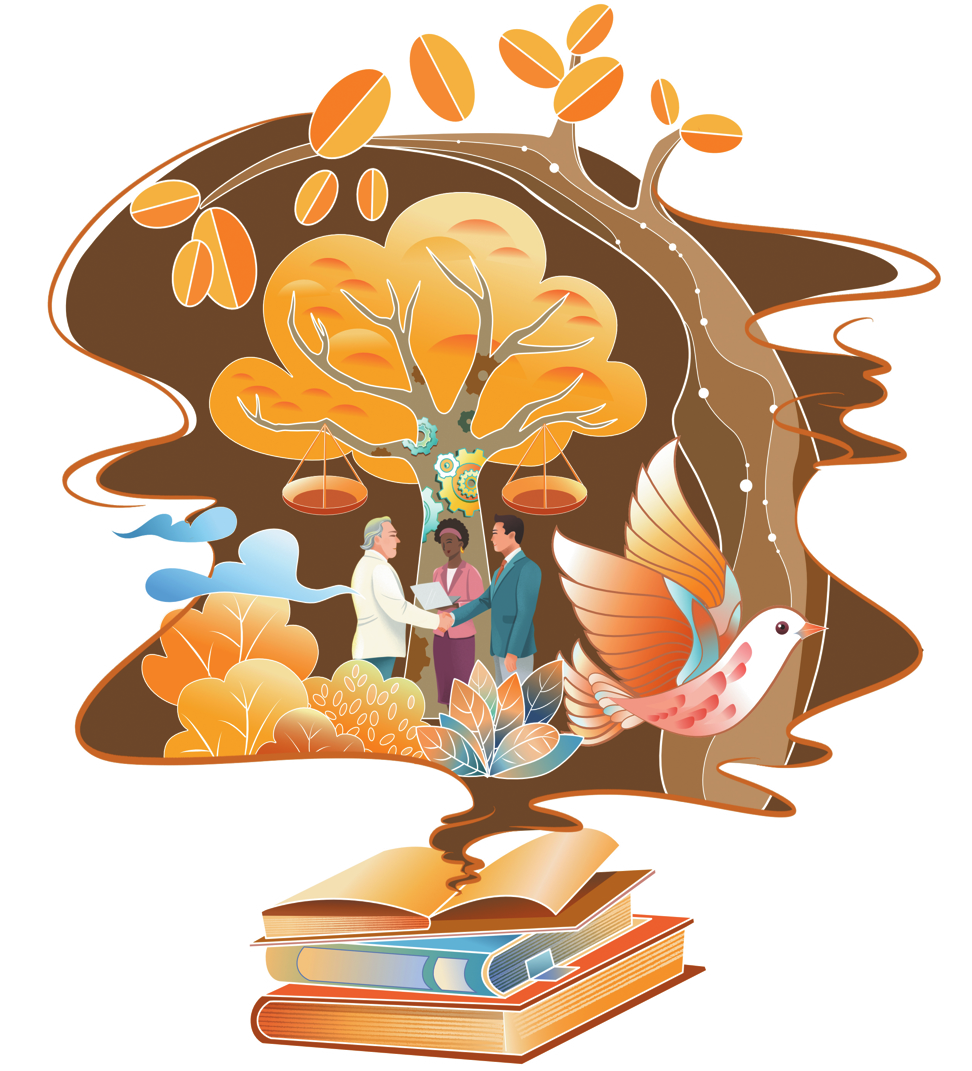
The current global order was forged from the dislocation and consensus after two world wars. It was certainly not a perfect consensus. Massive resources were dedicated to the ideological and military standoff between the two superpower blocs during the Cold War.
Many conflicts ensued in the vying for geopolitical influence and societal development was often neglected in favor of an arms race and power projection.
But it is undeniable that this order was more stable, beneficial and prosperous than the fraying order and scramble for empire and dominance that came before it. It brought many benefits which are often overlooked today, including decolonization, multilateral institutions and norms for addressing cross-border challenges and a balance of deterrence and cooperation among major powers.
The recent order was also marked by the willingness of major powers to contribute to global public goods on an unprecedented scale. During the Cold War, the United States, the Soviet Union and other countries undertook such contributions through the United Nations system and other multilateral institutions. With the collapse of the Soviet Union and the end of the Cold War, a unipolar global order emerged, global trade networks expanded, and the US became the preponderant provider of global public goods.
Now it appears that this willingness to bear the costs of goods whose benefits accrue freely, and sometimes disproportionately, to those across borders — goods such as international standards, public health, food aid and refugee assistance, securing the global commons, environmental protection, peacekeeping missions — has severely diminished.
Whether President Donald Trump is correct that the US did not proportionally benefit from these contributions, only history will be able to say for sure. It is worth noting, however, that the US in 2025 remains the wealthiest country by far, with per capita GDP of close to $90,000, according to the International Monetary Fund. So, at the moment, the US looks to have done quite well by the recent global order. Europe and East Asia, including China, have also done relatively well.
This is where the current order has taken us, but it is clear that we are now destined to reform the order. This is due to both its successes, in the form of the elevation of significant populations out of post-war chaos and poverty over the past 80 years, and its failure to produce consensus around the need to keep or reform its underpinnings, processes and institutions. Impetus for change is coming from pressures for greater equality and fairness and from fears about the future that might derive from those pressures.
While it is possible that such a period might produce a new and enlightened global order, our modern environment is not like previous eras of history. The "smallness" of our current world and the fierceness of modern weaponry make this current global order transition an existential one for humanity. Gains of the current order can easily be lost in a zero-sum scramble leading to wasted resources, environmental destruction and a cataclysmic world war.
The key to avoiding this is to forge a new consensus on the global order. What would such a new consensus look like?
Some see an emerging outline of two rival blocs, hearkening back to the bipolar system of the Cold War. But the US and China should not pit themselves against each other in a de facto battle of "the West against the Rest". The previous bipolar system, for which there is an undeserved amount of nostalgia in certain circles, sacrificed much in terms of societal development and well-being.
Another current trend is fragmentation, with many countries determining that they must preserve essential means of production within their own national borders to ensure continued access. But this scramble for self-sufficiency in economic production will only make all countries poorer. This is a lose-lose proposition.
There is no question that the path to a stable and healthy global order lies in making it more open and more equitable and thus depends on a revamped approach to global economic development and commercial interchange. The question is how to make a fairer global order without throwing the baby out with the bathwater, or getting rid of the benefits along with the downsides of globalization.
There are no easy answers, but the current trend of securitization and protectionism is unlikely to prove a winner. Multilateral instruments, such as the OECD global minimum tax and other efforts to curb jurisdictional arbitrage, as well as transparency in taxation requirements, would be helpful. Transparency in data reporting and enforcement of data standards would also help bolster the role of the IMF in monitoring global macroeconomic health.
But development, at the end of the day, depends on investment in human capital and learning. Health systems, schools and communities have trended toward underinvestment by both rich and poor governments, and now developed powers are turning away from such contributions to developing nations.
To move toward a stable and more equitable global order, countries that are the most capable and responsible will have to invest more in their own human capital and work to ensure that other governments are doing the same. They will have to see to it that those who are benefiting most from the current order abide by a fair social contract that recognizes the public contributions to their success. And they will have to contribute significantly to global public goods in order to meet the certain and growing challenges that we face as a human community on this planet, our one and only home.

The author is a senior fellow at the Paul Tsai China Center at Yale Law School. The author contributed this article to China Watch, a think tank powered by China Daily.
The views do not necessarily reflect those of China Daily.
Contact the editor at editor@chinawatch.cn.