Higher education inspiring for Central Asia







Higher education is a powerful driver of human development and technological innovation; it also sharpens a country's competitive edge. Perhaps this fact is evident in Central Asia more than many other places. I realized this fact in my conversations with local leaders, educators and students during my recent visit to Central Asia.
I was deeply impressed by the ambition and sense of purpose with which people in Central Asia use higher education as a vehicle for national development. They talk about the ancient trade route, saying it raises the potential for innovative collaboration between China and the region to, among other things, co-create education frameworks that honor local traditions and modernize the global educational landscape.
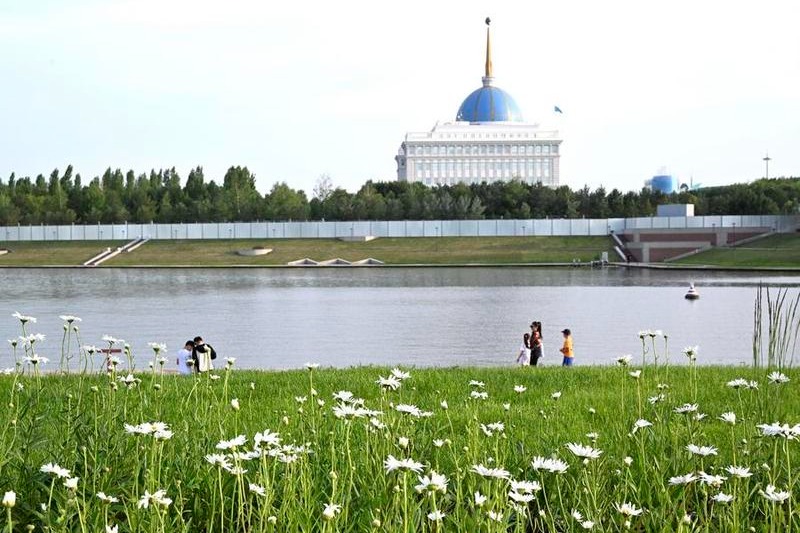
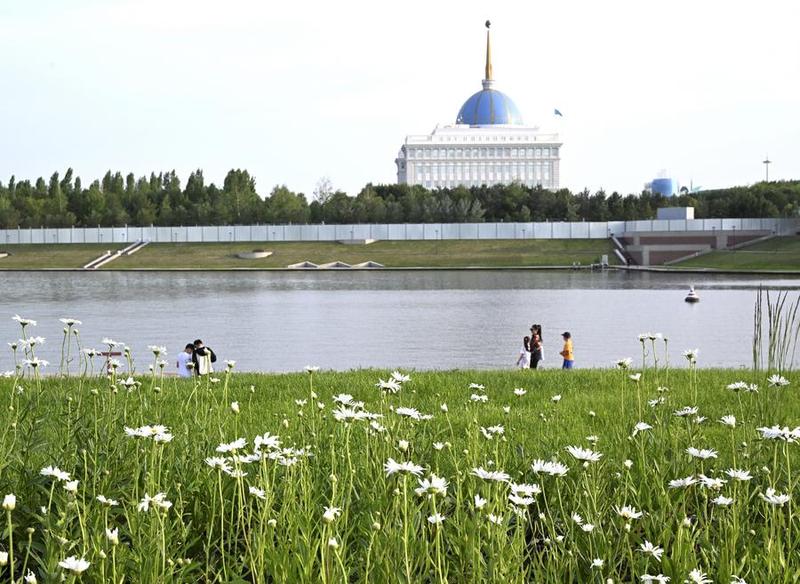
Kazakhstan is eager to establish research universities and turn them into world-class institutions. The country is alive to global trends, as evidenced by Kazakh President Kassym-Jomart Tokayev's recent state of the nation address based on the theme, "Kazakhstan in the Era of Artificial Intelligence: Current Challenges and Their Solutions through Digital Transformation".
At Nazarbayev University, which celebrated its 15th anniversary this year, I saw firsthand the transformative steps the authorities have taken to transform it into a leading global research institution. The university became a household name in China after President Xi Jinping proposed the Belt and Road Initiative there during a speech 12 years ago.
During a conversation with me, professor Waqar Ahmad, Nazarbayev University president, said: "Too often, there is a tendency to look to the West for examples. Yet some of the most dynamic and rapidly developing universities are ... right here."
Such universities are not limited to Kazakhstan, though. Countries such as China, Egypt, the United Arab Emirates and Malaysia have also been asking their top universities to make efforts to transform into world-class research institutions. I see this as the rise of the Global South in the field of education.
A highlight of my visit to Central Asia was the "Sino-Kazakhstan Higher Education Roundtable", where officials from a number of universities shared their visions for a collaborative and innovative educational future. The atmosphere was electric and crackling with optimism, fired up by a common understanding that knowledge exchanges enhance countries' education level, creating indigenous models.
In Uzbekistan, I was pleasantly surprised to see the country's commitment to educational reform and modernization. Its capital, Tashkent, is undergoing a transformation through the New Tashkent urban project, whose goal is to accommodate another 2 million residents by 2050. Interestingly, the driving force behind the urbanization project is the New Uzbekistan University, whose new campus buildings have taken shape in mere months.
People in Uzbekistan see higher education as a driver of urbanization. Their decisive actions and high efficiency speak volumes of Uzbekistan's notions on education and the country's commitment to progress and transformation. Such spectacular success has already been achieved in China's most competitive and innovative city Shenzhen, which was a remote fishing village just 50 years ago. Hong Kong's competitiveness, too, was built on its world-class universities.
At the Hong Kong University of Science and Technology (Guangzhou)-Uzbekistan Universities Roundtable in Tashkent, we celebrated our collaboration. As AICA (Central Asian Association for AI) chairman and former foreign minister of Uzbekistan, Vladimir Norov, said, "From the Silk Road to the Belt and Road, we are building on centuries of knowledge exchange."
To achieve this, it is imperative that we co-create new educational models that reflect the unique cultural and intellectual legacies of the region while addressing pressing global challenges. Yet we acknowledge the enormity of the challenges we face. The world is at a critical juncture where conflicts, wars, rising de-globalization and disruptive technologies threaten to deepen inequality in education, particularly in the Global South. Also, access to quality higher education remains uneven, posing risks to our countries' competitiveness and limiting the future of our youths.
There is reason for optimism, though. Recent regional cooperation efforts, such as the second China-Central Asia Summit in Astana and the Shanghai Cooperation Organization Summit in Tianjin, which resulted in a long list of agreements on higher education, innovation, joint research and youth exchanges, and raised hopes of deeper collaboration.
The communique of the fourth plenary session of the 20th Central Committee of the Communist Party of China emphasized that we must seize the historic opportunity presented by the new round of technological revolution and industrial transformation to boost China's strength in education, science and technology, and human resources in a well-coordinated manner. This vision aligns with the recent agreements on cooperation and reflects China's commitment to building stronger educational frameworks within the broader global context.
Everywhere we go, we are reminded of our shared Silk Road past. Together, we are determined to build a legacy of knowledge and cooperation that transcends borders, enriches lives and empowers future generations, helping us address the pressing global challenges.
We are riding on a spirit of unity and progress that captures the ideals of the ancient Silk Road, ideals that will enrich the educational landscape of Central Asia and beyond.
The author is president of the Hong Kong University of Science and Technology (Guangzhou). The views don't necessarily represent those of China Daily.
If you have a specific expertise, or would like to share your thought about our stories, then send us your writings at opinion@chinadaily.com.cn, and comment@chinadaily.com.cn.