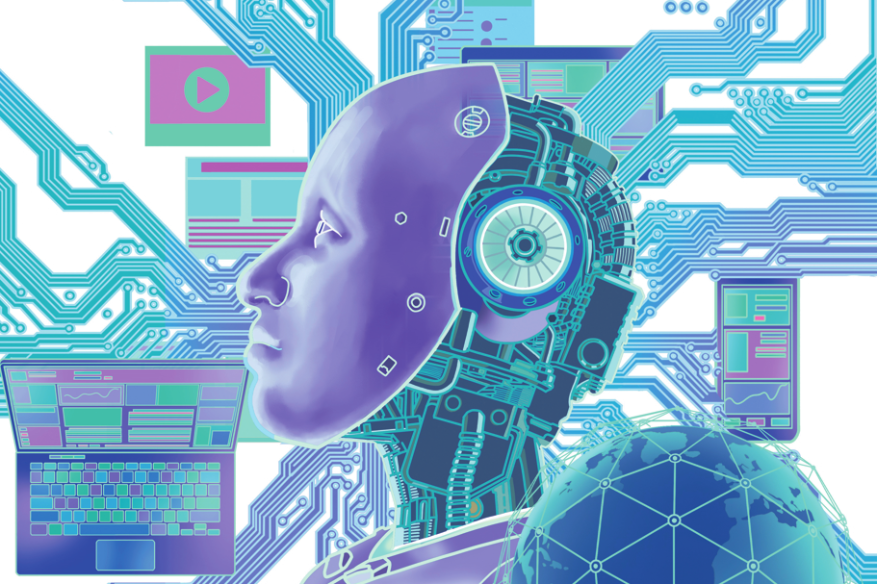
How AI can promote social good








Artificial intelligence is now increasingly present in corporate and government decision-making. And although AI tools are still largely in the hands of institutions that focus on profit before purpose, these new technologies could be equally powerful in promoting social good.
A joint effort by MIT Solve and the Patrick J. McGovern Foundation shows how AI applications can be used to extend prosperity to economically marginalized groups. Already, entrepreneurs are exploring how AI can be used to address some of the world's thorniest challenges in thoughtful, creative and previously impossible ways.
AI is most exciting when it can both absorb large amounts of data and identify more accurate correlations (diagnostics), while leaving the causational conclusions and ultimate decision-making to humans. This human-machine interaction is particularly important for social-impact initiatives, where ethical stakes are high and improving the lives of the marginalized is the measure of success.
Algorithms are only as good as the data that train them, and the choice of which data to include in AI models is inherently biased. Or, as the saying goes, "bias in, bias out."
Take the issue of financial inclusion and creditworthiness. For people without a bank account, getting a loan or credit card is near impossible. Yet many of the unbanked can prove their creditworthiness in other ways, such as through a history of paying utility and phone bills on time.
Destacame, an AI-based platform that now serves 1.3 million people in Chile and Mexico, uses an algorithm to create an alternative credit score using data not reported to credit bureaus. By proving its clients' ability to repay loans, the platform helps to reduce the barriers that often prevent financial institutions from lending to them.
In education and health, meanwhile, AI can dramatically reduce the cost of providing high-quality services, and improve outcomes. Century Tech's educational platform, for example, makes teachers more productive by automating rote and administrative tasks. And by understanding how each student learns, it provides customized individual plans aimed at improving their performance in school.
In a similar vein, Ada Health serves both patients and health workers. The platform's conversational interface, backed by natural language processing, gives patients instant personalized medical insights that help them to identify appropriate next steps. Its AI engine and curated medical knowledge base, meanwhile, provide semi-skilled health professionals such as community health workers, pharmacists, nurses, and midwives with clinical decision-support tools. At the frontlines of health-service delivery where worker shortages are acute, such support can make the difference between sickness and health.
Yet there is a limit to what bots can do. Although AI tools can triage customer-service requests or even make psychological support available to larger numbers of people, forging a genuinely deep connection requires a human touch.
The ISeeChange platform, for example, combines natural language processing with user-generated data and sensor networks to give cities critical data to improve their climate resilience, infrastructure design and even public safety. Residents submit detailed stories and data about their neighborhoods to the platform, which then aggregates these individual experiences into climate models.
Crisis Text Line, meanwhile, uses machine learning to analyze words and phrases associated with youths in crisis through text messages, and triages messages to ensure at-risk users get help fast. By processing vast amounts of data, the organization has identified some of the most likely predictors of the need for an emergency response. For example, it found a high correlation between the word "ibuprofen" and attempts at self-harm. By using AI, messages containing this word are now prioritized in the queue. But the outreach is done by human volunteer counselors who contact the distressed texter.
These examples show how new business models are helping to extract additional value from big data and AI technologies, benefiting those previously excluded from the data economy. That is why MIT Solve and the Patrick J. McGovern Foundation are collaborating to support tech entrepreneurs solving global problems. We will continue to identify promising ventures in their early stages; equip them with the capacity to grow, scale, and diversify; and champion their stories to bolster the use of AI for social good. Solve judges are selecting a new cohort of tech entrepreneurs to support via the Solve Challenge Finals.
AI has the potential to improve billions of people's lives-but only if it creates and delivers value directly to those most in need, rather than fattening the bottom line of businesses already serving the most privileged. By harnessing these technologies for social good, today's new breed of entrepreneurs can bring about lasting, transformational change.
Hala Hanna is managing director, Community at MIT Solve. Vilas Dhar is a trustee of the Patrick J. McGovern Foundation.
Project Syndicate
The views don't necessarily represent those of China Daily.