UK’s practical pivot in polarized world







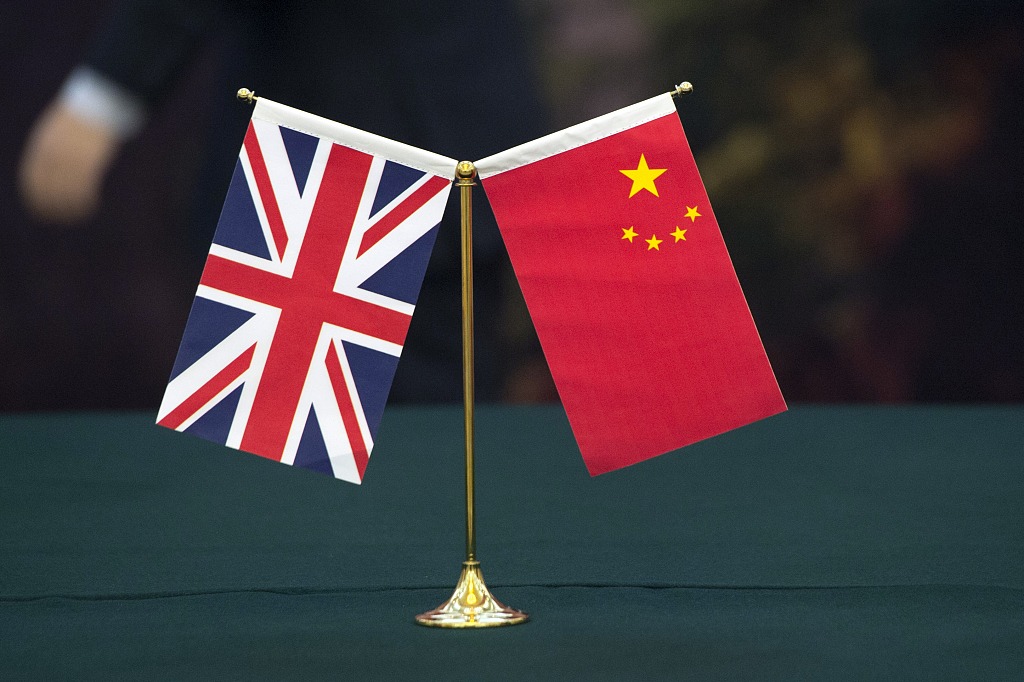
When British Prime Minister Keir Starmer arrived in Beijing on Wednesday, he carried more than just trade proposals and business cards. He carried a bet — on Britain’s economic future, on a recalibration of foreign policy, and on the idea that in a fragmenting world order, strategic pragmatism is not weakness but a necessity.
That Starmer’s visit to China is the first by a British leader since 2018 alone speaks volumes of its significance. In the past eight years, Britain’s relationship with the world’s second-largest economy has cooled from cautious courtship to outright suspicion. Successive Conservative governments recast the United Kingdom from one of Beijing’s strongest advocates in Europe into one of its sharpest critics, with commercial and diplomatic consequences that are still being felt.
Starmer’s Labour government is signaling that this era is over — or at least that the UK must reassess its stance. The rationale is as much geopolitical as it is economic. Relations with Britain’s closest ally, the United States, have become strained under US President Donald Trump’s erratic approach to trade and defense. His recent performance at Davos — marked by open disdain for European leaders, their regulatory regimes, their immigration policies, and their refusal to hand over Greenland — was not merely rhetorical theater. It was a reminder that Atlanticism, once Britain’s foreign-policy north star, is no longer a guarantee of stability or predictability.
In that context, Starmer’s China outreach looks less like a flirtation and more like a hedge.
The deterioration of UK-China ties was not accidental. The 2020 decision to ban Huawei from Britain’s 5G networks was a decisive break, framed in the language of national security but interpreted in Beijing as political alignment with Washington. Two years later, British lawmakers oversaw a taxpayer-funded buyout of China General Nuclear Power Corporation’s stake in a nuclear plant being developed by France’s EDF. The message was unmistakable: Chinese capital was welcome only up to a point — and that point was moving.
Starmer has been unusually blunt about the price of that approach. In a speech late last year, he accused previous governments of a “dereliction of duty” for allowing relations with Beijing to wither, noting that French President Emmanuel Macron has visited China twice since 2018, and that German leaders have visited four times. France and Germany managed to combine strategic caution with commercial engagement, while Britain chose estrangement — and paid for it.
This is where economics intrudes with unforgiving clarity. As Ray Dalio, one of the world’s most respected global thinkers, has warned, the postwar international order is under acute strain. In such an environment, voluntarily marginalizing oneself from the largest growth engine of the global economy is an act of self-harm. Starmer’s outreach to China is not nostalgia for a bygone “golden era”, but an attempt to safeguard Britain’s economic resilience before a new global settlement hardens into place.
Negotiations to restore economic ties have been quietly underway for months. UK Chancellor of the Exchequer Rachel Reeves traveled to China in January last year with a business delegation, unveiling £600 million ($820 million) in investment. Energy Secretary Ed Miliband and Business Secretary Peter Kyle have also made trips, while senior Chinese officials have reciprocated.
Reuters recently reported that senior Chinese officials met representatives from 30 British companies, including the Swire Group, HSBC and InterContinental Hotels. Ling Ji, China’s vice-minister for commerce, used the occasion to urge deeper trade and investment ties and to reaffirm Beijing’s commitment to win-win cooperation.
The commercial logic is straightforward. Britain wants to sell financial services — pensions, insurance, wealth management — alongside luxury cars, fashion and whisky. China, while locked out of sensitive sectors such as nuclear power and core telecom, has continued to invest in UK renewables, infrastructure and real estate. This transactional relationship is shaped by political red lines but driven by mutual economic interest.
The domestic imperative is equally pressing. Starmer has pledged to raise living standards through investment and growth, a promise that cannot be met on the austerity rhetoric alone. China is already Britain’s third-largest trading partner, with bilateral trade crossing £120 billion in the first six months of 2025. To pretend that this relationship can be ignored — or moralized out of existence — is to indulge in fantasy economics.
That is why Starmer’s decision to travel with Reeves and Kyle, alongside senior business figures, matters. It is a serious attempt to re-engage at a time when transatlantic relations have become strained. “We reject that binary choice,” Starmer said last month, describing China as a nation of “immense scale, ambition and ingenuity” and a defining force in technology, trade and global governance.
The visit will not resolve the contradictions at the heart of UK-China relations. But if Starmer can translate rhetoric into a durable framework for cooperation — clear-eyed about risks, unapologetic about interests — he may yet prove that in an era of global fragmentation, diplomacy grounded in realism is not a retreat from values, but a defense of national purpose.
The author is a political risk consultant and lawyer based in London who has served as the chairman of the International Affairs Committee at the Bow Group, which is the UK’s oldest conservative think tank.
The views don’t necessarily represent those of China Daily.