China backs globalization and fights protectionism at Boao







Commitment to opening up the Chinese economy, and deepening and widening domestic financial reforms, were the central messages from President Xi at the Boao Forum for Asia. The address has created new hope the recent rise in global protective measures will be short-lived and have minimal impact on the prospects of global economic growth. It has also underlined the fact protectionism does not enjoy broad-based global support among world leaders. While countries might have specific constituencies demanding protection, as a global policy, protectionism cannot bring benefits for bigger sections of the global population.
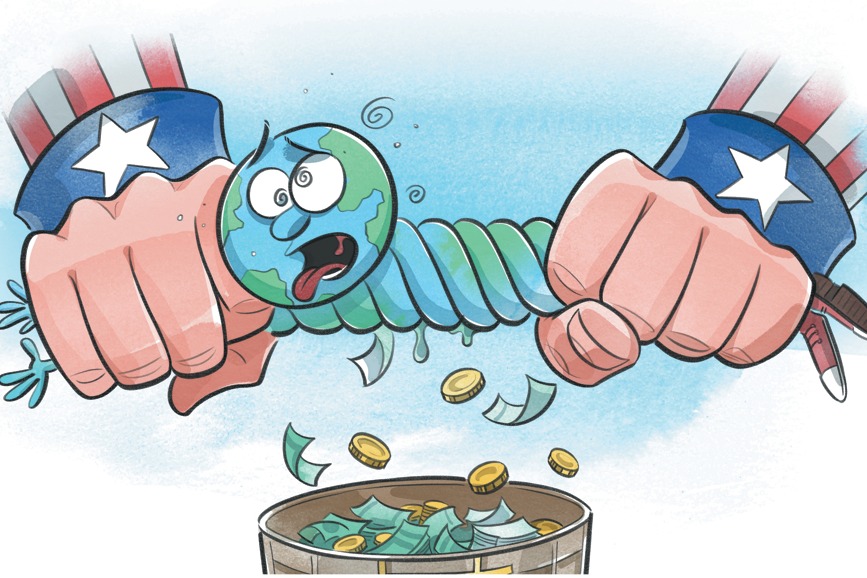
The recent series of trade-restrictive measures taken by the US is serious in several respects. First, it undoes the hard work by the WTO over the last couple of decades in bringing down tariffs across the world. The multilateral rules-based trade framework has worked well for the world. It has generated new growth opportunities for the developing world by giving poorer countries’ goods and services access to world markets, developing global supply chains linking low-income countries and enabling the developing world to attract capital and technology. The result has been the rise of strong emerging market economies like China, Brazil, India, Mexico, Turkey and Indonesia. Indeed, Asia’s current prominent position in the world economy has much to do with the expansion of the global trading mechanism under the WTO.
But a strong comeback of trade protectionism works against the spirit of the WTO. It particularly acts against the WTO’s principle of “Most Favoured Nation”. By committing to MFN, WTO members commit to allow each other mutual access to domestic markets unless compelled by specific economic conditions or circumstances. This principle of reciprocal non-discriminatory trade liberalization gets severely affected — and multilateral trade rules face serious challenges — if countries resort to unilateral trade-restrictive actions like the US has.
The other major implication of the US tariffs is their justification on national security grounds. In more than 20 years since the establishment of the WTO in 1995, these tariffs are the first example of a WTO member country describing imports as “damaging” for its internal economy and national security. This gives other WTO members the opportunity to use national security as grounds for resorting to trade-restrictive measures. And if national security becomes the major factor in deciding international trade relations, then the prospects for global trade darken significantly. Tariffs raised on national security grounds further undermine the credibility of the WTO. The WTO offers its members large latitude in tackling economic difficulties arising from large flows of imports. These include safeguards against import surges as well as anti-dumping actions. These are in addition to institutional processes for settling inter-country disputes. By not resorting to the WTO’s “checks and balances” and acting unilaterally, the US trade actions have damaged the WTO and created problems for orderly functioning of global trade.
Counter-protectionism is clearly not the answer to tackling protectionism. The best way to address protective actions is demonstrate the benefits of economic globalization and make efforts to stay committed to the process. In this respect, President Xi’s address at the Boao Forum underlines the current contrast in the views of world leaders on globalization. The US’ effort to resort to trade actions and settle trade imbalances bilaterally is moving in a direction opposite to global economic integration. On the other hand, China’s decisions to lower tariffs, increase imports and expand foreign ownership in major domestic industries is an effective strategy for backing economic globalization. In the long run, and as a history has indicated, this is what is crucial for global welfare.
The author is a senior research fellow and research lead for trade and economic policy at the Institute of South Asian Studies in the National University of Singapore.