Stars not the lone success factor for films
 |
|
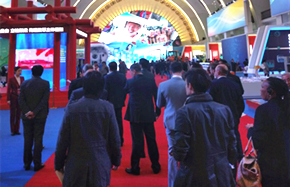
Patrons watch a 3D IMAX movie at a theater of Wanda cinema run by Dalian Wanda Group Co. in Beijing, China, Monday, May 21, 2012.[Photo/IC] |
A recent list of the top 100 Chinese mainland celebrities' pay for starring in a film or TV serial has left people open-mouthed, as their fees range from 5 million yuan ($750,000) to 80 million yuan for a film, and 50 million yuan to 100 million yuan for a TV serial. Which means even after paying the personal income tax, a celebrity can make a helluva lot of money, not counting his or her earnings from advertisements and other sources.
The public criticism about such high celebrity earnings had not made any difference to the trend, that is, until September when the administrative departments of the media and entertainment industries issued a regulation stipulating that actors' pay should not exceed 40 percent of the production cost of a movie or TV serial.
Before that, it was common to hear some producers complaining that the leading actors could take home more than 70 percent of a film's or TV serial's budget, while ruing the declining standard of their work.
Celebrity actors started demanding (and getting) huge amounts of money to act in movies or TV serials because of a massive flow of investments into the entertainment industry in a short time, and for the lack of self-regulation in the industry.
China produced about 21,500 TV serial episodes last year, but about 9,000 of them couldn't reach audiences because no TV or online channel was interested in them, mostly due to their "low" production quality. And half of the 500 to 600 movies made in China every year cannot find cinemas willing to screen them.
In the film industry, for example, hundreds of private equity funds are managing hundreds of billions of yuan. This astronomical amount of hot money and the shortage of experienced and coolheaded investors are important reasons for the unreasonably huge investment in the film industry in a short span of time-only 10 percent of the films produced each year make money, and about 40 percent break even.
It is estimated that nearly 300 billion yuan each was invested in the film industry in 2015 and 2016, which boosted China's box office from about 8 billion yuan in 2012 to more than 45 billion yuan last year-though about half of the revenue was earned from imported movies, mostly from the United States-and increased the number of movie screens from 13,000 to more than 45,000, the highest in the world.
Surrounded by impulsive investors, a producer with just the general outline of a story hoping to complete the script or screenplay "on the spot", is likely to look for stars to cover the drawbacks in the story or plot, if there is any, and use them as the decisive factor to secure funds. In such cases, the art and craft of filmmaking and, more importantly, the needs of the audience, take the back seat.
It is an open secret that some works are the result of the collective patchwork of a group of ghostwriters in a short time, especially for TV serials.
In Hengdian, East China's Zhejiang province, the largest shooting base for movies and TV serials in China, tens of thousands migrant workers provide the "human background" to films and TV serials, or play some insignificant roles without a name, let alone a dialogue, for "wages" of 80 yuan to 300 yuan a day, plus a box of lunch. Hengdian is just an example of the entertainment industry's ecology.
This is to say that despite the fat paychecks of celebrities being legal and a result of the market, an underdeveloped one though, payments are unsustainable because they come at the cost of the other players, both major and minor, without whom the industry would not function.
The author is a writer with China Daily. liyang@chinadaily.com.cn