A special day for safety and health of workers
 |
|
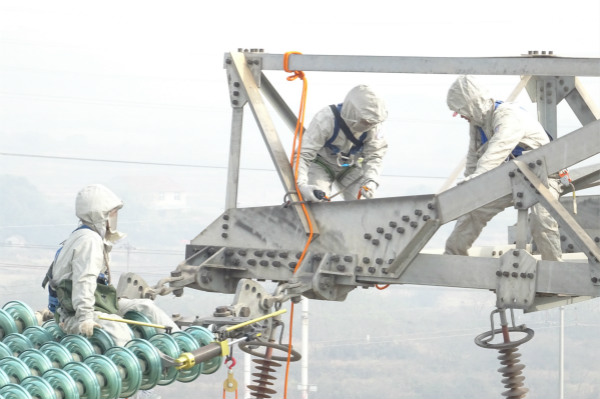
Electric operators test a new tool on UHV electricity cables at a UHV AC Test Base of SGCC in Wuhan, capital of Central China's Hubei province, on November 30, 2016. [Photo provided to chinadaily.com.cn] |
Most work-related deaths and non-fatal accidents occur in low-and middle-income countries of the region. However, in reality, the situation in the Asia-Pacific region could be even worse as the problem can only be estimated due to the lack of data.
Challenges in collecting occupational safety and health data that is accurate, comparable and timely hinder the analysis of scope, nature, causes and impact of occupational accidents and disease. Official reporting requirements are based on multiple criteria which change over time and do not cover all categories of workers (such as self-employed and informal workers).
In fact, no country reports all work-related diseases. Even countries with well-established reporting practices often do not report all cases, particularly non-fatal injuries or occupational diseases. Therefore, official figures provide only a partial assessment of the situation which can be only estimated.
Yet such information and analysis is pivotal to devising effective and evidence-based policies and preventive measures both at country and enterprise levels. Improved occupational safety and health (OSH) data can help secure working environments for all workers. They draw attention to high-risk activities and most vulnerable categories of workers, and enable labor inspectorates to carry out their preventive mandate by giving countries the means to monitor and assess the needs for and the impact of their OSH policies.
Over the past century, measures have been developed to improve OSH reporting and new technologies can facilitate access to timely sources of information on occupational safety and health data.
The ILO and its member states started to work on improving OSH data comparability in 1923, when industrial accident statistics were placed on the agenda of the First International Conference of Labour Statisticians. Moreover, ILO Occupational Safety and Health Conventions require ratifying member states to establish mechanisms to collect reliable OSH data and the ILO has also developed tools to support this work.
The 2030 Agenda for Sustainable Development calls on countries to collect, utilize and report OSH data as a means to measure progress in protecting labor rights and promoting safe and secure working environments for all workers. Countries have the primary responsibility for follow-up and review of the progress made in implementing the Sustainable Development Goals, which will require quality and accessible data collection. And regional follow-up and review will be based on national-level analyses and contribute to follow-up and review at the global level.
The ILO works to promote a culture of prevention on OSH to protect all workers' health and lives. It can be achieved with the joint commitment of governments, workers and employers, and with accurate, comparable and timely data.
The author is International Labour Organization's senior specialist in occupational safety and health for Asia.