China is not in a 'social division' trap
Upward social mobility trendy
 |
|
Zhang Haidong, a professor at the School of Sociology and Political Science, Shanghai University / CHINA DAILY |
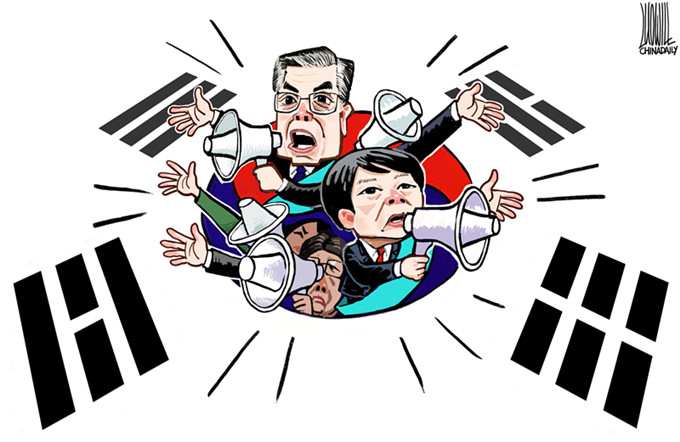
When people talk about consolidation of social divisions they usually mean reduction in the opportunities available to achieve upward social mobility. Seldom, if ever, do they refer to downward social mobility, which actually is a reality in many developed economies. For example, nearly 30 percent of residents in the Republic of Korea believe they're no longer part of the middle class, having slipped down the social ladder after the 1997 Asian financial crisis.
As for China, upward social mobility has been a fact for the majority of Chinese people. In Shanghai, for example, from 2005 to 2011, the social mobility rate grew from 61.7 percent to 76.4 percent, with the average rate of upward mobility being about 50 percent. In contrast, the downward mobility rate is about 20 percent.
Since Chinese society is in transformation and its social structure open, it means there is still much room for individuals to achieve upward mobility. China has been making continuous efforts to improve social vitality and mobility, like implementing targeted policies to alleviate poverty and boost middle-income groups.
But it should also raise the rate of individual tax for the high-income group, and use the additional revenue to subsidize low-income groups to narrow wealth gap.
Basically, efforts to build a fair and equitable social order will strengthen market economy as well as promote social mobility. For instance, if the hukou (household registration) system is gradually relaxed, non-local workers can send their children to schools in the cities of their residence, or buy cars and property, opening up the channels of opportunities for the upward mobility for more people.