US' withdrawal from TPP creates new challenges
 |
|
US President Donald Trump shows the Executive Order withdrawing the US from the Trans-Pacific Partnership (TPP) after signing it in the Oval Office of the White House in Washington, DC, USA, January 23, 2017. [Photo/IC] |
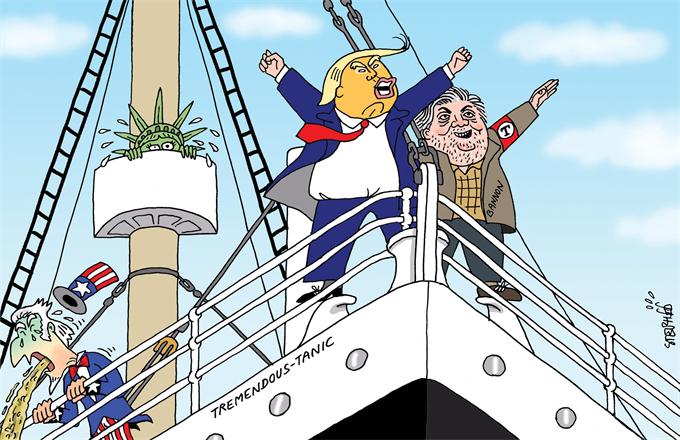
The implications for China of US President Donald Trump's decision to withdraw the United States from the Trans-Pacific Partnership agreement has drawn much attention, with many arguing it will enable China to play a bigger role in trade governance in the Asia-Pacific. While this might indeed be so, it also presents China with new challenges.
In his last few months as president, Barack Obama repeatedly emphasized the importance of the US ratifying the TPP in order to "contain" China. He and his administration argued that the failure to ratify the TPP would mean China, rather than the US, would write the trade rules for the Asia-Pacific. This narrative, supported by a large number of analysts and experts, strengthened the impression of the TPP being essentially an instrument for strengthening the US' strategic influence in the region: The TPP would have brought together regional allies of the US into a common trade framework led by the US. This surely would have been an uncomfortable proposition for China.
So the withdrawal of the US from the TPP, aborting the US' efforts to lead the regional order, has for the time being reduced China's apprehension of being strategically cornered by unfavorable trade agreements.
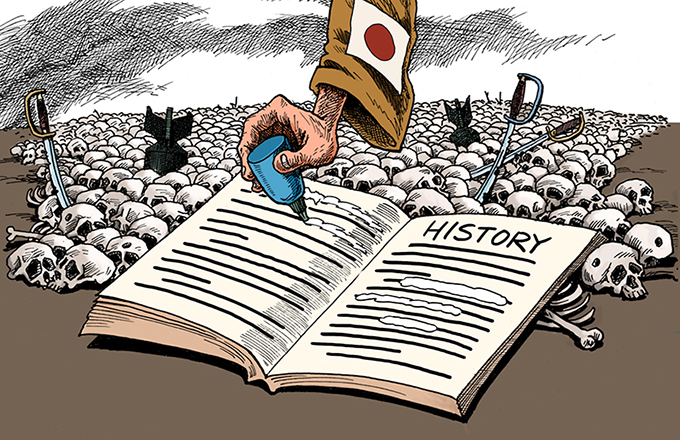
Yet while many seem to think China can now automatically assume leadership of the regional trade order, in reality much depends on how the rest of the region responds to that possibility. It is important to note that the rest of the TPP members might not be as comfortable with China's leadership of regional trade integration as they were with that of the US. Some TPP members such as Japan have difficult political relations with China, and are unlikely to accept China's leadership on Asia-Pacific trade. This is evident from Japan indicating that the TPP without the US is "meaningless". Indeed, these countries might explore the possibility of having bilateral trade deals with the US. That would give them the coveted access to the US market and at the same time assure them of security and strategic support from the US. Unless the rest of the TPP members remain committed to the TPP, it will die a natural death.
If the TPP gets going without the US, it might be able to bring in a new a modern system of trade governance in the Asia-Pacific, since without the US it would not be viewed as a US-led initiative for capturing strategic influence.
The new US administration is expected to play a less active role in the region. The Trump administration has backed out from the TPP and might also withdraw from the Obama administration's "pivot to Asia" strategy. But various statements by Trump and his team at different points in time have pointed to their hostile attitude towards China. Any effort on part of China to assume a leadership role in regional trade matters might provoke the Trump administration to retaliate. That would complicate the strategic dynamics in the Asia-Pacific.
While China doesn't face the threat of being strategically marginalized by the US-led TPP, it still faces a challenge in deciding its next steps. The Trump administration is very much in its early days. Over time, its China policy will become clearer. A prominently hostile US attitude towards China including tough actions on trade might lead to regional trade confrontation. Such a situation will mean other countries in the region will be forced to make a difficult choice between the US and China. While US allies like Australia and New Zealand might be willing to work with China on reviving the TPP and promoting the proposed Free Trade Area of the Asia-Pacific, other US allies in the region might not. So the US withdrawal from the TPP may have raised more questions for China than providing answers.
The author is senior research fellow and research lead (trade and economic policy) at the Institute of South Asian Studies, National University of Singapore.