|
|
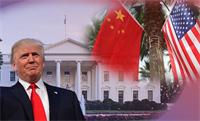
US President Donald Trump shows the Executive Order withdrawing the US from the Trans-Pacific Partnership (TPP) after signing it in the Oval Office of the White House in Washington, DC, USA, January 23, 2017. [Photo/IC] |
The Trans-Pacific Partnership agreement is dead, at least for the time being. But instead of dissecting US President Donald Trump's problematic trade policies, many are quick to point out that it will create a rare opportunity for China, especially in pursuing the Regional Comprehensive Economic Partnership, in which the United States is not participating.
Indeed, many Chinese may have heaved a sigh of relief or even felt like celebrating when Trump signed the executive order on Jan 23 to withdraw the US from the TPP. But this was largely because the TPP had been aggressively sold by former president Barack Obama as a geopolitical tool against China, part of his rebalancing to Asia strategy. It is hard to remember all the times Obama repeated such toxic rhetoric as "we can't let countries like China write the rules of global economy", given how many times he expressed such sentiments.
The problem with the TPP was exactly it was promoted more as a means to wrestle economic influence in the region from China rather than a free trade deal. Does that mean that even Obama was not sure about TPP's economic benefits, so he had to peddle it to lawmakers and to the US public by scaremongering about China?
Some US economists have pointed out that the TPP's economic benefits to the US are quite limited, or even negligible. If that is true, then US workers had every reason to oppose the TPP since it was based more on geopolitical concerns than on the well-being of average Americans.
Despite the fact that the TPP was touted by the Obama administration as an FTA of the 21st century, there is no doubt that the RCEP, as a genuine trade deal, is more befitting of that description, as it is a step toward greater regional economic integration and will inject vitality to the already most economically dynamic region in the world. In this regard, it should absolutely be applauded.
Unlike the TPP, the RCEP has never been sold as a geopolitical game against the US. It can't be given that many RCEP parties are US security allies. But the fact that the RCEP is a free trade agreement rather than a geopolitical tool shows its superiority to the TPP.
Let's be clear. China won't and can't dictate the RCEP. The 10-nation Association of Southeast Asian Nations, as well as Japan and India are some of the heavyweights in the group.
Unlike the US, China believes in a multipolar world rather than a unipolar world. It means that China would prefer a kind of collective leadership in RCEP or any multilateral organization.
"Adopting international norms" has been the catchphrase since Chinese leader Deng Xiaoping launched the country's reform and opening-up drive in 1978. China has gained a lot in the past decades by learning from and abiding by international norms.
However, China still has a lot to learn and catch up on in that process, especially in international governance. The US, Europe and other advanced economies should be a bit more patient.
The 50 US states, for example, are vastly different. Should California, the state with the strictest environmental law, demand that Texas or Ohio change their local environmental rules before trading with them? Or should New York and Massachusetts exclude Mississippi and Alabama from the table because their social agendas are not nearly as progressive?
China and the US should find common ground and pursue win-win cooperation rather than indulging in zero-sum thinking. By expanding win-win cooperation, the US can help make China great again while China can help make America great again.
The author is deputy editor of China Daily USA. chenweihua@chinadailyusa.com



Copyright 1995 - . All rights reserved. The content (including but not limited to text, photo, multimedia information, etc) published in this site belongs to China Daily Information Co (CDIC). Without written authorization from CDIC, such content shall not be republished or used in any form. Note: Browsers with 1024*768 or higher resolution are suggested for this site.
License for publishing multimedia online 0108263 Registration Number: 130349