|
|
Henry Paulson, the Former US Treasury Secretary during the 2015 Milken Institute Global Conference held Monday April 27, 2015 at the Beverly Hilton Hotel in Beverly Hills, California. [Photo/IC] |
The popularity of former US secretary of treasury Henry Paulson's new book, Dealing with China: An Insider Unmasks the New Economic Superpower, in the US implies many Americans want to know how best to deal with China.
Paulson's book is of reference value for senior management officials and politicians, as well as ordinary readers, because it is full of insights and interesting details sourced from his long-term contact with China.
Except for former US secretary of state Henry Kissinger, Paulson is the fittest American to tell his fellow Americans how to deal with China. He visited China more than 70 times while working for Goldman Sachs before serving as the secretary of treasury under former US president George W. Bush from 2006 to 2009.
Paulson advises US people to be frank, think from China's angle and use an evolving perspective in dealing with China. Since his strengths lie in economics and finance, he uses more economic logic, instead of political and military logic, to deal with China. That's why his emphasis is more on convolution and compromise, and he is labeled a member of the "dove faction".
When he was the secretary of treasury, Sino-US trade and economic ties not only progressed relatively smoothly, but also achieved some breakthroughs. The largest developed and developing countries started holding regular strategic dialogues on pressing issues, which provided a platform for decision-makers from both sides to communicate face to face. The mechanism now helps the two countries dispel political misjudgment, and manage and control crises.
Paulson has visited China more than 100 times in total and is regarded as an important mediator who helped resolve many knotty bilateral issues. His observations on China come not only from his contacts with senior Chinese leaders, but also his down-to-earth contacts with rural China. To help an environmental protection agency set up a branch in China, he once went to Yunnan province in southwest China with his wife and daughter. He made new friends in China but never forgot the old ones. He knows how Chinese officials and senior corporate managers think, and what they think of the US.
Opponents at a negotiation table who lack mutual trust tend to keep their eyes open to watch each other while plugging their ears. But Paulson is a good listener. He has always said Americans should pay more attention to what their Chinese counterparts are saying and thinking about, which is quite difficult for some US officials used to seeing the world condescendingly.
Paulson made many Chinese people feel he was willing to share rather than conquer. He made them aware of his foresight and openness. That's why he could build mutual trust with Chinese people, which is the foundation of effective communication. And although Paulson has always stood up for the US' national interests, he turned down proposals to block and contain China. This is uncommon among US officials.
China has taken the lead in establishing the Asian Infrastructure Investment Bank to promote regional and global development, which the US initially eyed with suspicion. This prompted Paulson to say Washington is being unwise because Beijing has a strong sense of responsibility. Also, he urged the US to open the Trans-Pacific Partnership Agreement to China, for that is the policy the US should follow while dealing with China.
In his book, Paulson suggests the US be more practical while dealing with China, always bear in mind that China is the world's second-largest economy and the Chinese economy will continue to grow for a long time. He, therefore, advises Washington to reach a reasonable compromise with Beijing and consider its strategic concerns.
As for the future of Sino-US relations, Paulson says he hopes the most important bilateral relationship in the world can bring happiness to future generations. Were there more mediators like Paulson, Sino-US relations would have benefited more.
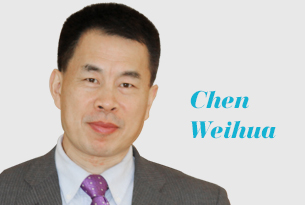
The author is an expert in international studies.



I’ve lived in China for quite a considerable time including my graduate school years, travelled and worked in a few cities and still choose my destination taking into consideration the density of smog or PM2.5 particulate matter in the region.
Copyright 1995 - . All rights reserved. The content (including but not limited to text, photo, multimedia information, etc) published in this site belongs to China Daily Information Co (CDIC). Without written authorization from CDIC, such content shall not be republished or used in any form. Note: Browsers with 1024*768 or higher resolution are suggested for this site.
License for publishing multimedia online 0108263 Registration Number: 130349