Changing the aging global order
Pragmatic leadership based on sustainable use of resources for global prosperity can overcome trust deficit within BRICS
The BRICS group is five years old, and the modest agreement among the five member states to establish a development bank and pool of currency reserves moves it beyond a dialogue forum for cooperative mechanisms and challenges the 60-year hegemony of the undemocratic Bretton Woods. BRICS' next step should be a transition in ideas and principles to share global governance and prosperity in an interdependent world.
BRICS member states account for 20 percent of the world GDP, 42 percent of the global population, 40 percent of foreign reserves, but only 15 percent voting rights in the World Bank and International Monetary Fund. Much of BRICS' collective clout derives from the economic miracle of China, whose economy is a quarter larger than the other four combined. China, however, does not have the monopoly of power enjoyed by the United States at the end of World War II when the latter established the old international order.
China, nevertheless, has to reassure the other four (Brazil, Russia, India and South Africa) of its commitment to a collective approach. And only then will BRICS move beyond a new version of the Non-Aligned Movement to reflect the shift toward a multipolar world.
Coined as an investment destination of a loose grouping of emerging economies, BRICS also responds to an anti-colonial past, common challenges and shared interests, and does not have the same concerns as the advanced economies. The disparity and disparate interests of BRICS member states can be overcome by evolving a common definition of the collective future of developing countries.
A BRICS "Development Bank" would ensure the five countries, and many others, don't have to turn to the West for developmental guidance and, instead, can evolve their own state-driven infrastructure-led frameworks for sustainable development.
After the global financial crisis, the free market ideology, or Washington Consensus, has come into question. So a "BRICS Consensus" has to respond to resource scarcity as the most dominant global trend, making the shift more than just a continuation of the current system and requiring new global rules based both on market and social considerations.
The new framework should look at transformational shifts in growth pathways driven by infrastructure development, with focus on consumption rather than production, and with human welfare measured not just in terms of economic activity but also through broader criteria, including ecosystem services and societal considerations. Consequently, the post-2015 agenda of the UN should focus on resource use rather than on the status of natural resources to develop principles on how standards of living can be raised worldwide within ecological limits, because environmental problems like climate change are examples of market failure.
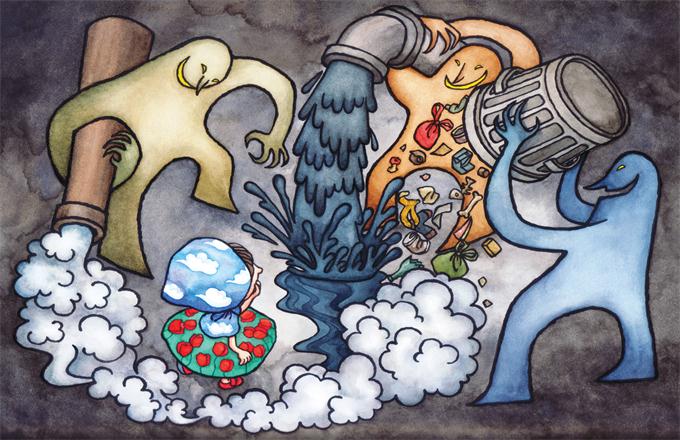
The West's approach of giving the market free reign over economic growth and then creating new markets to clean up the mess so created is the cause of the global ecological crisis. Clearly, BRICS, with abundant natural resources and minerals, needs to evolve a framework that does not depress commodity prices leading to wasteful use of scarce natural resources.
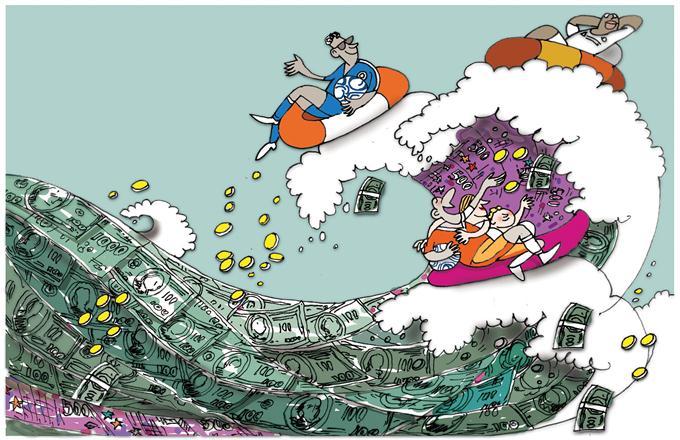
Under the current system, redistribution has been kept out of the UN that focuses on political and human rights, relegating economic and social rights to the non-democratic Bretton Woods, whose governance is based on "one-dollar, one-vote" rather than "one-country, one-vote". The proposed Development Bank is not a "litmus test" for BRICS' coming of age but an effective way of getting the World Bank to take borrowers' interests into account. Similarly, agreements on conducting trade in local currencies (expected to reach $500 billion in 2015), exchange-rate stability and a rating agency will dilute the role of the IMF.
In the area of security, a permanent seat in the UN Security Council is a divisive issue among BRICS member states. Sitting on the high table with the victors of World War II has lost its relevance in a multipolar world, and BRICS is rightly focusing on preventive diplomacy and mediation. For example, moves to extend the collective "responsibility to protect" national populations against genocide to the potential disappearance of small island states and food security in the Sahel should be countered with the longer-term future, not in terms of environmental rights and duties but in terms of giving equal access to the tools of sustainable development. And the focus should be on promoting peace, not on managing conflict.
The success of this rebalancing despite opposition from the US, which created the present international system that plays a critical role in the perpetuation of its leadership, will depend on pragmatism in developing and setting the global agenda. For instance, just as the predominant roles within the multilateral institutions were divided among the G7, BRICS should consider Chinese leadership for the Development Bank, and even internationalizing the renminbi.
The BRICS think tank could be based in India and should aim at charting the course of the UN toward a more equitable and sustainable future. South Africa could be tasked with developing rules for infrastructure development and mining, avoiding a repeat of the scramble that took place in Africa earlier. Brazil could look at food security, ecosystem services and intellectual property rights based on their use.
And Russia is well placed to develop global rules on long-term energy access and a fair pricing mechanism to replace the current system of interference in internal affairs of energy suppliers.
BRICS will continue to rely on a global rule-based system but with new approaches to challenges, favoring resolutions and treaties through the UN Economic and Social Council rather than the Security Council and Bretton Woods Institutions.
But despite common areas of importance, BRICS will find it difficult to change the global system from one that has served the resource and security needs of 20 percent of the world population to one that will share prosperity with all of humanity.
The author is a former adviser to the United Nations Environment Program.
(China Daily 03/30/2013 page5)