Consumers hit as gasoline prices soar worldwide








After years of losses, producers in no rush to come to the rescue
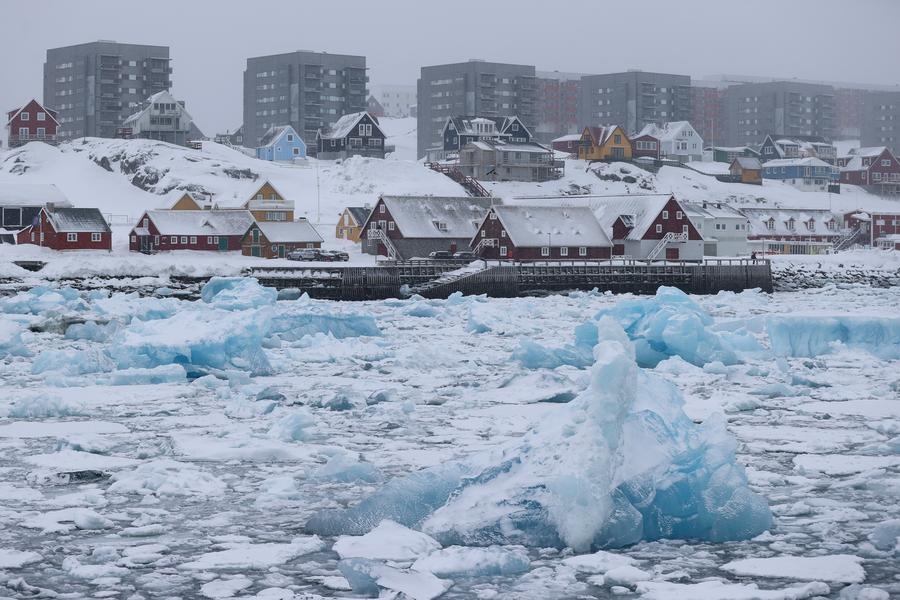
An employee updates fuel price signs at a gasoline station in Nice, France, last month.
With gasoline prices continuing to surge across the world, there appears to be no relief in sight.
Producers that experienced a yearslong crude oil glut do not look to be in a hurry to bail out consumers as demand rises.
Dan Dicker, a longtime energy trader at the New York Mercantile Exchange, media commentator and founder of The Energy Word newsletter, said, "For those (oilproducing) players that are left, like OPEC and Russia, and the majors here in the United States, they've got no appetite to ramp up more because they lost money for six years.
"To see oil prices going above $80 (a barrel) with a supply shortage, and people can freeze all they want, these guys aren't about to dip into much of their spare supply, if there is much. And I'm not a big believer that there is much anyway. They're not about to bail anybody out. They want to make some money because they've lost so much money."
A year ago, the price of US bench mark West Texas Intermediate crude was $39.73 a barrel, according to the US Energy Information Administration. On Tuesday, WTI closed at $84.44 a barrel on the New York Mercantile Exchange.
Dicker said oil producers have been living "hand to mouth since 2014".
He added that what is happening in the oil market is endemic of a supply glut that has "decimated most of the producers, including 50 percent of the shale players here in the United States, and it's also annihilated a lot of the investment that lost a ton of money during those six years in those same producers.
"So now that there's less capability to ramp up production, now that there's a shortage, and there's less appetite from investors to invest in startup drilling for small independents because they've gotten burned so badly … there's really nothing on the horizon except for a serious global shortage, with nobody really coming to the rescue," he said.
Many producers scaled back production because of a drop in demand due to people traveling less during the pandemic.
Patrick de Haan, head of petroleum analysis at GasBuddy, a pricetracking website, said: "Oil companies let millions of people go. Not only did US oil producers slow production down, but OPEC did as well."
OPEC, the Organization of the Petroleum Exporting Countries, has said it will gradually raise production targets by 400,000 barrels a day, but that was mainly to offset 5.8 million barrels per day of existing output cuts. OPEC will next meet on Thursday. Russia is a non-member affiliate of the group, also known as OPEC+.
Some observers said that increase may not be enough to ease price pressure, especially with colder weather on the way.
Kieran Clancy, commodities economist at Capital Economics, told CNBC "We think that their refusal to do so (raise production) means that the market will remain in a deficit in Q4, which suggests that oil prices will stay elevated for at least the remainder of this year."

Presidential power
On Tuesday, White House press secretary Jen Psaki said the US administration would continue to push OPEC to increase production.
"There's a power of the president of the United States engaging on that front," she said.
"That issue has been raised at [national security adviser Jake Sullivan's] level, at a range of levels throughout government, but certainly the supply and OPEC, and putting additional pressure on OPEC is something that our national security team will continue to do."
In a video interview with China Daily on Tuesday, de Haan said the supply imbalance would support the high price of crude indefinitely.
"So, as a result of the increase in demand, because of that, and overall the global economy continues to improve from COVID-19, oil demand is likely to continue going up. And because of OPEC, which met three weeks ago declining to further accelerate restoring oil production, we're kind of in a Catch-22, where demand is rebounding but supply of crude oil is not, and that will likely keep oil prices elevated for some time," he said.
As of Tuesday evening, the average price for a gallon (4.54 liters) of regular gasoline in the US was $3.39, according to the American Automobile Association, or AAA. A year ago, the price was $2.14, according to the EIA.
With US consumer prices up by more than 5 percent, more-expensive gasoline is stretching many consumers' finances.
Andy Gross, an AAA spokesman, told Fox Business, "The key driver for this recent rise in the price of gas is crude oil, which typically accounts for between 50 percent and 60 percent of the price at the pump."
The highest average gasoline price on Tuesday in the US was $4.55 a gallon in California. The lowest, $3.01 a gallon, was in Oklahoma, home to major crude oil storage site Cushing.
Stockpiles at the Cushing facility fell by more than 4 million barrels over the past two weeks, "a stunning reversal from last year when the pandemic prompted a glut of oil so big that traders resorted to storing it in tankers at sea", Bloomberg's website reported.
US President Joe Biden said during a CNN town hall on Oct 21 that there was no immediate solution to the rising price of gasoline.
"My guess is you'll start to see gas prices come down as we get by and going into the winter — I mean, excuse me, into next year, 2022," he said.
"I must tell you, I don't have a near-term answer," Biden said, adding that he could "go in the [Strategic] Petroleum Reserve and take out and probably reduce the price of gas maybe 18 cents or so per gallon, but it's still going to be above 3 bucks."
Natural gas prices in the US — about three times higher than they were last year — have reached a 13-year high, according to the IEA.
USA Today reported that this is in contrast to recent years when booming business in shale oilfields led to plentiful natural gas and lower heating costs.
High demand
Natural gas has become increasingly popular in recent years as nations and utilities have turned to it to replace coal. While it is still a fossil fuel, natural gas burns cleaner than coal. It also can help countries meet commitments to reduce greenhouse gas emissions attributed to climate change.
Demand has been high recently in Europe and Asia, neither of which previously were major natural gas users. Now, their increased demand is straining supply.
De Haan said: "Challenges in feeding power plants enough coal has China buying plenty of natural gas, oil and coal. And in Europe, the natural gas shortage is boosting oil demand as well, simply because so much electricity can be produced from natural gas. And with the natural gas shortage boosting prices, many are switching to crude oil."
Another issue for the natural gas market is that the US does not have enough export facilities, pipelines and storage to quickly increase capacity.
Dicker said: "The trouble is that it's a long-horizon deal, then you have to go to LNG (liquefied natural gas). You'll see that there's very few export terminals and very few players, because unless you have been engaged in building export plants 10 years ago … there's nobody who's going to take advantage of that."
Energy companies have been rethinking whether they want to continue pouring money into fossil fuel production amid a political shift away from carbonemitting energy.
Dicker said the oil giants were politically concerned with producing "dirty crude".
"The weird part about this is most of the big majors have been crying uncle for the last year, saying, 'We're going to become renewable energy companies.' Shell, less than a month ago sold all their shale assets to ConocoPhillips for a song. Conoco's stock is headed back to its 52-week high," he said.
Stephen Myrow, managing partner of Beacon Policy Advisors and a former US Treasury official, told CNBC: "Politically speaking, Democrats need the economy to be going as well as it can. At the same time, (Biden) has prioritized climate change and clean energy, and inevitably there's conflict between those priorities."
De Haan said: "Hostility toward the oil sector … may be limiting the ability for oil producers to raise production. So there are some political factors that weigh in as well. I would say that President Biden's moratorium on new drilling on federal land and the cancellation of the Keystone Pipeline are future issues. They are currently not primary drivers of this."
Three phases of the Keystone Pipeline System running between Canada and the US have been completed. A fourth was canceled this year.
"Really, the bulk of what we're facing is because of COVID keeping Americans home and keeping global demand down at the onset of the pandemic," de Haan said. "But now with vaccinations increasing, there has been a significant amount of pent-up demand."
Meanwhile, a service station on the Big Sur coast in California was charging $7.59 a gallon for regular unleaded gasoline last week and nearly $8.50 for premium, the Los Angeles Times reported.
Signs at the station, located on a remote stretch of picturesque Highway 1 in Monterey County, warn: "Next gas 40 miles (64 kilometers) north, 12 miles south."
In Los Angeles and Orange counties, motorists are paying about $19 more to fill their tanks than they were a year ago.
AAA spokesman Doug Shupe told the Los Angeles Times: "Typically, we start to see prices go down after Labor Day (the first Monday in September) because people have wrapped up their summer road trips. But this year is different … more people want to get out there to share the open roads with friends and family."
Gasoline has always cost more in California than in elsewhere in the US because of higher taxes and environmental fees.
UC Berkeley energy economist Severin Borenstein told the Los Angeles Times that since 1996, cleaner-burning gasoline has cost more, but has led to cleaner skies.
"Forty years ago, you couldn't see the mountains in Los Angeles," he said. "Now you can."
De Haan said: "Early in the pandemic, Americans started working from home, globally as well, where possible telecommuting has risen to reduce oil consumption. And you compare this to, say, the oil embargo in the '70s … where the US started to increase more of its own oil production.
"I don't know that the US will see a meaningful rebound of oil production for quite some time, but you know we've seen nothing like COVID-19 … where essentially, overnight, oil demand plummeted," he said.
"So, it's creating a lot of imbalances; the fact that there was such a rapid decline in the price of and demand for crude oil, and now there's been a rapid return of demand.
"We've never really seen something significantly change consumer behavior so much, and then to see demand come back at such a quick pace has been fairly shocking."
The World Bank has signaled that energy prices likely will continue to rise following a surge of more than 80 percent this year, a trend expected to extend well into the second half of next year.
Inflation fears
These findings were part of the World Bank's Commodity Markets Outlook released on Oct 21. The report said the scenario might trigger a surge in global inflation that could lead to prices of agricultural produce following suit. This could also increase concerns about food security in developing countries.
Reuters quoted Ayhan Kose, chief economist and director of the World Bank's Prospects Group, as saying, "The surge in energy prices poses significant near-term risks to global inflation and, if sustained, could also weigh on growth in energy-importing countries.
"The sharp rebound in commodity prices is turning out to be more pronounced than previously projected. Recent volatility in prices may complicate policy choices as countries recover from last year's global recession."
In Europe, increased demand for energy due to falling temperatures has put pressure on some countries that are poised to potentially break their climate change promises as they consider using coal during the gasoline shortage.
Frans Timmermans, European Commission executive vice-president, told Reuters: "It will be a tragedy if, in this crunch, we start investing again in coal, which is an energy that has no future and is extremely polluting. The smart thing to do during this energy crisis is to reduce as soon as possible your dependency on fossil fuels."
De Haan said: "The US has made it clear that moving forward, they will move to clean energy. Of course, that then will mean that prices may remain elevated for some time, because of the cost of transitioning to cleaner energy, whereas China may have lower costs upfront as it looks, at least for now, to stick with some of these coal power plants that are new.
"But I'm sure China and the US are both aligned in the fact that, you know, in the decades ahead, they will likely move away from fossil fuels and toward cleaner energy."