Le Clezio in translation
By Chitralekha Basu (China Daily)
Updated: 2009-12-08 11:16
 |
Large Medium Small |
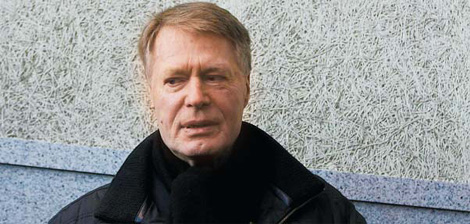
At the first Fu Lei award for translations ceremony held at Peking University on Sunday, the guest of honor, French author and the Nobel Prize in Literature for 2008 laureate JMG Le Clezio, shared an anecdote. It was about an international translation seminar in Oklahoma, where an American-Indian lady put a question to him: "Is the translator putting the translation at the feet of the author?"
Put another way: Was the writer-translator relationship essentially a power equation, in which the translator did the author's bidding? It wasn't a question that could be easily answered or put away.
Le Clezio, whose awesome range of writing - from essays on cinema and expressionist novels on war and ecological imbalance, to literature for children -includes a substantial body of translations, finally gave an answer. "Now I think translation is a respectable work. It's a true sharing and communication between the translator and the writer," he said.
That would, of course, be the situation in an ideal, egalitarian world, but not the sort that Le Clezio often writes about. His fictional worlds are frequently about chaos, anarchy and ennui. His debut novel, Le Procs-Verbal, 1963; (The Interrogation, 1964), which won him the prestigious prix Renaudot, at the tender age of 23, for example, is about a man who does not remember if he has run away from the army or a psychiatric ward. When he tries coping with his state - sometimes identifying with a dog, a rat or a rock - by giving a potentially debilitating speech, he is picked up by the police for an interrogation.
The existentialist crisis phase - his writing has often been compared to Albert Camus - continued with the short story collection La Fivre, 1965; (Fever, 1966) and Le Dluge, 1966; (The Flood, 1967). How physical anguish and suffering can obviate thought and turn a human being's world inside out was the theme of the first. The second was mostly a monologue by a man as he watches the city drowning in incessant rain.

The angst never really left Le Clezio. In the series of novels that followed - Terra Amata (1967); Le Livre des Fuites, 1969; (The Book of Flights, 1971), La guerre, 1970; (War, 1973) and Les Gants, 1973; (The Giants, 1975) - how planet earth is wrung dry by human abuse was the central theme. But the specter of death and devastation, often man-made, still formed the backdrop. It was as if there was no respite from the never-ending killing fields that Bea B, Le Clezio's protagonist in War, travels across, covering 10,000 years of human history.
Finally, in Desert (1980), which won him the French Academy award, Le Clezio had a more defined plotline and a story. The free-spirited Algerian orphan girl Lalla, a descendent of the Tuaregs - driven out of their ancestral lands in the north African desert by the French colonial army - is shown as the living embodiment of romantic beauty, nullifying the damage that European colonialist impulses have done to the land.
His engagement with the history of Mexico led to translations of major works in the American-Indian tradition. And fiction like Ourania (2005), about an imaginary Utopian community on the Pacific coast of Mexico, where formal schooling, organized religion and exchange of money is frowned upon, but children are encouraged to learn life lessons directly from nature.
The material collected from islands of the Indian Ocean - his father was from Mauritius- went into Le Chercheur d'Or, 1985; (The Prospector, 1993), and Raga: Approche du Continent Invisible (2006).
The Holocaust is also a recurrent theme in his recent works. In Estrella Errante (1992), Wandering Star (2004), Esther, a Jewish girl hiding in the south of France with her family around the beginning of World War II, meets Nejma, a Palestinian girl, on the run, since the founding of the state of Israel. In Ritournelle de la Faim, (Same Old Story about Hunger, 2008), Le Clezio follows the journey of 12-year-old Ethel and her unhappy parents through the hardships of the occupation.
"The translator must forget about himself, go deep into the work, and make great efforts in putting the work into a different cultural context," said Le Clezio, at the awards ceremony.
A traveler across continents since early childhood - he has lived in Boston and Bangkok, Nigeria and Nice, Albuquerque and Austin - that's precisely what Le Clezio has been doing. He has been reaching and interpreting cultures that are not necessarily under focus in the literary establishment.