
中國(guó)網(wǎng)站品牌欄目(頻道)
日本原子能規(guī)制委員會(huì)日前將福島核電站核污水泄漏事故級(jí)別從一級(jí)提高至三級(jí),形容其為“嚴(yán)重事件”,并對(duì)東電公司應(yīng)對(duì)這一事故的能力表示擔(dān)心。國(guó)際核輻射事件分級(jí)表根據(jù)泄漏事件嚴(yán)重程度將其分成0至7級(jí),7級(jí)為最嚴(yán)重。本周一,東電公司發(fā)現(xiàn)福島核電站一處高輻射性污水儲(chǔ)罐發(fā)生泄漏,預(yù)計(jì)已有300噸高輻射性污水泄漏。東電公司最近的一份報(bào)告顯示,部分污水已滲入地表,部分或已流入附近的太平洋海域。東電檢測(cè)發(fā)現(xiàn),已泄露污水每小時(shí)的輻射釋放量為100毫希沃特,這意味著,按照國(guó)際安全標(biāo)準(zhǔn),如果一個(gè)人站在那里一小時(shí)內(nèi)所受的輻射量將是核電作業(yè)人員一年內(nèi)所能承受輻射上限的5倍。
2011年地震海嘯使福島核電站三處核反應(yīng)堆冷卻系統(tǒng)失靈,需要將水泵入反應(yīng)堆幫助其冷卻,同時(shí)也需要大量的儲(chǔ)罐來(lái)存儲(chǔ)這些帶有高輻射性的污水。此前也發(fā)生過(guò)核污水泄漏事故,但此次泄漏事件是至今為止最嚴(yán)重的一次。

 |
|
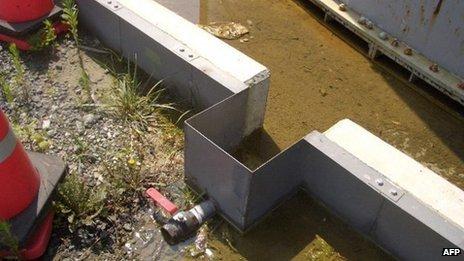
Workers discovered the water was leaking from a tank on Monday |
Japan's nuclear agency has upgraded the severity level of a radioactive water leak at the Fukushima plant from one to three on an international scale.
Highly radioactive water was found to be leaking from a storage tank into the ground at the plant on Monday.
It was first classified as a level one incident on the International Nuclear and Radiological Event Scale (Ines).
But Japan's Nuclear Regulation Authority proposes elevating it to level three on the seven-point scale.
Japanese reports say it is a provisional move that had to be confirmed with the IAEA, the UN's nuclear agency.
This week is the first time that Japan has declared an event on the Ines scale since the 2011 earthquake and tsunami.
The move was announced in a document on the agency's website and was subsequently approved at a weekly meeting of the regulatory body.
The March 2011 tsunami knocked out cooling systems to the reactors at the plant, three of which melted down.
Water is now being pumped in to cool the reactors but this means that a large amount of contaminated water has to be stored on site.
There have been leaks of water in the past but this one is being seen as the most serious to date, because of the volume - 300 tons of radioactive water, according to Tepco - and high levels of radioactivity in the water.
Japan's Nuclear Regulation Authority (NRA) said it feared the disaster was "in some respects" beyond Tepco's ability to cope.
"We should assume that what has happened once could happen again, and prepare for more," watchdog chairman Shunichi Tanaka told a news conference. "We are in a situation where there is no time to waste."
He said Tepco had failed to spot the leak for days - maybe weeks - despite patrols that are supposed to check each storage tank twice every day. Workers had also left a tap open in the safety barrier that surrounds the base of the leaking storage tank.
That had allowed highly toxic water to trickle away into the ground. Latest reports from the plant suggest some of it may already have reached the nearby Pacific Ocean.
A puddle of the contaminated water was emitting 100 millisieverts an hour of radiation, Kyodo news agency said earlier this week.
Teams of workers at the plant have surrounded the leaking tank with sandbags and have been attempting to suck up large puddles of radioactive water.
But it is a difficult and dangerous job. The water is so radioactive that teams must be constantly rotated and it is clear that most of the toxic water has already disappeared into the ground.
Under the Ines, events have seven categories starting with Level 0 ("without safety significance") and Levels 1-3 denoting "incidents" while Levels 4-7 denote "accidents".
The triple meltdown at Fukushima two years ago was classed as a level 7 incident, one of only two nuclear events ever rated that highly - along with the 1986 Chernobyl disaster in the former Soviet Union.
(Source: BBC News)
相關(guān)閱讀
日本數(shù)萬(wàn)民眾集會(huì) 反對(duì)使用核能
日本推出地震預(yù)警服務(wù) 手機(jī)可預(yù)報(bào)地震

(中國(guó)日?qǐng)?bào)網(wǎng)英語(yǔ)點(diǎn)津 實(shí)習(xí)生 馬國(guó)佳,編輯 Helen )
 |
 |
 |
 |
 |
 |

 主站蜘蛛池模板:
精品人妻中文字幕av|
久久综合色一综合色88|
在线免费观看亚洲天堂av|
天天摸夜夜添狠狠添高潮出免费|
国产在线精彩自拍视频|
中文有无人妻VS无码人妻激烈|
国产欧美另类精品久久久|
亚洲高清最新AV网站|
亚洲日本乱码一区二区在线二产线
|
噜噜综合亚洲av中文无码|
久久人妻系列无码一区|
日韩不卡二区三区三区四区|
成人性生交片无码免费看|
老司机精品成人无码AV|
人成午夜免费视频无码|
国产精品亚洲片在线观看麻豆|
国产精品午夜福利精品|
精品一区二区三区不卡|
久久久婷婷综合亚洲av|
亚洲小说乱欧美另类|
久久国产热精品波多野结衣av|
日本在线视频www色影响网站|
精品国产成人午夜福利|
亚洲免费观看一区二区三区|
久久精品夜色国产亚洲av|
免费特黄夫妻生活片|
精品国产乱一区二区三区|
国产又色又爽又黄的视频在线|
国产精品无码a∨麻豆|
顶级少妇做爰视频在线观看|
久久天天躁狠狠躁夜夜躁2012|
国产精品一区二区国产主播|
中文字幕一区二区三区在线不卡|
亚洲欧洲一区二区精品|
国内久久婷婷精品人双人|
自拍偷自拍亚洲精品情侣|
久久国内精品自在自线400部|
国产成人综合亚洲精品国产|
狠狠躁夜夜躁人人爽天天5|
伊人成色综合人夜夜久久|
无码精品人妻一区二区三李一桐|
主站蜘蛛池模板:
精品人妻中文字幕av|
久久综合色一综合色88|
在线免费观看亚洲天堂av|
天天摸夜夜添狠狠添高潮出免费|
国产在线精彩自拍视频|
中文有无人妻VS无码人妻激烈|
国产欧美另类精品久久久|
亚洲高清最新AV网站|
亚洲日本乱码一区二区在线二产线
|
噜噜综合亚洲av中文无码|
久久人妻系列无码一区|
日韩不卡二区三区三区四区|
成人性生交片无码免费看|
老司机精品成人无码AV|
人成午夜免费视频无码|
国产精品亚洲片在线观看麻豆|
国产精品午夜福利精品|
精品一区二区三区不卡|
久久久婷婷综合亚洲av|
亚洲小说乱欧美另类|
久久国产热精品波多野结衣av|
日本在线视频www色影响网站|
精品国产成人午夜福利|
亚洲免费观看一区二区三区|
久久精品夜色国产亚洲av|
免费特黄夫妻生活片|
精品国产乱一区二区三区|
国产又色又爽又黄的视频在线|
国产精品无码a∨麻豆|
顶级少妇做爰视频在线观看|
久久天天躁狠狠躁夜夜躁2012|
国产精品一区二区国产主播|
中文字幕一区二区三区在线不卡|
亚洲欧洲一区二区精品|
国内久久婷婷精品人双人|
自拍偷自拍亚洲精品情侣|
久久国内精品自在自线400部|
国产成人综合亚洲精品国产|
狠狠躁夜夜躁人人爽天天5|
伊人成色综合人夜夜久久|
无码精品人妻一区二区三李一桐|