
中國(guó)網(wǎng)站品牌欄目(頻道)
英國(guó)科學(xué)家約翰?格登和日本科學(xué)家山中伸彌因在細(xì)胞核重新編程研究領(lǐng)域的杰出貢獻(xiàn)獲得2012年諾貝爾生理學(xué)或醫(yī)學(xué)獎(jiǎng),兩人將分享120萬(wàn)美元(約合人民幣757萬(wàn)元)的獎(jiǎng)金。英國(guó)獲獎(jiǎng)科學(xué)教約翰?格登獲獎(jiǎng)后表示,15歲時(shí),他的生物課成績(jī)?cè)?50名同年齡的男生班中排最后一名,在其他科學(xué)類學(xué)科中成績(jī)也都?jí)|底。老師對(duì)他的評(píng)價(jià)是“在大學(xué)搞科學(xué)純粹是浪費(fèi)時(shí)間”。寫有這句評(píng)價(jià)的成績(jī)報(bào)告單被格登裝在相框里擺在書桌上,一直到現(xiàn)在。格登介紹說(shuō),給他評(píng)價(jià)的那位老師原本是博物館的講解員,后來(lái)受雇到學(xué)校給“后進(jìn)生”講課。接到那樣一張成績(jī)報(bào)告單之后,格登放棄之前研習(xí)科學(xué)的打算,專修古典文學(xué);在牛津大學(xué)基督教堂學(xué)院學(xué)習(xí)期間又陰差陽(yáng)錯(cuò)轉(zhuǎn)讀了動(dòng)物學(xué)。在牛津大學(xué)讀研究生時(shí),他發(fā)表了有關(guān)基因?qū)W的一篇突破性研究報(bào)告,首次證明生物體內(nèi)的每個(gè)細(xì)胞都有同樣的基因。這份報(bào)告最初發(fā)表時(shí)飽受爭(zhēng)議,但正是這份報(bào)告帶動(dòng)了后來(lái)韋莫特教授所做的克隆羊多莉、以及山中伸彌以皮膚細(xì)胞制造出干細(xì)胞等研究,堪稱重要先驅(qū)。

 |
|
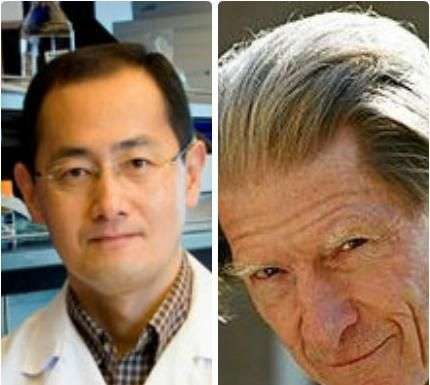
British scientise John Gurdon and Japanese stem cell researcher Shinya Yamanaka have been awarded the Nobel Prize in medicine or physiology. |
A British scientist whose schoolmasters told him he was too stupid to study the subject has been awarded the Nobel Prize in medicine or physiology for his pioneering work on cloning.
At the age of 15, Prof Sir John Gurdon ranked last out of the 250 boys in his Eton year group at biology, and was in the bottom set in every other science subject.
Sixty-four years later he has been recognized as one of the finest minds of his generation after being awarded the £750,000 annual prize, which he shares with Japanese stem cell researcher Shinya Yamanaka.
Speaking after learning of his award in London on Monday, Sir John revealed that his school report still sits above his desk at the Gurdon Institute in Cambridge, which is named in his honor.
While it might be less than complimentary, noting that for him to study science at University would be a "sheer waste of time", Sir John said it is the only item he has ever framed.
The master, a Mr Gaddum, was in fact a museum curator by profession who had been hired to teach the lowest-achieving pupils and was not in fact a particularly effective teacher, he explained.
He said: "The main gist of it was that he had heard Gurdon was interested in doing science and that this was a completely ridiculous idea because there was no hope whatever of my doing science.
"When you have problems like an experiment doesn't work, which often happens, it's nice to remind yourself that perhaps after all you are not so good at this job and the schoolmaster may have been right."
After receiving the report Sir John said he switched his attention to classics and was offered a place to study at Christ Church, Oxford, but was allowed to switch courses and read zoology instead because of a mix-up in the admissions office.
It was at Oxford as a postgraduate student that he published his groundbreaking research on genetics and proved for the first time that every cell in the body contains the same genes.
He did so by taking a cell from an adult frog's intestine, removing its genes and implanting them into an egg cell, which grew into a clone of the adult frog.
The idea was controversial at the time because it contradicted previous studies by much more senior scientists, and it was a decade before the then-graduate student's work became widely accepted.
But it later led directly to the cloning of Dolly the Sheep by Prof Ian Wilmut in 1996, and to the subsequent discovery by Prof Yamanaka that adult cells can be "reprogrammed" into stem cells for use in medicine.
This means that cells from someone's skin can be made into stem cells which in turn can turn into any type of tissue in the body, meaning they can replace diseased or damaged tissue in patients.
Sir John admitted it would have been "particularly nice" if Prof Wilmut had been given a third share of the award, but said he would celebrate nonetheless with a drinks reception at Cambridge last night.
He joined the university in 1971 following spells at the California Institute of Technology and Oxford, and in 1989 was a founding member of the Wellcome/CRC Institute for Cell Biology and Cancer - later renamed the Gurdon Institute - where he still works full-time at the age of 79.
He revealed that he had first heard about his prize when an Italian newspaper telephoned him in his laboratory to ask for his reaction at 7.30am on Monday morning, but dismissed their information as speculation.
An hour later he received a call from the Swedish Academy telling him he had won the prize, but admitted he was initially suspicious that the call was a hoax by a friend or colleague speaking in a Swedish accent.
Sir John professed to be unaware of the cash prize that awaits, but said he would most likely invest it in a fund he has previously set up to support PhD students during their fourth year of study.
He added that he would be back in the lab where at his customary early hour this morning. "It isn’t going to be particularly productive to clear off to some exotic place and I don’t have a yacht,” he explained.
Sir John's award could be followed by another British success if Prof Peter Higgs is given the Nobel Prize for physics after the discovery of a particle matching his 50-year-old theory by Cern this year.
But despite the public clamour for Prof Higgs to win the award after the huge public interest in his work, the fact the Cern results have not yet been verified by independent researchers may prove a stumbling block.
相關(guān)閱讀
奧巴馬領(lǐng)諾貝爾獎(jiǎng) 大談戰(zhàn)爭(zhēng)必要性
(Agencies)

(中國(guó)日?qǐng)?bào)網(wǎng)英語(yǔ)點(diǎn)津 Helen)
 |
 |
 |
 |
 |
 |


 主站蜘蛛池模板:
亚洲激情视频一区二区三区
|
久9视频这里只有精品|
亚洲大尺度视频在线播放|
日本韩国日韩少妇熟女少妇|
国产精品久久久一区二区三区|
久久夜色撩人精品国产av|
中国产无码一区二区三区|
国产美女在线观看大长腿|
日韩中文字幕人妻一区|
成av免费大片黄在线观看|
国产精品午夜福利合集|
小13箩利洗澡无码视频免费网站|
国产精品三级一区二区三区
|
亚洲女同精品一区二区|
蜜臀av一区二区三区日韩|
亚洲日韩AV秘 无码一区二区|
91人妻熟妇在线视频|
国产WW久久久久久久久久|
japanese人妻中文字幕|
国产成人综合欧美精品久久|
亚洲精品精华液|
香蕉EEWW99国产精选免费|
97超碰精品成人国产|
日韩乱码人妻无码中文字幕视频
|
成人免费在线播放av|
a级免费视频|
极品vpswindows少妇|
亚洲国产亚洲综合在线尤物|
婷婷丁香五月激情综合|
欧美另类视频一区二区三区|
免费VA国产高清大片在线|
91久久夜色精品国产网站|
亚洲精品人妻中文字幕|
亚洲一二三四区中文字幕|
午夜在线观看成人av|
狠狠做五月深爱婷婷天天综合|
久久国产成人av蜜臀|
国产偷国产偷亚洲清高动态图|
日韩精品亚洲专区在线播放|
亚洲精品一区二区三区大桥未久|
亚洲国产一区二区av|
主站蜘蛛池模板:
亚洲激情视频一区二区三区
|
久9视频这里只有精品|
亚洲大尺度视频在线播放|
日本韩国日韩少妇熟女少妇|
国产精品久久久一区二区三区|
久久夜色撩人精品国产av|
中国产无码一区二区三区|
国产美女在线观看大长腿|
日韩中文字幕人妻一区|
成av免费大片黄在线观看|
国产精品午夜福利合集|
小13箩利洗澡无码视频免费网站|
国产精品三级一区二区三区
|
亚洲女同精品一区二区|
蜜臀av一区二区三区日韩|
亚洲日韩AV秘 无码一区二区|
91人妻熟妇在线视频|
国产WW久久久久久久久久|
japanese人妻中文字幕|
国产成人综合欧美精品久久|
亚洲精品精华液|
香蕉EEWW99国产精选免费|
97超碰精品成人国产|
日韩乱码人妻无码中文字幕视频
|
成人免费在线播放av|
a级免费视频|
极品vpswindows少妇|
亚洲国产亚洲综合在线尤物|
婷婷丁香五月激情综合|
欧美另类视频一区二区三区|
免费VA国产高清大片在线|
91久久夜色精品国产网站|
亚洲精品人妻中文字幕|
亚洲一二三四区中文字幕|
午夜在线观看成人av|
狠狠做五月深爱婷婷天天综合|
久久国产成人av蜜臀|
国产偷国产偷亚洲清高动态图|
日韩精品亚洲专区在线播放|
亚洲精品一区二区三区大桥未久|
亚洲国产一区二区av|