中國網站品牌欄目(頻道)
 It is hard to understand why people complain of improved living standards. But until one goes through it, one tends to think in hypothetical terms.
In the 1980s, I dreamed of a Chinese metropolis adorned with air-conditioned shopping malls and grand hotels with even grander lobbies. Whenever I walked through a residential district with street peddlers and littered sidewalks, I would say to myself: Someday this will change and it'll be immaculate.
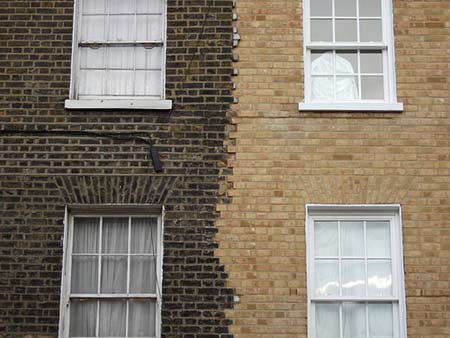
This day is arriving faster than I imagined.
The pace of gentrification is happening so fast all over China, especially in the nation's megacities, that I'm getting pinched, rather than delighted, by it. Certainly, our cities are more photogenic now than a decade or two ago, but at what price are we paying for the improvement?
Merely five years ago, the place where I work was surrounded by countless restaurants. At night in summer, students from a nearby university would show up drinking beer on the sidewalk. It was a community oozing with vitality. I remember taking a new colleague to one of the restaurants; most of the dishes were priced no more than 9 yuan. Now, after several changes of ownership and nonstop renovations to the interior, prices have tripled. The food looks nicer, but is no more delicious. It's not an exaggeration to say the improvement has gone mainly into the facade.
And it is still among the affordable areas for dining out. Where I live, the average price for a restaurant dish is now around 50 yuan, double the pre-Olympic level. Sure, I can choose to eat in, but every time I shop for groceries in the neighborhood supermarket, there is always a rude awakening. One thing I'm sure: whoever keeps track of CPI do not come here.
Still, price hikes for these businesses are somewhat justified because after each increase the venues are crowded as before. Not so for the shopping mall south of the Olympic venues. Panda Island was teeming with shoppers before the Olympics. Then the owners decided to upgrade. They kicked out all the stall operators and did a makeover. But few of the original stalls have moved back due to skyrocketing rent. Neither have shoppers.
Don't blame everything on the greed of a few real estate owners. Local governments are shaping urban China in similar ways, leaving a trail of empty streets that look like movie sets - pretty but soulless.
Case in point: the historical Qianmen Street south of Tian'anmen Square. It has all the trappings of a white elephant. By upgrading to a level unaffordable to old Beijingers, its core clientele, it aims to reap profits with margins so wide the whole Qing army could have marched through.
Leaving aside the issue of antiquity and restoration, a commercial district and its unique culture cannot be radically transformed with a mandate from a government office. Even if you had the best of intentions, it would be like "pulling up a seedling to hasten its growth." It doesn't take just time for buyers and sellers to find each other, it takes magic. Business theories can explain some of the factors, but not all. Once you destroy that special karma for a business hub, you may never be able to recreate it, even if you don't raise prices sky-high.
I'm not saying no razing and rebuilding should be allowed. But the restructuring of a business venue, let alone a whole street or district, should proceed with attention to the interests of the public. If a city has nothing but upscale facilities, how can it satisfy the needs of its middle class, its retirees and its burger flippers and errand runners? They need places to shop as well.
Gentrification in itself is not bad. But it should not run ahead of the vast populace. A crowded shop in a not-so-magnificent environment is better than an empty one glittering with state-of-the-art adornments. Business developers and urban planners should keep in mind that you can erect a building, but you cannot recreate the dynamism.
raymondzhou@chinadaily.com.cn
?相關閱讀:
 |
 |
 |
 |
 |
 |