
中國(guó)網(wǎng)站品牌欄目(頻道)
STEVE EMBER: Welcome to THE MAKING OF A NATION – American history in VOA Special English. I'm Steve Ember
This week in our series, we begin the story of President Lyndon Johnson.
(MUSIC)
WALTER CRONKITE (CBS TV): "From Dallas Texas, the flash, apparently official, President Kennedy died at 1 PM Central Standard Time, two o'clock Eastern Standard Time."
Lyndon Baines Johnson became America's 36th president suddenly.
WALTER CRONKITE: "Vice President Lyndon Johnson has left the hospital in Dallas. Presumably, he will be taking the oath of office shortly, and become the 36th President of the United States."
On November 22nd, 1963, President John Kennedy was murdered.
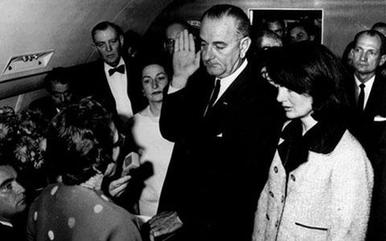
Kennedy and Johnson, his vice president, were in Dallas, Texas. Kennedy was shot as his open car drove through the city. Within a few hours, Johnson was sworn into office. The swearing-in took place on the presidential plane, Air Force One, at Dallas' Love Field.
The plane returned to Andrews Air Force Base near Washington carrying the new president and the body of the former president.
At Andrews, President Johnson read a brief statement. He ended with these words: "I will do my best. That is all I can do. I ask for your help, and God's."
(MUSIC)
Before he was vice president, LBJ had served for many years in the Senate and the House of Representatives. He grew up in small towns in Texas. He finished high school at age 15. He traveled and worked for a few years before he entered Southwest Texas State Teachers College. There he was a student leader and a political activist.
In 1931 a newly elected congressman asked Johnson to work for him as his secretary in Washington. Four years later, President Franklin Roosevelt appointed Johnson as Texas director of Roosevelt's National Youth Administration.
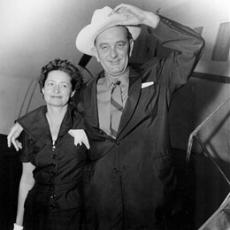
Two years after that, in 1937, Johnson won a special election for a seat in the House of Representatives. He served in the House for 12 years. When the United States entered World War Two, Johnson was the first member of Congress at that time to volunteer for active duty. After the war, he ran for the Senate, where he also served for 12 years.
Johnson loved politics and became an expert in the operations of government. He would need all of that knowledge as president of a nation facing problems near and far.
(SOUND: Vietnam War gunfire)
When Johnson took office, communist forces were fighting South Vietnamese troops supported by the United States. Also there were continuing worries about nuclear war with the Soviet Union. At home, there was racial conflict. Many Americans were out of work, and there was the threat of a railroad strike.
Johnson began his presidency by working hard for legislation that President Kennedy had proposed. Johnson had voted against civil rights legislation when he served in the Senate. But now he urged Congress to support the idea, and Congress agreed.
The 1964 Civil Rights Act barred discrimination against minorities in jobs and in restaurants and other businesses.
LYNDON JOHNSON: "We believe that all men are created equal. Yet many are denied equal treatment. We believe that all men have certain unalienable rights. Yet many Americans do not enjoy those rights. We believe that all men are entitled to the blessings of liberty. Yet millions are being deprived of those blessings -- not because of their own failures -- but because of the color of their skin."
The president said that such a situation could not continue in America. To treat people unfairly because of their race, he said, violated the Constitution and the idea of democracy.
Lyndon Johnson succeeded in getting Congress to pass more civil rights legislation in 1965 and 68.
LYNDON JOHNSON: "Many of the issues of civil rights are very complex and most difficult. But about this there can -- and should be -- no argument. Every American citizen must have an equal right to vote... There is no reason that can excuse the denial of that right. There is no duty which weighs more heavily on us than the duty we have to ensure that right."
Many southern states used so-called literacy tests as a way to deny blacks the right to vote.
LYNDON JOHNSON: "The Negro citizen may go to register only to be told that the day is wrong, or the hour is late, or the official in charge is absent. And if he persists and, if he manages to present himself to the registrar, he may be disqualified because he did not spell out his middle name, or because he abbreviated a word on the application.

And if he manages to fill out an application, he is given a test. The registrar is the sole judge of whether he passes this test. He may be asked to recite the entire Constitution, or explain the most complex provisions of state law.
And even a college degree cannot be used to prove that he can read and write."
The Civil Rights Act of 1965 said states could not prevent citizens from voting just because they could not read very well.
The 1968 law barred discrimination against blacks in housing.
Johnson was from the South. That -- and his ability to persuade people -- helped him get southern conservatives in Congress to support the civil rights legislation.
He also had other ideas for a better America. He called his plan the Great Society. He talked about it in a speech at the University of Michigan:
LYNDON JOHNSON: "The Great Society rests on abundance and liberty for all. It demands an end to poverty and racial injustice, to which we are totally committed in our time. But that is just the beginning. The Great Society is a place where every child can find knowledge to enrich his mind and to enlarge his talents."
Johnson launched the War on Poverty, a series of bills designed to help the poor. But his efforts to pay for social programs and a war overseas led to inflation.
Vietnam was not the only place where Johnson used military force. In 1965 he sent more than 20,000 troops to intervene in the Dominican Republic. He worried that a revolution could lead to a communist takeover of that Caribbean nation.
(MUSIC)
Lyndon Johnson served the last 14 months of President Kennedy's term. Then in 1964 he ran for a full term. The Democratic Party strongly supported him and accepted his choice of Hubert Humphrey for vice president. Humphrey was a liberal senator from the state of Minnesota.
Unlike the Democrats, the Republicans had a difficult time choosing their presidential candidate. Delegates at the party's nominating convention finally chose Barry Goldwater. Goldwater was a strongly conservative senator from Arizona.
BARRY GOLDWATER: "Certainly, simple honesty is not too much to demand of men in government. And let our Republicanism, so focused and so dedicated, not be made fuzzy and futile by unthinking and stupid labels. I would remind you that extremism in the defense of liberty is no vice. And let me remind you also that moderation in the pursuit of justice is no virtue."
The Republican candidate for vice president was William Miller, a congressman from New York State.
Americans voted in November of 1964. Lyndon Johnson won more than 60 percent of the popular vote. Still he had hoped for an even bigger victory. He wanted proof that Americans were voting for him, and not the shadow of John Kennedy.
In his inaugural speech, Johnson said his Great Society would never be finished -- it would keep growing and improving.
LYNDON JOHNSON: "I do not believe that the Great Society is the ordered, changeless and sterile battalion of the ants. It is the excitement of becoming -- always becoming, trying, probing, falling, resting and trying again -- but always trying and always gaining."
In 1965, he won congressional approval of Medicare, a health insurance program for Americans age 65 and older. President Harry Truman had called for such a plan 20 years earlier. Johnson presented Truman and his wife, Bess, with Medicare cards numbers one and two. Under Johnson, Congress also approved Medicaid, a health care program for the poor and disabled.
In 1967, President Johnson appointed the nation's first black justice to the Supreme Court, Thurgood Marshall.
ANTI-WAR DEMONSTRATORS: "Hell no, we won't go!"
Around the country, President Johnson faced growing opposition to the war in Vietnam. More and more American troops were dying.
Lyndon Johnson may have wanted to be remembered as a great president, but the war came to redefine his presidency. That will be our story next week.
(MUSIC)
You can find our series online with transcripts, MP3s, podcasts and pictures at voaspecialenglish.com. You can also follow us on Facebook and Twitter at VOA Learning English. I'm Steve Ember, inviting you to join us again next week for THE MAKING OF A NATION -- American history in VOA Special English.
Edward Kennedy, 1932-2009: the 'Liberal Lion' of the Senate
American history: Roosevelt aims for economic security with 'second new deal'
American history: an angry nation puts its hopes in President Roosevelt
American history: Hoover wins in 1928
(來(lái)源:VOA 編輯:Rosy)
 |
 |
 |
 |
 |
 |

 主站蜘蛛池模板:
日韩幕无线码一区中文|
线观看的国产成人av天堂|
少妇又紧又色又爽又刺激视频|
毛片久久网站小视频|
中文字幕无码av不卡一区|
国外欧美一区另类中文字幕|
国产suv精品一区二区五|
免费夜色污私人影院在线观看|
在线欧美中文字幕农村电影|
国产精品国语对白露脸在线播放|
久久99久久99精品免视看动漫|
97视频精品全国免费观看|
国产成人综合久久二区|
久久国内精品一国内精品|
国内精品久久黄色三级乱|
中文字幕人妻中出制服诱惑
|
亚洲欧洲精品一区二区|
欧美日本激情|
2021国产成人精品久久|
日本高清免费不卡视频|
国产高清亚洲一区亚洲二区|
男女啪啪高潮激烈免费版|
国产片一区二区三区视频|
亚洲午夜理论片在线观看|
国产精品一二二区视在线|
精品无码午夜福利理论片|
国产乱子伦精品免费视频|
亚洲人妻中文字幕一区|
少妇被搞高潮在线免费观看|
午夜福利精品国产二区|
国产成人美女视频网站|
国产日韩综合av在线|
欧美色资源|
亚洲成亚洲成网中文字幕|
少妇潮喷无码白浆水视频|
日韩av毛片福利国产福利|
女人与牲口性恔配视频免费|
国产一区二区av天堂热|
强奷白丝美女在线观看|
国产短视频精品一区二区|
亚洲a人片在线观看网址|
主站蜘蛛池模板:
日韩幕无线码一区中文|
线观看的国产成人av天堂|
少妇又紧又色又爽又刺激视频|
毛片久久网站小视频|
中文字幕无码av不卡一区|
国外欧美一区另类中文字幕|
国产suv精品一区二区五|
免费夜色污私人影院在线观看|
在线欧美中文字幕农村电影|
国产精品国语对白露脸在线播放|
久久99久久99精品免视看动漫|
97视频精品全国免费观看|
国产成人综合久久二区|
久久国内精品一国内精品|
国内精品久久黄色三级乱|
中文字幕人妻中出制服诱惑
|
亚洲欧洲精品一区二区|
欧美日本激情|
2021国产成人精品久久|
日本高清免费不卡视频|
国产高清亚洲一区亚洲二区|
男女啪啪高潮激烈免费版|
国产片一区二区三区视频|
亚洲午夜理论片在线观看|
国产精品一二二区视在线|
精品无码午夜福利理论片|
国产乱子伦精品免费视频|
亚洲人妻中文字幕一区|
少妇被搞高潮在线免费观看|
午夜福利精品国产二区|
国产成人美女视频网站|
国产日韩综合av在线|
欧美色资源|
亚洲成亚洲成网中文字幕|
少妇潮喷无码白浆水视频|
日韩av毛片福利国产福利|
女人与牲口性恔配视频免费|
国产一区二区av天堂热|
强奷白丝美女在线观看|
国产短视频精品一区二区|
亚洲a人片在线观看网址|