
中國網站品牌欄目(頻道)
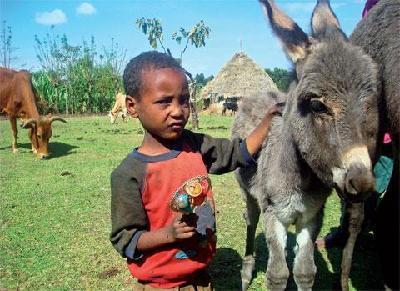
In many parts of the world, people now rely on the Internet, smart phones and Twitter in their daily lives. But in rural Ethiopia, the same can be said for donkeys, horses and mules. A new study looks at the animals' contributions to people's livelihoods.
The study describes equines as a "lifeline" for both rural and urban people of Ethiopia. The Brooke, an international animal welfare organization, focused on the woredas, or small districts, of Lemmo, Meskan and Shashego, located in Southern Nations, and the Nationalities People's Region.
Doing the hard work
Co-author Berhanu Admassu is a senior researcher for Tufts University and veterinary association president in Ethiopia. "There are almost eight million horses and donkeys in Ethiopia. They contribute to the economic development through the transportation system in the rural areas. Their contribution is huge, especially in areas where there's no road and very difficult to transport things to market."
Besides the expected uses of riding and pack services, some rent their animals to the poor. Berhanu says both parties benefit.
"They are also being used around the urban and peri-urban areas as a taxi. We call it 'gharry' in the Ethiopian language, but they are used as a taxi." he said.
Other roles
What's more, they're used in festivals, entertainment and as ceremonial decoration during funeral services. Berhanu also says donkeys have made life a bit easier for rural women.
"Women were supposed to fetch water on their back, but now these donkeys are working for women. They are carrying items to market and from market to home. And even in farms, these donkeys are carrying farm utilities and facilities where the women were supposed to carry this." Berhanu said.
The animals are an integral part of people's lives, not just their jobs.
"Apart from the economic benefit, the social benefit in the area is tremendous." he said.
The cover of the report features a young boy hugging his small donkey.

"That boy usually goes to school. And if this donkey is not working, the boy most probably might not go to school if that donkey is not existing or die or whatever or sick. So the livelihood of that very small boy is really directly linked with that very small donkey. That is just to show how his future is linked with that donkey." he said.
Donkeys, horses and mules are also part of the rural health care system.
Berhanu said, "That is the wonderful thing we found, you know, people are carried by these equine to be transported to hospitals. And we have also seen some animals were transported when they get sick to the veterinary clinics. And these are really wonderful activities we observed."
In rural Ethiopia, it costs about $70 to buy a donkey, around $100 for a horse and $130 for a mule. Feeding an animal can range from $40 to $100 per year. The Brooke report says the net return for animals used for income generation, such as renting, pack use or taxis, was more than $580 annually.

The study says donkeys, mules and horses "play a central role" in the livelihoods of people. It recommends that donors help provide improved management and feeding practices and the delivery of accessible, sustainable and affordable equine health services.
Berhanu co-wrote the report with Yoseph Shiferaw. He says the international community should become more aware of the role these animals play.
equine: a horse or other member of the horse family 馬
Climate change threatens world food production
Ethiopian Jews push Israel on immigration right
Children, women in 28 countries in desperate need of aid
California congressman returns to Ethiopian roots
(來源:VOA 編輯:崔旭燕)
 |
 |
 |
 |
 |
 |


 主站蜘蛛池模板:
蜜芽久久人人超碰爱香蕉|
最好好看的中文字幕|
免费A级毛片无码A∨蜜芽试看|
亚洲中文字幕乱码一区|
视频一区二区三区四区不卡|
国内精品人妻一区二区三区|
大地资源免费视频观看|
2021AV在线无码最新|
撕开奶罩揉吮奶头高潮AV|
孕妇特级毛片ww无码内射|
少妇厨房愉情理伦片BD在线观看|
国产无遮挡免费真人视频在线观看|
久久精品国产亚洲精品|
久久无码喷吹高潮播放不卡|
2021国产成人精品久久|
小13箩利洗澡无码视频免费网站|
免费看的日韩精品黄色片|
亚洲夂夂婷婷色拍ww47|
亚洲国产欧美在线人成AAAA|
国产成人精品亚洲精品日日|
日韩欧国产精品一区综合无码
|
国产亚洲精品久久久久婷婷图片|
亚洲性线免费观看视频成熟|
成人深夜福利av在线|
国产精品自拍午夜福利|
AVtt手机版天堂网国产|
亚洲精品一区二区二三区|
亚洲欧美日韩尤物AⅤ一区|
免费大黄网站在线观看|
精品国产美女福到在线不卡|
小12箩利洗澡无码视频网站|
粉嫩一区二区三区精品视频|
国产精品自在自线免费观看|
视频精品亚洲一区二区|
国产黄色一区二区三区四区|
h无码精品3d动漫在线观看|
欧美乱妇狂野欧美在线视频|
av毛片|
99re免费视频|
在线免费播放亚洲自拍网|
国产亚洲精品VA片在线播放
|
主站蜘蛛池模板:
蜜芽久久人人超碰爱香蕉|
最好好看的中文字幕|
免费A级毛片无码A∨蜜芽试看|
亚洲中文字幕乱码一区|
视频一区二区三区四区不卡|
国内精品人妻一区二区三区|
大地资源免费视频观看|
2021AV在线无码最新|
撕开奶罩揉吮奶头高潮AV|
孕妇特级毛片ww无码内射|
少妇厨房愉情理伦片BD在线观看|
国产无遮挡免费真人视频在线观看|
久久精品国产亚洲精品|
久久无码喷吹高潮播放不卡|
2021国产成人精品久久|
小13箩利洗澡无码视频免费网站|
免费看的日韩精品黄色片|
亚洲夂夂婷婷色拍ww47|
亚洲国产欧美在线人成AAAA|
国产成人精品亚洲精品日日|
日韩欧国产精品一区综合无码
|
国产亚洲精品久久久久婷婷图片|
亚洲性线免费观看视频成熟|
成人深夜福利av在线|
国产精品自拍午夜福利|
AVtt手机版天堂网国产|
亚洲精品一区二区二三区|
亚洲欧美日韩尤物AⅤ一区|
免费大黄网站在线观看|
精品国产美女福到在线不卡|
小12箩利洗澡无码视频网站|
粉嫩一区二区三区精品视频|
国产精品自在自线免费观看|
视频精品亚洲一区二区|
国产黄色一区二区三区四区|
h无码精品3d动漫在线观看|
欧美乱妇狂野欧美在线视频|
av毛片|
99re免费视频|
在线免费播放亚洲自拍网|
国产亚洲精品VA片在线播放
|