
 |
 |

當(dāng)前位置: Language Tips> VOA聽力> Normal Speed News VOA常速
A new study in the Journal Nature provides compelling evidence that carbon dioxide was a major driver of climate change at the end of the last Ice Age. That correlation supports the prevailing scientific view that that CO2 is also playing a major role in today's warming global climate.
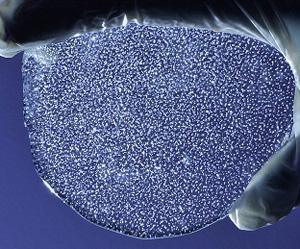
The new study analyzed ice and sediment samples from dozens of locations on every continent to reconstruct variations in global temperature between 20,000 and 10,000 years ago - the end of the last Ice Age.
Harvard scientist Jeremy Shakun, the study's lead author, says climate-change skeptics have long pointed to evidence from Antarctic ice cores that rising levels of C02 in the atmosphere lagged behind the warming climate that marked the end of the Ice Age.
But Shakun says the new study dismantles that argument by correlating CO2 levels and temperatures all across the prehistoric planet.
"So you put these two points together, the correlation of global temperature and CO2, the fact that it lags behind the CO2, and it really leaves you thinking that CO2 was the big driver of global warming at the end of the ice age."
Other events also helped push the planet out of the ice age. A rare wobble in the Earth's axis resulted in more sunlight hitting the northern hemisphere. Wind shifted, ice sheets melted, dumping enormous amounts of water into the North Atlantic.
Shakun says the water flow disrupted global ocean circulation.
"And this cause caused a seesawing of heat between the hemispheres. It turns out Antarctica happens to be on the leading end of the warm end of this seesaw, so it warmed first before the CO2 started to rise," he says. "The key thing to realize with this is that this wasn't associated with the change in global temperature. The south was warming first, but it was at the expense of cooling in the north or just shifting heat around the planet."
Eventually, CO2 released from the deep southern ocean accelerated the warming of the Earth's atmosphere. Shakun says that ancient story emerges from air bubbles in ice cores, tiny shells in ocean sediment and even pollen at many data points across time.
"We tried to get records that really are pretty highly resolved so it would have a data point on the order of every several decades out to maybe a few centuries. We didn't pull in any records that only had data point entry of every thousand or two thousand years. That would just be too fuzzy to really answer what we wanted to answer."
During the end of the last ice age, as the climate warmed, CO2 levels in the atmosphere rose from about 180 parts per million to about 260.
Shakun says today the CO2 concentration has risen to 392 parts per million - and it's still climbing.
"We've gone up in the last hundred years about 100 ppm (parts per million). That's on the same order as the amount we rose at the end of the ice age, which I think puts this in perspective. Clearly it's not a small amount. Obviously rising CO2 at the end of the ice age had a huge effect on global climate, and so we raised it as much in the last century."
Shakun doesn't see this trend ending any time soon unless industrial CO2 emissions are reduced at their source: the burning of fossil fuels in power plants, cars and buildings. He says while the research strengthens the link between C02 and the Ice ages, he believes it also reinforces the importance of addressing C02-driven climate change in our own time.
sediment: material that settles to the bottom of a liquid; lees 沉淀物
Developing countries see sharp rise in meat consumption
Climate change blamed for dying African trees
Glimpsing the future on climate change
(來源:VOA 編輯:旭燕)

添加Chinadaily_Mobile
你想看的我們這兒都有!

中國首份雙語手機(jī)報(bào)
學(xué)英語看資訊一個(gè)都不能少!
關(guān)注和訂閱

關(guān)于我們 | 聯(lián)系方式 | 招聘信息

電話:8610-84883645
傳真:8610-84883500
Email: languagetips@chinadaily.com.cn