'Parallel trade agenda to benefit both countries'


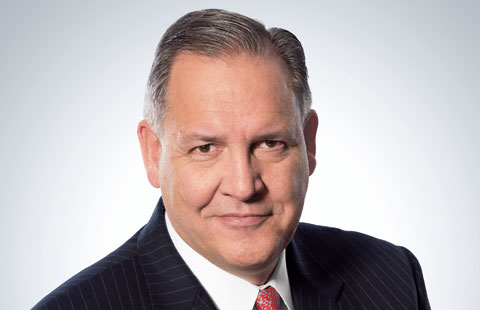
A parallel trade agenda between China and the United States is essential for the expansion of global trade liberalization, according to the former World Bank president Robert Zoellick.
Speaking to China Daily in Shanghai, Zoellick said it is important for the world's largest two economies to push ahead with service sector reforms via the World Trade Organization, even if the US expands its involvement in the Trans-Pacific Partnership Agreement, a free trade pact effective within an exclusive bloc of nations.
The creation of the TPP has been controversial because negotiations surrounding its expansion have largely been taking place in secret.
Originally launched in March 2010 by Singapore, New Zealand, Chile and Brunei, its newer members are Australia, Peru, Vietnam, Malaysia, Mexico, Canada, Japan, and the US.
"There are worries that the TPP is being seen as containment of China. But I say that's illogical because China is so integrated into East Asia," he said.
Chinese manufacturers say they are facing strong headwinds from the enlarged TPP and the agreement may trigger a flow of industrial investment to member states where labor costs are lower than in China.
But according to Zoellick, Washington should supplement any other regional trade deals it has with strengthened trade ties with Beijing, with both sides pushing to remove trade barriers via a multilateral approach, such as that promoted by the WTO.
"I always believe that you can combine bilateral, regional and global efforts.
"Even if the US makes regional movements, it still depends on the willingness of major developing countries like China to take concrete steps at the global level," he said.
It is vital to move beyond talk and take action, he added, forecasting the TPP is still a long way from being finalized and attending parties aren't anywhere close to making tough decisions on deals.
Jeffrey Bader, senior director for East Asian affairs on the National Security Council during US President Barack Obama's first term, has said the TPP would "give some momentum to free trade" in light of the deadlocked Doha Round of talks.
Addressing the American Chamber of Commerce in Shanghai earlier this month, he said: "The idea is that the (Obama) administration has been trying to ink a high-standard trade agreement, and it is open to China and anyone else who is willing to negotiate."
Zoellick said their trade relationship reflects the larger state of Sino-US relations, and that the two parties should avoid tensions in the region that are overwhelming the potential for global cooperation.
"One of the unusual qualities about Sino-US relations is that there exists a number of common security interests globally, such as energy and anti-terrorism, while the tensions are more regional and focused on East Asian conflicts," he added.
How global cooperation helps infuse a spirit of reconciliation in the region shows the wisdom in handling a bilateral relationship that is "too big to fail", Zoellick said.
"In practical terms, if China and the US work together on a problem, it creates a basis for bringing other countries along, which is quite influential. If they don't, you are going to have a hard time making progress on this cooperation."
The same logic applies to appeasing frictions over Chinese investment to the US, a situation that is crying out for a bilateral investment treaty, Zoellick said.
He believes that many sectors in the US should open up to Chinese investors who are keen to build market opportunities, branding skills and technological upgrades, as they continue to "go global".
Rather than observing day-to-day economic indicators, Zoellick said China's sustainable growth relies on structural issues.
Don't miss