How the world sees its second-largest economy is a view that has to change for the better
For China to be perceived as just "the world's factory" is neither sustainable nor desirable in the long run. As we move into 2013, it's a good time to think about how "Brand China" is perceived and the prospect of repositioning it.
Just like company brands, a country's brand image is very important. The brand image is the beliefs that a person has regarding a particular brand. There can be positive or negative brand images, depending on things like experience, general rumors and word-of-mouth. The brand image can be a major influence on whether someone will buy or not.
Brand image can also be connected with positioning, which is the way people perceive the brand in relation to competitors. In a competitive world, a strategy of repositioning may be needed to change how a brand is perceived. But can this be done with a brand that is a country?
Thousands of years ago, porcelain was invented in China and years of development resulted in high-quality, artistic and sophisticatedly made porcelain ware. So good were the pieces of porcelain that in the West the terms "china" and "fine china" were used to describe the cups, saucers and plates. Then, China was synonymous with quality.
The image of Brand China has changed over the years, and it can change again. Has this occurred recently with any other country?
Ireland has undergone a number of changes in recent times. When I was young, Ireland was a place with people who were generally perceived as being drink and music-loving simpletons and they were the butt of many jokes.
However, the Irish government, determined to change this unflattering image, improved education and skills standards, and encouraged research and entrepreneurship in industry. The economy boomed, and even though the country has since suffered a severe economic downturn, there are many highly respected and skilled Irish people who are managers, bankers, IT specialists, teachers and so forth.
It is not easy for a country to reposition itself, and even when it does, there are factors out of its control that can change its image again.
How can Brand China reposition itself in the global marketplace? There have already been some positive steps, such as the growing interest in innovation in China, the Shanghai World Expo, and the "Made With China" campaign that was shown internationally.
Launched in 2009, the campaign first saw advertisements promoting the line: "Made in China, Made with the World". Sponsored by four Chinese industry groups, the campaign has been seen by millions of people on televisions around the world.
There has also been a lot of talk that the 21st century is the Asian century, and many Western researchers and organizations have analyzed Chinese companies and focused on China as the country of greatest interest.
A major report by the advertising agency J Walter Thompson in August, "Remaking 'Made in China'", looked at China's leading brands, including Lenovo, Li-Ning, Haier and Huawei, and the factors that hinder global success.
The JWT study uses both qualitative and quantitative research methodologies, including a survey of more than 1,000 people in the US and the UK. The main negative perceptions relating to China were that it mass-produced cheap and low-quality products, as well as having questionable environmental and labor practices.
Of course, while these perceptions are not true for many Chinese companies, they are perceptions that must be dealt with.
Importantly, what was positive was the perception of "Chinese-ness" and Chinese people in general, including celebrities, culture, heritage and food.
These are strong positive perceptions to build on and indicate ways in which China can try to reposition itself. But while some work has begun on changing views, more needs to be done.
Prospective areas that need to be promoted for Brand China are:
History and heritage: China has a long, rich history. The JWT report found that Westerners generally have a positive attitude to Chinese people and the country's heritage. However, there are many aspects that would not be generally known, and there should be more opportunities to share this history with the world.
Education: It is vitally important that a good grounding in the "basics" of reading, writing and mathematics be used to develop skills, motivate learning, and encourage imagination. Education is the greatest gift for a child, but it will be a bigger gift to society.
Arts: As people look at a country, they are not just interested in its GDP and trade surplus. The arts, including fine arts, literature, music, theater and film, provide a deeper understanding of its people and culture. Success in the arts shows a well-rounded society.
Research: As the world is observing China as an emerging economy, there is a lot more to research and disseminate about the nation. Undertaking, presenting and publishing research findings will keep China in people's thoughts.
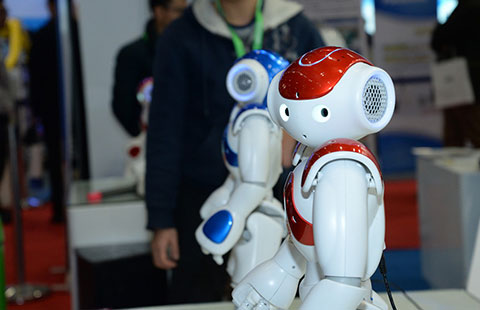
Technical innovation: Being innovative in a marketplace gives a significant advantage in that it can provide market leadership and gain respect from customers. Not only should Chinese companies be encouraged to innovate, but also promote the fact that they are being innovative.
Sustainable and environmentally friendly development: This is an extremely important issue around the world, especially for the younger generation. If China's industry can show it is moving toward being less polluting and more sustainable and environmentally efficient, many would take notice. It will help change the perception of China as a big polluter, and help reposition the country's image in people's minds.
This is not an exhaustive list, but hopefully, with improvement in these areas, Brand China can win more of the hearts, as well as the minds, of global customers.
While research and technical innovation need to be supported, Chinese companies should not be expected to do this in isolation. Chinese brands should be encouraged to undertake partnerships, alliances or joint ventures with companies outside China. By developing connections, Chinese companies can be given access to research, manufacturing, distribution and marketing expertise that would not be available otherwise. This would also reinforce the message of "Made with China".
Even though the number 13 is perceived as being unlucky by many in the West, 2013 may be a lucky year for Brand China. Repositioning of its brand image in the world market has already begun. It is not an easy or quick goal to achieve, but with encouragement and promotion, there is a better chance it will succeed.
The author is a professor at the Business School of the University of Technology, Sydney. The views do not necessarily reflect those of China Daily.


Copyright 1995 - . All rights reserved. The content (including but not limited to text, photo, multimedia information, etc) published in this site belongs to China Daily Information Co (CDIC). Without written authorization from CDIC, such content shall not be republished or used in any form. Note: Browsers with 1024*768 or higher resolution are suggested for this site.
License for publishing multimedia online 0108263 Registration Number: 130349