QFII quotas resume as capital flows out
Updated: 2011-12-30 09:19
By Gao Changxin (China Daily)
|
|||||||||


|
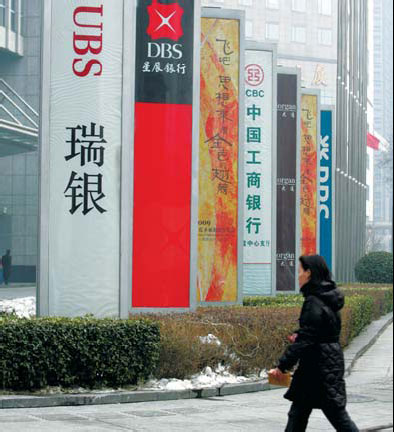
As of Dec 21, new QFII quotas granted this year stood at $1.92 billion, about 40 percent less than in 2010, data from the State Administration of Foreign Exchange show.?[Photo / China Daily] |
SHANGHAI - China resumed granting new quotas in October for foreign asset managers to invest in its capital markets after a five-month hiatus, according to an announcement on Thursday by the State Administration of Foreign Exchange (SAFE).
The announcement came on the heels of figures indicating that capital abruptly flowed overseas during the fourth quarter.
SAFE said that $950 million in new quotas under the QFII program were granted from Oct 19 to Dec 21. Approvals had been suspended since May.
"Approval of new QFII quotas temporarily stopped because the surplus in international payments surged earlier this year. That put pressure on inflation and (pushed) the yuan to appreciate," said Huang Wujun, an analyst with CCID Consulting in Beijing.
QFII grants "resumed after capital abruptly began to flow out of the country in October and the pressure on inflation and the yuan eased", Huang said.
As of Dec 21, new QFII quotas granted this year stood at $1.92 billion, about 40 percent less than in 2010 and the lowest since 2007, according to SAFE data. The approval freeze came after the capital-account surplus doubled in the first half to $183.9 billion, as capital inflows, including some that analysts believe represented speculative capital, accelerated. As of the third quarter, the surplus was $229.8 billion.
An international payments surplus puts pressure on inflation and the yuan to appreciate. The surplus forces the People's Bank of China (PBOC), the central bank, to buy dollars and other foreign currencies that flow in and issue yuan instead, since the Chinese currency is not freely convertible.
But the trend broke suddenly in October after global economic uncertainties led many foreign investors to pull funds out of emerging markets, including China. Investors shifted money into dollar-denominated assets, weakening the yuan against the dollar in the onshore market.
Yuan positions at financial institutions accumulated from foreign-exchange purchases declined by 27.9 billion yuan in November to 25.46 trillion yuan, PBOC data show.
The figure dropped a combined 52.8 billion yuan in November and October, the first back-to-back drop in more than decade.
Following these outflows, the yuan touched the bottom of its daily trading range of 0.5 percent on 12 out of the 20 trading days this month.
Inflation also eased. The consumer price index, a main gauge of inflation, dropped sharply in November to a 14-month low of 4.2 percent, from 5.5 percent in October, after hitting a 37-month high of 6.5 percent in July.
"Capital outflow from China has just started and it's likely to continue into early next year," Ren Xianfang, a Beijing-based economist with IHS Global Insight Ltd, told Bloomberg News on Dec 20.
"The global economy will experience its most difficult time this quarter and the next, and the next few months will likely be the most volatile time for the global financial markets."
The new head of the China Securities Regulatory Commission (CSRC), Guo Shuqing, said earlier this month that his agency would speed up QFII approvals.
Under the QFII program, the CSRC, which is the nation's top securities regulator, gives foreign investors licenses.
SAFE, which manages the nation's foreign exchange reserves, allocates investment quotas to licensed investors.
Tian Yuan, a Shanghai-based economist with Bank of America Merrill Lynch, forecast that QFII quotas to be approved in 2012 would exceed those of this year.
"The trend is that the QFII scheme will get bigger and bigger," she said.