Comments
  Print
Print  Mail
Mail  Large Medium Small
|
 Farmers picking tea leaves in Dongling village, Liuzhou city, in the Guangxi Zhuang autonomous region.[Photo / China Daily]
|
Auction power
While finding someone willing to pay up to four times the price for a block of tea may be difficult, one auction house in Africa has answered the call of tea aficionados from across the globe.
The Mombasa Tea Auction house is one of the most famous in the world, selling teas from across the continent to buyers in the US, Europe and Asia, supplying to big names such as Lipton in a traditional live auction format.
Facing the opposite problem as China — Kenya is the third-largest producer of tea globally, with very little demand domestically — the auction house is now revamping the process to allow international bidders the chance to take part in an e-auction.
The plan is designed to expand the reach of the world's largest tea auction house, matching distributors with buyers at a price both can agree on.
While Western consumers may be perceived as having a less-sophisticated view of tea drinking, the US and Europe are mass consumers — with US citizens alone sipping more than 79 billion servings in 2012, according to statistics from the Tea Association of the USA.
They help fuel an international tea market worth more than $30 billion a year worldwide.
But unlike in China, where tea is the center of many social functions, from gatherings with friends to traditional marriage ceremonies, Americans and Europeans often view it as a cheaper, easy alternative to coffee.
More than 50 percent of the $10 billion annual tea sales in the US last year were ready-to-drink beverages. The pre-prepared bottled tea drinks selling for $1 to $2 a bottle in US grocery stores accounted for $4.8 billion in sales, according to numbers from the Tea Association of the USA.
It was the flourishing success of on-the-go drinks in the US that pushed drinks giant the Coca-Cola to phase out an agreement with Nestle's Nestea last year, instead refocusing efforts to capitalize on the trend in Europe, where traditional teabags still dominate the market.
One report, by research company MarketsandMarkets, estimates that by 2017, ready-to-drink tea and coffee sales will make up a $125 billion global industry.
Market dynamics
But while ready-to-drink sales may be on a quick rise, something has been lost in the bustling consumption, says tea enthusiast Par Carlson.
"We need to learn the slow process of drinking tea. In Europe it is mostly coffee and quick consumption," he says.
One of just a handful of non-Chinese attendees at the China Tea Expo, the 49-year-old Swede stands surveying a row of sweet-smelling black teas from Fujian province, occasionally picking up a handful to take in the aroma. Approached by a salesperson, he eyes the price tag before waving his hand, dismissing any thoughts of a potential sale.
"It's hard to put a price range on what I would pay, but this is too much," he says, refocusing his attention on a bushel of Pu'er.
Visiting extended family in Beijing, Carlson is one of a small percentage of Europeans who take a more in-depth view on drinking tea. He says in Sweden his local teashop sells 100 grams of Chinese Pu'er tea for a quarter of the price.
The reason for such a price gap, says David Duckler, president and founder of US-based Verdant Tea, is because the cost of famous brands and teas grown in recognized regions is driven up by huge domestic demand.
Dispelling the notion that Chinese tea is too expensive, the 26-year-old American's Minnesota-based teahouse sells a variety of high-quality teas, sourced directly from farmers for less than $5 a cup — the equivalent of an average coffee at Starbucks.
"Whenever possible, we try to source from regions or farmers who are doing high-quality work but are not yet famous," he says.
"This allows us to present the best value to American customers by providing high-quality tea at more affordable prices and not affected by the high domestic demand."
Establishing contact with farming families while working as a Fulbright Foundation scholar to examine tea in China in more depth, Duckler says the reason for the lackluster interest in fine teas is simply because of a scarcity of information.
"The Western market is full of young professionals excited to spend money on Scotch whisky, wine and coffee. Tea companies in America have simply never given Americans a reason to spend more than what tea bags cost at the grocery store," he says.
"When an American customer spends money on coffee or Scotch, they expect to know when and where it was produced, how much was produced and whether flavor, texture and aftertaste make it worth the money.
"Tea sellers in America usually focus on health benefits, but not much is said about taste. Even less is said about the origins of the tea."
Starting Verdant as an online distributor, Duckler eventually opened a small tearoom to attract customers who wouldn't otherwise seek out his products.
His tearoom, complete with carved wooden tables sporting hidden drains, seems more at home in a city such as Shanghai or Guangzhou than in the cold northern state of Minnesota.
But it is transplanting that piece of Chinese culture in America that captured his interest while living in China that pushed Duckler and his wife to create Verdant.
Preparing tea in the gongfucha fashion and holding tea tasting daily, Verdant has become a cultural beacon in the local community.
"Our strategy is to make sure that the Chinese tea ceremony is approachable," he says.
"By showing people how easy and fun tea can be instead of making it seem strange and foreign, we are helping Americans embrace this important piece of Chinese culture and connect with farmers and growing regions."
While Verdant may be gaining the attention of locals, supply of his 25 teas is seasonal and the quantity is limited, so expansion will be slow, he says.
 Buick Riviera concept car at 2013 Auto Guangzhou
 FAW-VW all-new Golf at Guangzhou auto show
 VW donates more than 5k child safety seats
 Honda models at 2013 Guangzhou auto show
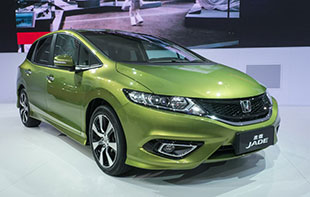 Honda Jade at the 2013 Guangzhou auto show
 Toyota's new Reiz debuts at 2013 Auto Guangzhou
 Jimmy Lin Zhiying, models at Toyota pavilion
 Volvo all-new S60L world premiere at Guangzhou auto show

Copyright 1995 - . All rights reserved. The content (including but not limited to text, photo, multimedia information, etc) published in this site belongs to China Daily Information Co (CDIC). Without written authorization from CDIC, such content shall not be republished or used in any form. Note: Browsers with 1024*768 or higher resolution are suggested for this site.
License for publishing multimedia online 0108263 Registration Number: 20100000002731