BIZCHINA> Review & Analysis

|
BIZCHINA> Review & Analysis
|
|
Related
More efforts needed to raise stocks
By Wang Lan (China Daily)
Updated: 2008-07-14 14:48
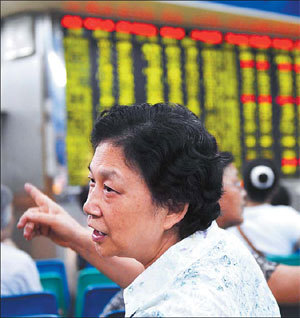
The Chinese stock market is in the doldrums. Having tumbled 56 percent in 9 months since October, it's fast losing its primary function as a source of funds to finance the growth of the corporate sector. At a time of credit tightening to combat inflation, this impotence of the stock market has become all the more unpalatable. A combination of factors, both domestic and foreign, have depressed share prices and the daily average turnover in the stock market. The benchmark Shanghai Composite Index had recently sunk to the 2,600 level, down from the peak of 6,214 last October. The average daily turnover on the Shanghai Stock Exchange in May retreated to 98.6 billion yuan ($14.44 billion) from 212.5 billion yuan in May 2007. Such is the condition of the market that any mention of a new share issue by listed companies to raise additional capital is not only jeered by investors but, more seriously, causes sharp plunges in the index. Several major companies including Ping An of China have hastily withdrawn their plans to raise money when investors voted against such moves with a deluge of sell orders. The problem has not escaped the government. Shang Fulin, chairman of market watchdog China Securities Regulatory Commission, has reportedly said "total efforts" must be made to preserve the stability of the capital market. The People's Daily recently published an article recommending 10 government measures to revive the stock market. This included exercising stricter standards to regulate non-tradable share conversions, exerting further controls on large-scale new share issues, establish a timetable for the launch of index futures to stabilize prices, encourage stock repurchase by listed companies, especially by large State-owned enterprises, and setting up a special government fund to help shore up share prices. The publication of this commentary in the official paper has been widely seen as an indication that the authorities are gearing up for direct intervention to stabilize the stock market. Economists and stock analysts say there are numerous fiscal, monetary and administrative tools available to the government to revive market confidence. "The securities regulator should make it a priority to revive the market's basic function as a source of finance for companies," says Zhang Xiaojun, an analyst at CITIC China Securities. "The government has demonstrated in the past that it has the will to intervene when needed." On April 20, the government announced stricter restrictions over the conversion of non-tradable shares to tradable ones to ease investor concerns about a possible influx of new scripts dragging down share prices. Three days later, the stamp duty for stock trading was cut to 0.1 percent from 0.3 percent. The government also asked some fund management companies to cooperate by refraining from dumping their holdings. These moves had sharp but short-lived impacts on the market as investors continued to be troubled by escalating oil prices, a depreciating US dollar and the specter of a global economic slump. Investor confidence has also been low as a result of the government's credit tightening policy to fight inflation. The sluggish stock market plus the continuous credit tightening have forced companies to search for new ways, such as issuing corporate bonds, to find funds to fuel growth. However, bond trading with inadequate liquidity as well as the insufficient development of the rating system has impeded companies funding from this market. Funding woes With a number of big-caps dropping below their IPO (initial public offering) prices, many companies are concerned about the waning function of the capital market as a source of funding. Starting from China Pacific Insurance Co in late March, several big-caps including PetroChina, China Coal Energy, China Shipping Container Lines Co, China Railway Construction Co, China Construction Bank and other blue chips plunged below their IPO prices in the first six months of 2008. What's more, share prices of some listed companies have fallen from 30 to as much as 200 percent shortly after making new issues. Latest figures show there are 114 companies whose current share prices have dropped below the issue price of their new shares. "Sharp price drops always followed new share issues, which has almost become the rule over the past year," says Mao Nan, an analyst at Orient Securities in Shanghai. (For more biz stories, please visit Industries)
|
主站蜘蛛池模板: 把女人弄爽大黄A大片片| 高清欧美精品一区二区三区| 国产精品一区二区三区污| 欧美做受视频播放| 亚洲中少妇久久中文字幕| 亚洲综合色婷婷中文字幕| 精品人妻伦一二二区久久| 久久精品国产91精品亚洲| 四虎国产精品永久入口| 成人3D动漫一区二区三区| 最新亚洲精品国偷自产在线| 成A人片亚洲日本久久| 亚洲中文字幕无码av| 久久精品人人做人人爽电影蜜月| 精品 无码 国产观看| 久久精品熟妇丰满人妻久久 | 无码免费大香伊蕉在人线国产| 小嫩批日出水无码视频免费| 少妇人妻偷人精品视蜜桃| 熟妇人妻av无码一区二区三区| 久久久久女教师免费一区| 元码人妻精品一区二区三区9| 国产精品色哟哟在线观看| 亚洲午夜无码久久久久蜜臀AV| 欧洲无码一区二区三区在线观看| 浮力影院欧美三级日本三级| 香蕉久久久久久久av网站| 巨胸美乳无码人妻视频漫画| 中文字幕精品亚洲无线码二区| 高清无码18| 四虎永久精品在线视频| 日本伊人色综合网| 亚洲伊人情人综合网站| 亚洲精中文字幕二区三区| 99久久免费只有精品国产| 被绑在坐桩机上抹春药| 天堂va蜜桃一区二区三区| 精品国产中文字幕懂色| 精品无码国产污污污免费| 天堂视频一区二区免费在线观看| 日韩一区二区三区av在线|