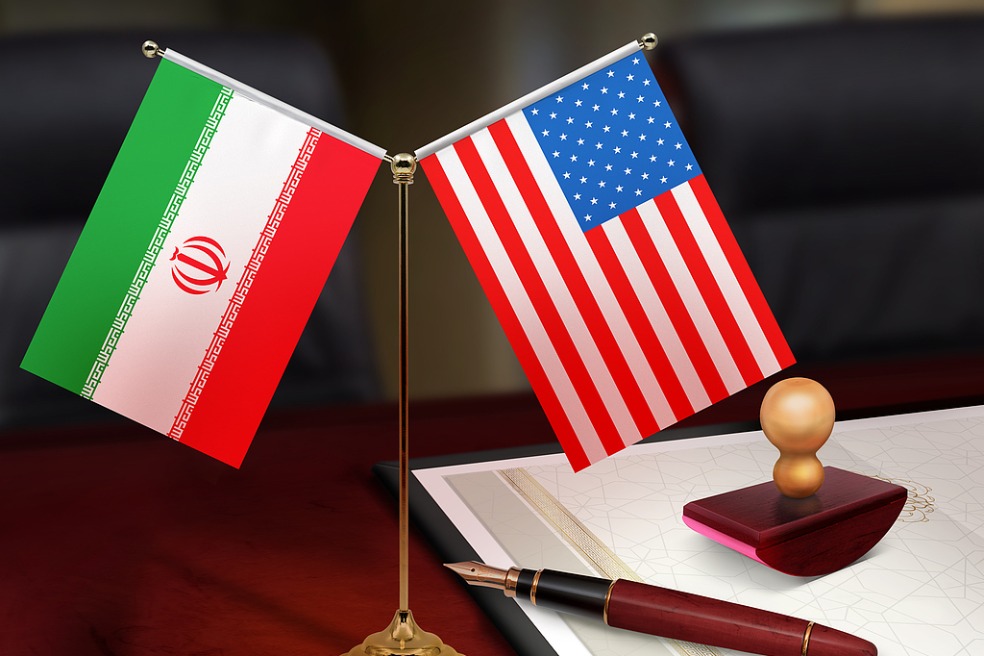
Tehran and Washington confirm dialogue







PARIS/WASHINGTON — Iran's top security official said on Saturday that progress had been made toward negotiations with the United States, even as the Islamic republic's army chief warned Washington against launching military strikes.
"Contrary to the hype of the contrived media war, structural arrangements for negotiations are progressing," said Ali Larijani, head of Iran's Supreme National Security Council.
The US administration confirmed the two sides were talking, while keeping the threat of an attack in the foreground.
Asked by reporters aboard Air Force One whether he had made a final decision on Iran, US President Donald Trump said on Saturday, "Certainly, I can't tell you that, but we do have very big, powerful ships heading in that direction."
He said Iran should negotiate a "satisfactory" deal to prevent the Middle Eastern country from getting any nuclear weapons but said: "I don't know that they will. But they are talking to us. Seriously talking to us."
The arrival of the US flotilla has raised fears of a direct confrontation with Iran, which has warned it would respond with missile strikes on US bases, ships and allies — notably Israel — in the event of an attack.
"The Americans should know that if they start a war, this time it will be a regional war," Iran's Supreme Leader Ali Khamenei said, telling Iranians they "should not be scared" of the US rhetoric.
Iran would not start a war and does not seek to attack any country, "but Iranian people will deliver a hard punch to those seeking to attack and harass them", Khamenei said.
Trump has said he believes Iran will make a deal over its nuclear and missile programs rather than face US military action.
Tehran has said it is ready for nuclear talks if its missiles and defense capabilities are not on the agenda.
Iranian army chief Amir Hatami has warned the US and Israel against any attack, saying his forces were "at full defensive and military readiness".
"If the enemy makes a mistake, without a doubt it will endanger its own security, the security of the region, and the security of the Zionist regime," Hatami said, official news agency IRNA reported.
Iran's nuclear technology and expertise "cannot be eliminated", he added.
In interest of neither
Iranian President Masoud Pezeshkian said on Saturday that a broader conflict would hurt both Iran and the US.
"The Islamic Republic of Iran has never sought, and in no way seeks, war and it is firmly convinced that a war would be in the interest of neither Iran, nor the United States, nor the region," he said in a call with Egyptian counterpart Abdel Fattah El-Sisi.
Later on Saturday, Trump confirmed that there was a dialogue between Washington and Tehran.
"(Iran is) talking to us, and we'll see if we can do something, otherwise we'll see what happens... we have a big fleet heading out there," he told Fox News. "They are negotiating."
On Friday, Pezeshkian said Tehran has consistently pursued engagement and dialogue to resolve disputes and is not seeking war. He emphasized Iran's "dignity-based diplomacy", engagement within the framework of international law, mutual respect and refraining from threats or coercion.
The US has said a deal with Iran must include a ban on uranium enrichment, the removal of already-enriched uranium, a cap on long-range missiles, and a rollback of support for regional proxies — conditions that Tehran has rejected.
Agencies - Xinhua