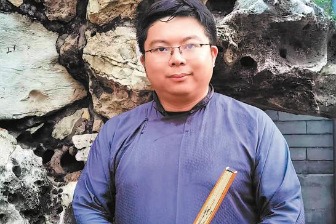
Livestreaming hosts focus on grassroots fairs, local livelihoods







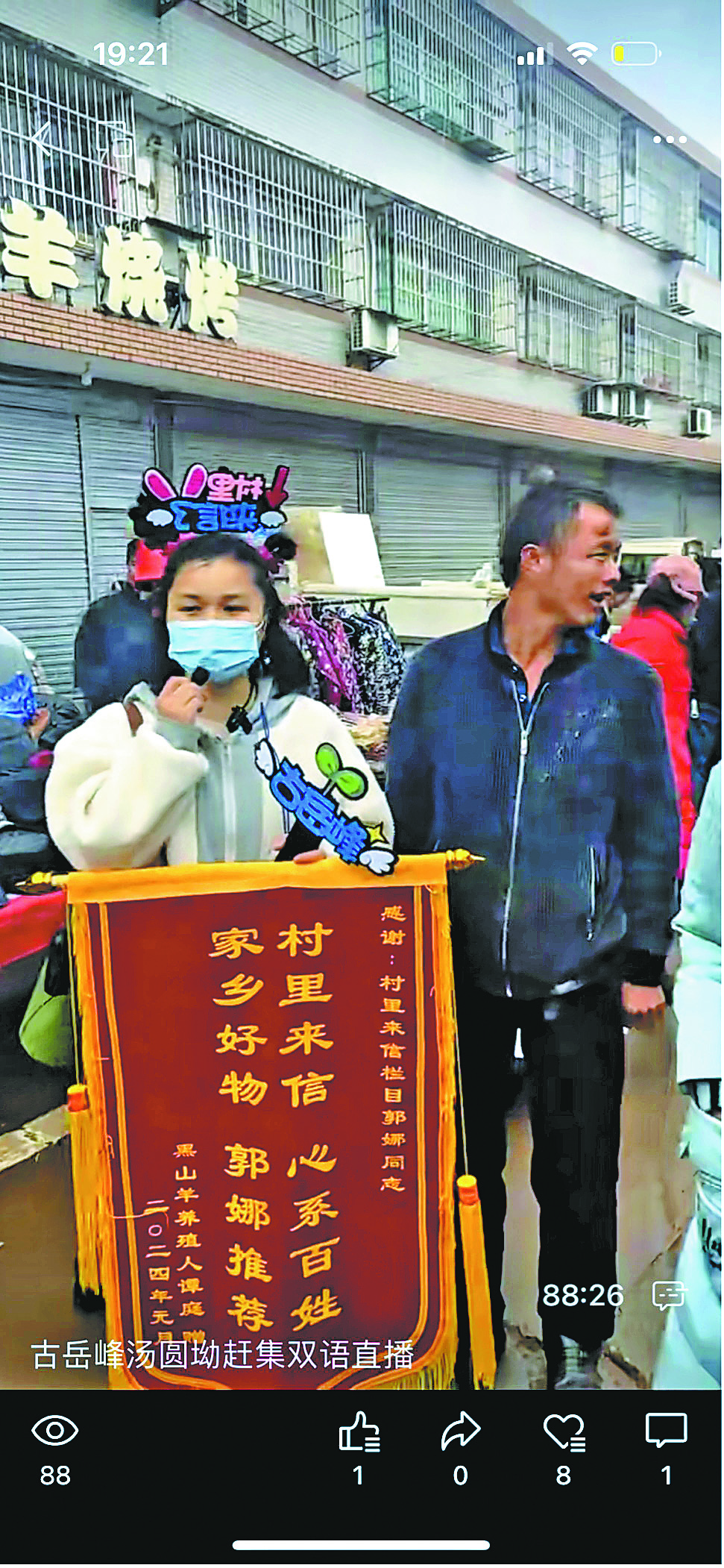
In the predawn chill, Guo Na lugs three smartphones to a rural market near her hometown of Lukou district in Zhuzhou, Hunan province. She sets up her gear, one for Douyin, one for WeChat Channels, and a third for close-ups, ready to broadcast the bustle of the rural market.
For two years, Guo, 37, has spent her weekends livestreaming rural markets under the account "Village Letters".
"I grew up here, and it breaks my heart to see farmers setting up stalls at 3 am just to get a good spot," she said.
"I want to use my phone to draw attention to their hard work, to let city people feel the vibrancy of rural life, and to help sell their produce."
Across China, a growing number of young livestreamers like Guo are turning their lenses to rural markets, once seen as fading relics of the past.
In the Ningxia Hui autonomous region, Hu Jiayin, a livestreamer and international communication reporter, uses English to broadcast these rural fairs to a global audience.
"Market-gathering is uniquely Chinese. It is lively, authentic and full of human warmth," she said." Using English to show this creates a fascinating contrast, making it a great way to tell China's stories to the world."
Their broadcasts blend spontaneity and purpose. Hu plans themes for each video but embraces live unpredictability, interviewing passersby to capture real reactions.
Meanwhile, Guo, who switches between Hunan dialect and Mandarin, focuses on intimate conversations with vendors. She asks about their produce, how to cook it, and the stories behind their stalls.
Guo's Douyin and WeChat Channels accounts each have 28,000 followers. Over 70 percent are in Hunan and the others live in other provinces including Guangdong, Jiangxi and Hubei.
"Dialect builds trust," she said."People open up, and viewers feel like they're right there, chatting with neighbors."
The impact is tangible. Guo has helped sell over 100,000 yuan ($14,390) worth of agricultural products by acting as an agent, while Hu's streams have boosted visitor numbers, especially among young people curious about rural life.
"Young viewers ask about parking, prices, and how far the market is," Hu said. "Many comment that they want to visit on weekends because they crave the authenticity supermarkets can't offer."
Markets are becoming more standardized, with safer layouts replacing makeshift roadside fairs. Yet the core charm remains.
"Supermarkets are about efficiency, and markets are about connection," Guo said. "Where else can you chat with the person who grew your vegetables, or watch an opera performance while shopping?"
For these creators, livestreaming is not just a hobby, but a long-term commitment. Hu aims to showcase a vibrant, lived-in Ningxia to global audiences. Meanwhile, Guo sees her work as "valuable documentation" that will stand the test of time.
"I don't make fast-food content," Guo said. "I want to record these moments so people can look back and remember what rural life was like."
With the approach of Spring Festival, the peak season for rural markets, the livestreamers' plans have been made.
Hu said she plans to film a video in English highlighting Ningxia's fairs, while Guo said she intends to collaborate with restaurant owners to bulk-buy local produce.
"These markets aren't just places to shop," Guo said. "They're places where tradition meets technology, and where ordinary people's stories shine. That's why we keep coming back, and why viewers keep watching."
Contact the writers at zhaoruixue@chinadaily.com.cn

- Livestreaming hosts focus on grassroots fairs, local livelihoods
- Top Chinese mainland, Hong Kong finance education institutions ink partnership to deepen ties
- Lantern Festival lights bring the Dunhuang grottoes to life
- China's 2026 Spring Festival travel rush to begin
- Reopening the doorway to a Shanghai cultural touchstone
- Shanghai Science and Technology Museum to reopen soon