Chinese scientists reveal key mechanisms in early human embryonic development







BEIJING -- After years of dedicated research, a team of Chinese scientists has unveiled critical mechanisms governing early human embryonic development, offering novel theories and potential therapeutic strategies for the prevention of birth defects and other development-related disorders.
For these groundbreaking findings, the team was honored by the Chinese Academy of Sciences (CAS) on Wednesday with the 2025 Outstanding Science and Technology Achievement Prize.
Human embryonic development is a complex process that transforms a single fertilized cell into a fully formed individual. The placenta serves as the nurturing "soil" that protects and sustains the developing embryo. However, the principles governing early human embryonic development had remained largely unclear, while the process through which the human placenta supports embryonic development was also previously not well understood.
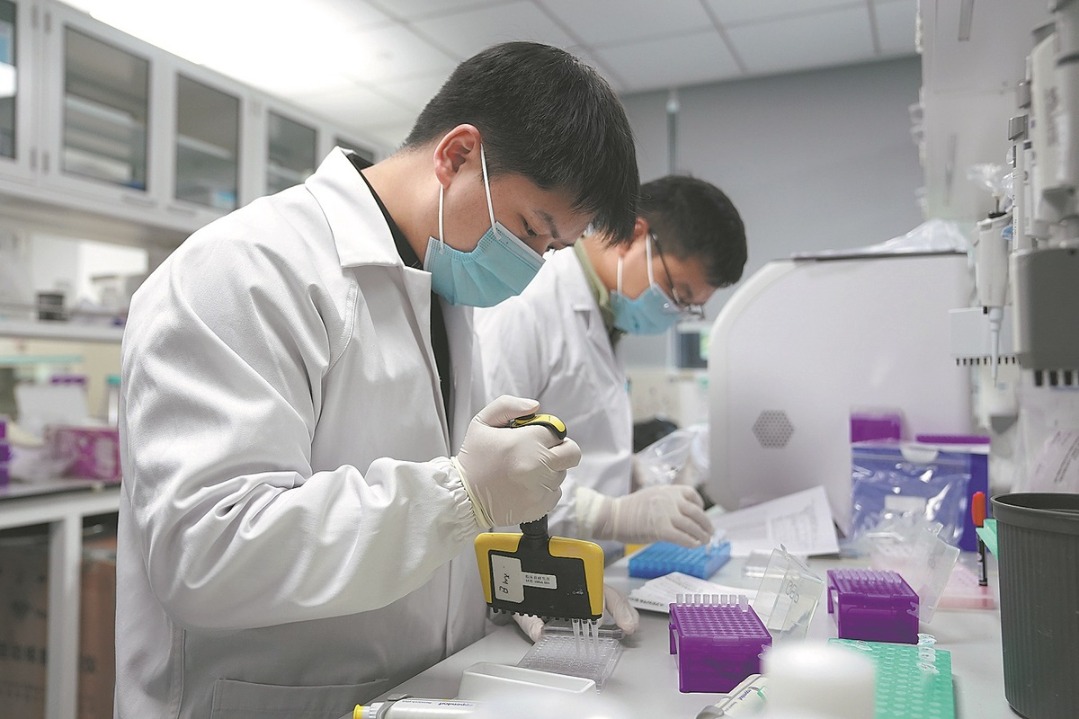
A research team from the Institute of Zoology (IOZ) of the CAS has systematically deciphered the developmental patterns of normal human embryos via 27 years of studies. Building upon this foundation, the team accurately simulated the embryonic development process in vitro, establishing disease models and drug-screening platforms for birth defects or recurrent pregnancy failure.
Wang Hongmei, deputy director of the IOZ, explained that during days 14 to 28 of human embryonic development, the embryo undergoes gastrulation. This is a key developmental event that shapes the earliest steps of organ formation. This critical stage is also the origin of many developmental disorders. However, due to the extreme difficulty in obtaining natural human embryos and ethical limitation for in vitro culture, experimental models have been lacking, leaving knowledge of this phase of human embryonic development long shrouded in a "black box."
Primates share remarkable genetic conservation with humans, alongside close similarities in anatomy and physiology, particularly in the structure and function of the reproductive and nervous systems. Using the cynomolgus macaque as a model, the team successfully obtained monkey embryos spanning from the early to the late stages of this "black box" period, enabling in-depth investigation of critical developmental events at each stage.
Leveraging insights from early monkey embryonic development, the team further broke through technical barriers to acquire precious human embryos from the "black box" stage. By employing spatial transcriptomics and artificial intelligence systems, they captured the developmental features of human embryos, for the first time achieving a precise spatiotemporal mapping of genes expressed across individual cells in early human embryos. This led to the establishment of a three-dimensional digital model of early human embryonic development.
Furthermore, the team investigated mouse, macaque and human placentas as comparative systems, utilizing lineage tracing technologies and multiple cellular and molecular biology technologies to elucidate key events and mechanisms throughout the entire process of placental development and how the placenta coordinated with multiple maternal organs to support embryo development.
Due to the scarcity of samples and ethical constraints, large-scale disease-related research on natural human embryos has long remained unfeasible. Therefore, the team constructed an in vitro simulation system for human embryonic development, utilizing primate embryos and stem cell-based embryo models.
Wang noted that recurrent implantation failure (RIF) affects approximately 15 percent of couples undergoing assisted reproductive therapy. Its pathogenesis is complex and effective treatments remain elusive.
The team successfully simulated the human embryo implantation process in vitro, reproducing the implantation failure phenotype observed in RIF patients. Using this model for drug screening, they identified a set of candidate drugs that significantly improved embryo attachment efficiency in different RIF patients, thereby offering a new approach for personalized drug screening and intervention for RIF patients in the future.





- Chinese scientists reveal key mechanisms in early human embryonic development
- International students commit to strengthening ties between China and their home countries
- Xi meets British PM in Beijing
- China expects 9.5b passenger trips in upcoming travel rush
- China spends big on urban renewal in 2025
- Mount Qomolangma scenic area closes due to heavy snowfall