Consensus, commitment, collaboration








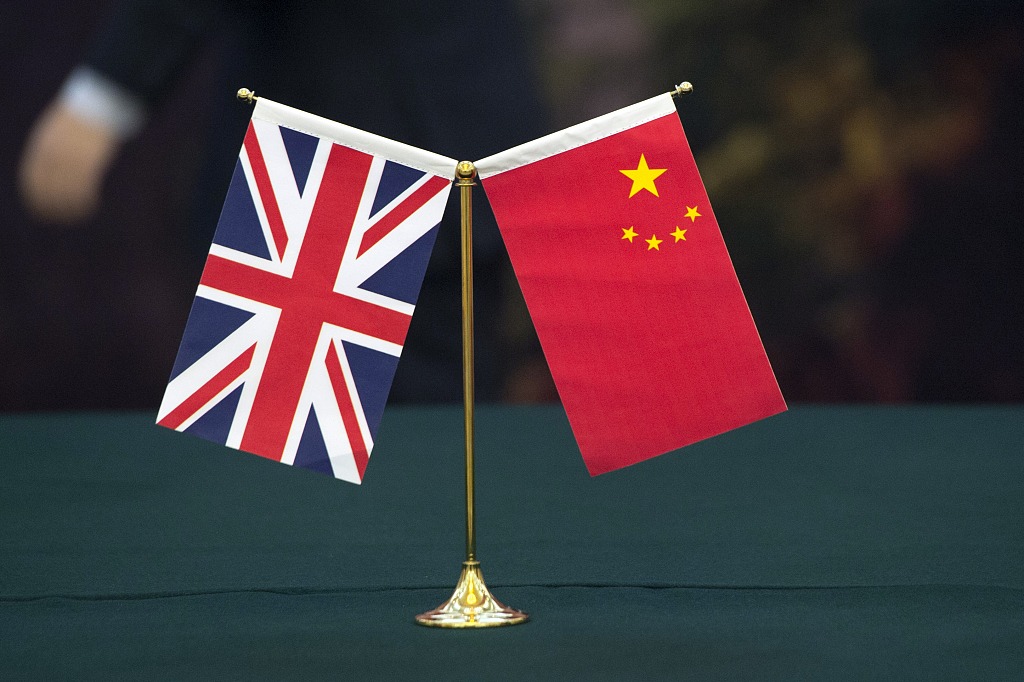
The climate committees of the United Kingdom and China should work together to promote comprehensive cooperation on climate action
The continued need for a robust and collaborative global climate policy, driven by the best available science and the best available practice, is essential.
The theme of the 30th United Nations Climate Change Conference (COP30) in Belém, Brazil, in November 2025 was "implementation" — taking action on the legally binding commitments countries agreed to under the UN Framework Convention on Climate Change (UNFCCC), as set out in the Paris Agreement and elaborated in subsequent COP meetings.
Thanks to the combined efforts of many parties, COP30 yielded the Global Mutir?o agreement and the launch of various other important initiatives.
COP30 continued the global momentum on addressing climate change and promoting low-carbon development that has been building since the signing of the Paris Agreement at COP21 in 2015, with progress on some key aspects, including the Global Goal on Adaptation and the Just Transition Work Program. But despite the progress, it is clear that further work is needed to strengthen confidence, deepen mutual trust and lead global climate governance in the right direction, through multilevel international cooperation.
Fully implementing the Paris Agreement requires not only implementing the consensus reached by all parties, but also learning from the successful experiences of others, maintaining positive incentives for action amid uncertainties and actively steering global climate efforts under the UNFCCC in the right direction.
In addition to upholding multilateralism, this means supporting multilateral processes by strengthening bilateral cooperation. In this respect, China and the United Kingdom have already made important progress. In a complex international environment, further strengthening the bilateral cooperation between the UK and China, based on the scientific consensus on climate change, and commitment to taking effective action to advance the green transition, is crucial to rebuilding confidence and improving mutual trust to achieve the ambitious goals of the Paris Agreement.
The UK and China are standing strong in providing global certainty. In the past 18 months alone, the UK closed its last coal-fired power plant, submitted an ambitious Nationally Determined Contribution to the Paris Agreement and proposed its seventh five-year carbon budget under its landmark Climate Change Act 2008.
China has built the world's largest and most complete clean energy industrial system, and it is committed to a comprehensive green transformation for economic and social development. It has proposed a package of plans under its NDC that combines ambitious goals and pragmatic actions, including the reduction of economy-wide net greenhouse gas emissions by 2035. All these play a positive role in steering the global response to climate change and the advancement of global green development.
Looking ahead to COP31 and beyond, recognizing the opportunities and challenges, the following are recommended for countries to accelerate global climate action.
First, enhancing political will, increasing confidence in addressing climate change and advancing the green transformation and development. There must be a shared commitment to strengthening communication, increasing trust and clarifying doubts. National governments must take action to ensure that NDC commitments are implemented, and promote the reform of global climate governance after 2030. It is essential to build mutual trust and jointly find win-win solutions that are in line with global climate goals that meet the needs and conditions of all countries.
Second, deepening international cooperation in the field of climate change. Global challenges cannot be overcome by the unilateral efforts of any one country. All stakeholders must be mobilized to carry out multilevel pragmatic cooperation based on rules, science and innovative practices to promote the green transformation process in a fair and just manner. The respective climate committees of China and the UK are committed to playing their due roles by sharing modeling assumptions and building out their joint understanding of the green transition.
Third, continuing comprehensive and pragmatic cooperation between China and the UK. As both countries accelerate the deployment of renewable energy, and pursue the energy transition, China and the UK face common challenges, such as building a new power system fit for the specific characteristics of renewable energy. They should carry out multilevel exchanges and dialogues, taking into account each other's concerns, to identify points of consensus, expand areas of cooperation and improve each other's energy security and transition security. The climate committees of China and the UK are cooperating to enhance climate adaptation and risk response capabilities and the co-governance of nature and climate. China and the UK can work together to leverage their respective strengths to pursue climate cooperation with third countries, providing more effective and systematic solutions to advance the energy transition and achieve a nature-positive economic transformation that leaves no country behind.
Considering the above recommendations, China and the UK should emphasize dedication to continued cooperation that facilitates robust climate policy, informed by the best scientific, technological and governance advice. While there are challenges ahead, the opportunities of the transition are many. The two sides will continue to accelerate their climate action and work together to encourage others to do the same.
Nigel Topping is the chair of the Climate Change Committee of the United Kingdom. Wang Yi is the vice-chair of China's National Expert Committee on Climate Change. The authors contributed this article to China Watch, a think tank powered by China Daily.
The views do not necessarily reflect those of China Daily.
Contact the editor at editor@chinawatch.cn.