A stabilizing force in the global supply chain







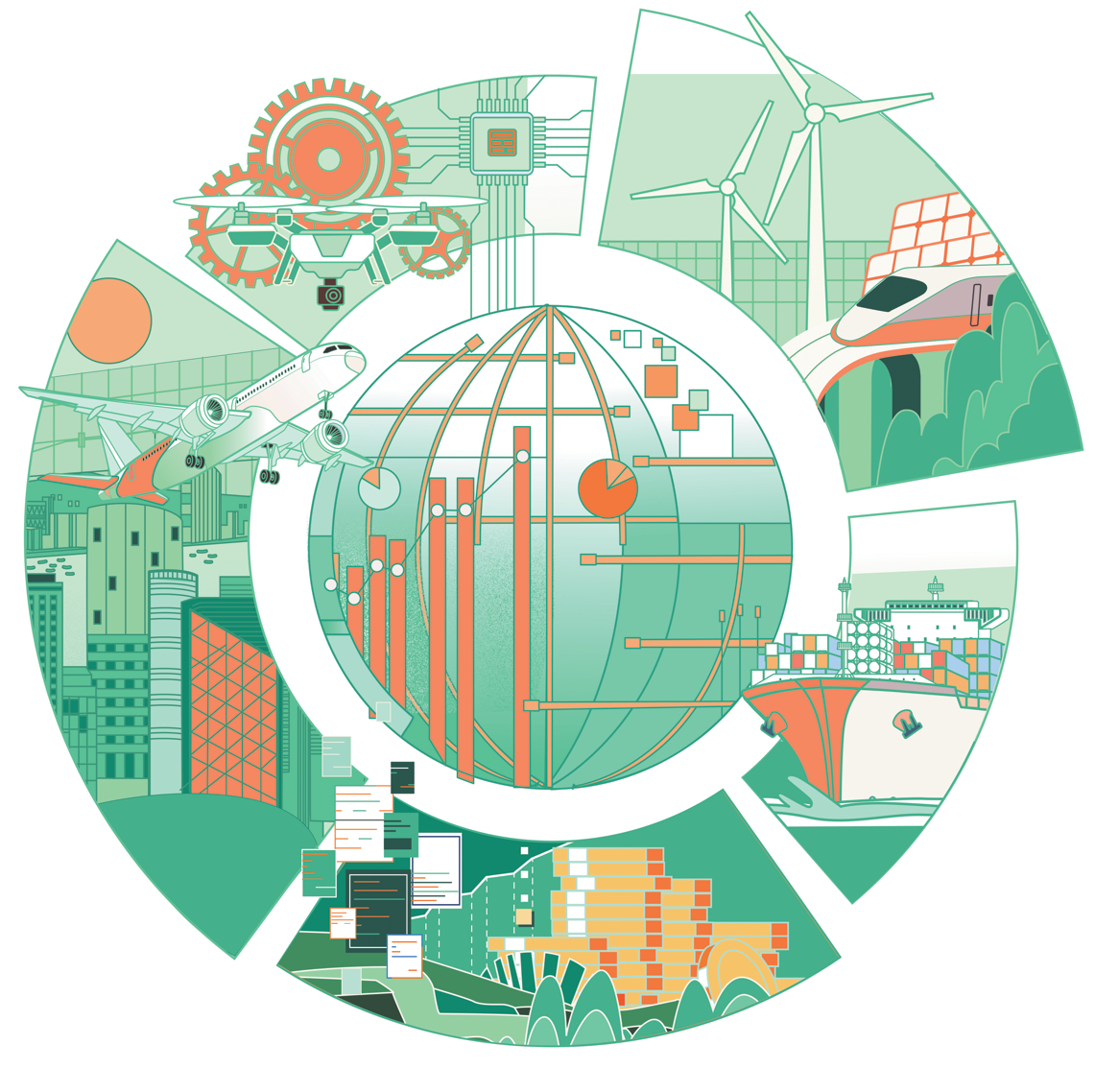
Global supply chains are under unprecedented stress. From raw materials to finished products, every link — from production to transportation and distribution — is facing disruption. Geopolitical tensions, especially the US-China "decoupling" in technology and trade and the Fourth Industrial Revolution, have reshaped supply chains into a complex arena where efficiency alone no longer dictates outcomes. Today, supply chains are as much about sustainability, public health and industrial security as they are about cost.
Policy choices in some countries are accelerating this transformation. Where economic logic once drove global integration, considerations of national security and values now shape decisions, prompting localization, regionalization, and friend-shoring. For developing economies, this shift presents three major challenges.
First, reshoring by developed nations may reduce opportunities for participating in global value chains and risk marginalizing certain industries. Second, decreased import demand, especially for labor-intensive goods, threatens traditional comparative advantages. Third, the rise of automation and intelligent manufacturing in developed countries is eroding labor-cost advantages, making industrial repatriation economically viable rather than merely politically motivated. The global industrial map is being redrawn, and the window for industrialization in developing countries is narrowing.
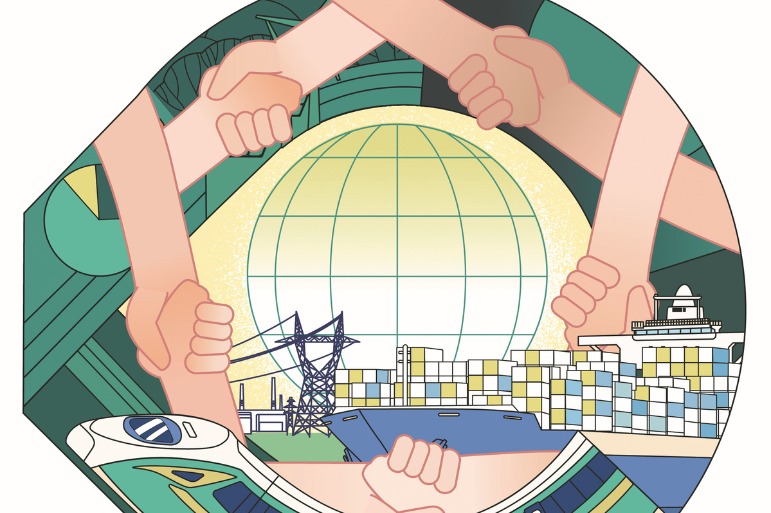
Amid these shifts, China emerges as a key stabilizer. Its vast domestic market, comprehensive infrastructure, strong industrial clusters and nationwide coordinated approach have helped China remain competitive across most manufacturing sectors while leading in advanced technologies. This dual role — as both a global supplier of critical components and an innovator — has allowed China to transition from "manufacturing" to "intelligent manufacturing", securing a proactive role in supply chain rebalancing.
The numbers speak for themselves. The Organisation for Economic Co-operation and Development identifies China as a dominant actor in roughly half of the 10 critical nodes across global value chains, particularly in electronics, chemicals, metals, and machinery. Manufacturing value added accounts for nearly 30 percent of the global total, with China maintaining the world's largest manufacturing scale for 15 consecutive years by 2025. The United Nations Industrial Development Organization projects that by 2030, China's industrial value added will account for 45 percent of the global total, more than double the combined total of the United States, Japan, and Germany.
China's domestic market amplifies its global influence. In 2025, total retail sales of consumer goods surpassed 50 trillion yuan ($7.18 trillion). For businesses worldwide, China represents a downstream market of significant scale, providing a solid foundation for value-added trade.
China's role extends beyond domestic demand. The Belt and Road Initiative enhances supply chain connectivity in partner countries, providing landlocked and infrastructure-limited nations access to global markets. By linking energy, minerals, agricultural products and manufactured goods to the world, the BRI not only strengthens China's economic ties with participating countries but also indirectly connects China with non-participants, benefiting hundreds of millions in developing countries.
China's outbound investment further reinforces supply chain stability. In 2024, Chinese manufacturing overseas investment reached $37.5 billion, up 37 percent year-on-year, while mining investments grew 115 percent to $21.3 billion. Asian countries, particularly ASEAN members, remain primary destinations, but investment in Oceania, Europe, and Latin America is rising. These investments enhance local industrial capabilities and integrate host countries into global value chains, while generating $211 billion in exports.
At the same time, China continues to expand high-level openness. Contrary to following protectionist practices such as imposing high tariffs, China promotes trade and investment liberalization. Since 2018, overall tariff levels have fallen to 7.3 percent, among the lowest globally. In 2025, China announced zero tariffs on all products from 53 African countries. Initiatives such as the Hainan Free Trade Port exemplify China's commitment to free and facilitated market access, creating opportunities for foreign products, capital and technology.
As global strategist Parag Khanna noted, "Who rules the supply chain, rules the world." China's approach, however, is not about domination. By connecting supply chains and promoting mutual benefit, China seeks stability and shared prosperity — a practical embodiment of its vision for a community with a shared future for humanity.
In a world of fragmented trade and political uncertainty, China's stabilizing role in the global supply chain is not just an economic advantage; it is a linchpin for global growth, cooperation, and resilience.
The author is a professor at the School of Economics, University of International Business and Economics.
The views don't necessarily reflect those of China Daily.
If you have a specific expertise, or would like to share your thought about our stories, then send us your writings at opinion@chinadaily.com.cn, and comment@chinadaily.com.cn.