Reconnect to real-world problems








As China has long maintained, the fundamental goal of global governance is to promote the common well-being of humanity
The world has entered a new era of turbulence and transformation, with global governance standing at a defining crossroads. Frequent geopolitical conflicts, anemic economic growth and rapid technological evolution have laid bare the structural failings of the existing global order. To make global governance fairer and more rational, the world must confront contradictions head-on and solve problems squarely. This is what China has sought to do by putting forward the Global Governance Initiative, which proposes partnership with the international community to address the governance deficit.
The Global South remains significantly underrepresented and lacks a voice in international institutions and global governance. While developing countries account for a growing portion of the global economy and population, systemic biases persist within key international mechanisms — evident in voting power, rule-setting authority and staffing. For instance, Africa’s 54 countries hold less than 7 percent of the combined voting rights in the International Monetary Fund, despite representing about 18 percent of the world’s population. As a governing framework, the current system has failed to keep pace with these structural shifts in the global economy. This not only compromises the fairness of international bodies but also weakens the effectiveness of global governance.
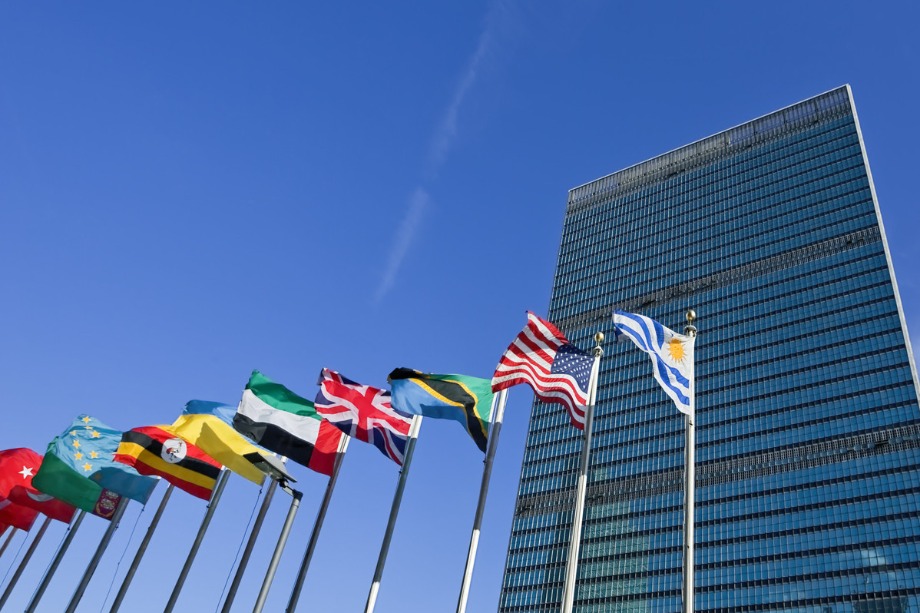
The authority of the United Nations is being steadily eroded. As the central platform for global governance, the UN Security Council has become ineffective in addressing major peace and security issues, including the Palestine-Israel conflict. This stems from certain countries’ adherence to bloc confrontation, misuse of the veto and exploitation of procedural tactics, all of which severely undermine the UN’s credibility. Unilateralism, protectionism and politicized exclusionary practices have eroded the organization’s neutrality, making it increasingly difficult for international institutions to build consensus on critical issues.
Furthermore, the existing governance mechanisms are increasingly disconnected from real-world challenges. While urgent issues such as climate change and artificial intelligence are gaining prominence on the global agenda, the development of corresponding regulatory frameworks and cooperative arrangements has lagged behind.
In this context, a number of developed countries have inappropriately expanded the notion of security, turning governance in these new fields into a tool of political maneuvering. This approach exacerbates the North-South divide and widens the technological gap, thereby eroding the collective effectiveness of global governance.
To address this governance deficit, China has proposed a set of coherent principles and practical approaches. These constitute a direct response to the pivotal challenges: clarifying the subjects, beneficiaries, reform pathways and ultimate direction.
On governance subjects, China consistently advocates for developing countries. President Xi Jinping has emphasized that all countries should jointly shape the future of the world, write international rules, manage global affairs together and ensure that development outcomes are shared by all. China supports enhancing the representation and voice of developing countries — particularly African states — within the UN Security Council, backs the African Union’s membership in the G20, and promotes a greater role for the Global South in emerging multilateral frameworks such as the Shanghai Cooperation Organization and BRICS.
When it comes to governance beneficiaries, the fundamental goal of global governance is to promote the common well-being of humanity. China firmly advances the UN 2030 Agenda for Sustainable Development. High-quality Belt and Road cooperation has cumulatively lifted more than 40 million people out of poverty. China also engages in practical cooperation across public health, poverty reduction and people-to-people exchanges, helping ensure that the benefits of global governance reach people worldwide.
In terms of reform methods, the focus must remain on upholding the fundamental norms of international relations as codified in the UN Charter. The core challenge is not that the Charter is outdated, but that its principles are inadequately adhered to. China supports the UN in implementing Our Common Agenda and advancing its reform. As of November 2025, China has participated in 29 Security Council-authorized UN peacekeeping operations, with over 1,800 personnel currently deployed across eight missions — making it the top contributor among the five permanent Security Council members. China also provides over 20 percent of the UN’s regular budget and about 18 percent of its peacekeeping budget, offering substantial and direct support to the organization.
Looking to the future, building a more just and equitable global governance system is integral to realizing a community with a shared future for humanity. Guided by its five core principles — staying committed to sovereign equality, international rule of law, multilateralism, a people-centered approach and delivering real results, the Global Governance Initiative combines conceptual guidance, value appeal and practical direction. Since its introduction, the initiative has received positive responses from more than 140 countries and international organizations, reflecting broad-based demand.
Moving forward, as a responsible major power, China will consistently translate its global governance vision into concrete action. Through the Global Development Initiative, Global Security Initiative, Global Civilization Initiative and Global Governance Initiative, China has been injecting stability and constructive momentum into an uncertain world, and will continue to encourage the international community to address common challenges through cooperation.

The author is the president of the China Institutes of Contemporary International Relations.
The author contributed this article to China Watch, a think tank powered by China Daily. The views do not necessarily reflect those of China Daily.
Contact the editor at editor@chinawatch.cn.