Multipolarity is future of global governance








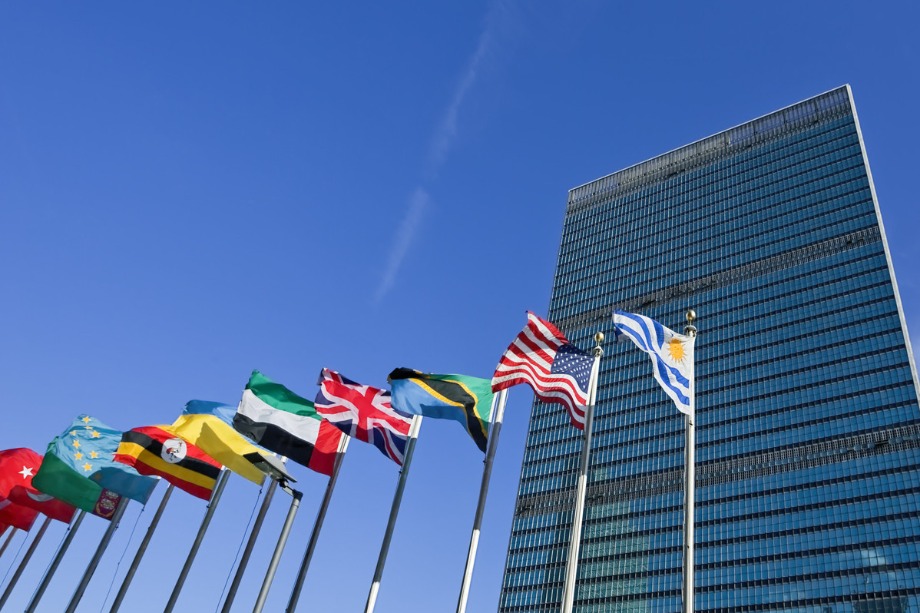
As the United Nations marks its 80th anniversary, the multilateral system it anchors is faced with significant challenges. The United States' withdrawal from multilateral platforms, abrogation of agreements and suspension of funding have disrupted the global governance system. Against the backdrop of the US' "retreat", some Western scholars have envisaged the notion of the "G0 era" in which the absence of a single dominant power will result in a leadership vacuum in global governance.
However, this "G0" narrative is misleading. It misreads the nature of current power shifts and distorts the positive momentum of global multipolarization. Instead of heralding disorder, the erosion of unipolar dominance paves the way for a more balanced, inclusive and resilient global governance system.
The "G0" narrative rests on three flawed assumptions. First, it simplistically portrays the US as a power retreating from the global scene. In reality, while the US is scaling back its international responsibilities, it continues to sustain influence in multilateral platforms. Washington uses disengagement as leverage to pressure international organizations and compel them to prioritize US interests as also curb the growing influence of emerging powers such as China.
Moreover, the US' use of force, unilateral sanctions and tariff coercion against other nations has weakened the UN Security Council's collective security framework and the rules-based multilateral trading system under the World Trade Organization. Washington's objective is to reshape an international order that perpetuates its hegemony.
Second, the "G0" narrative is based on the hegemonic stability theory, which erroneously assumes a single hegemon ensures global stability. However, the neoliberal international order established during the era of US dominance was not out of benevolence. Rather, Washington sought to build international mechanisms that would consolidate American advantages after it established its hegemony. Notions such as the Sino-US G2 or the so-called Kindleberger trap theory are also grounded in this mistaken assumption.
Last, the concept of "G0" follows the conventional Western-centric mindset. It assumes that a multipolar world is prone to chaos, conveniently overlooking the positive role of the collective rise of the Global South and the democratization of international relations. In reality, the Western-dominated global governance system has long suffered from three major deficiencies: poor effectiveness, declining authority and inadequate representation. Unable to adapt to changes in the international landscape, this global governance system must evolve into one that is more equitable, reasonable and inclusive.
In contrast, the multipolar worldview holds promise. As traditional multilateral mechanisms struggle and the global development divide widens, countries of the Global South have shown a growing willingness and capacity to shoulder governance responsibilities. Regional and emerging multilateral mechanisms are gaining vitality, injecting fresh momentum into global cooperation in a multipolar world.
For example, driven collectively by Global South countries, the 80th United Nations General Assembly endorsed the New York Declaration on the two-State solution between Israel and Palestine. The 78th World Health Assembly adopted the historic Pandemic Agreement to make the world more safe from future pandemics. The UN General Assembly proclaimed Dec 4 as the International Day against Unilateral Coercive Measures to safeguard the legitimate rights and interests of developing countries. Additionally, the COP30 climate change conference concluded with an agreement to enhance support for developing countries and tackle climate change collaboratively. Together, these outcomes compensate for the "G minus one" caused by the US disengagement.
Notably, regional multilateral organizations are playing significant roles in global governance. For instance, the Gulf Cooperation Council summit issued the Sakhir Declaration to emphasize regional solidarity. The African Continental Free Trade Area paved the way for faster establishment of a customs union and advanced the African Union's Agenda 2063. The Gyeongju Declaration, endorsed at the 32nd APEC Economic Leaders' Meeting, and the signing of the China-ASEAN Free Trade Area 3.0 Upgrade Protocol injected new momentum into Asia-Pacific cooperation. The Community of Latin American and Caribbean States and the Southern Common Market, or Mercosur, are working to strengthen regional industry chains and reduce dependence on the US dollar in settlements. Across the world, regional and sub-regional mechanisms are proactively contributing to global governance.
Emerging multilateral mechanisms are adding to the momentum. In 2025, the BRICS and the Shanghai Cooperation Organization achieved significant outcomes across both traditional and emerging fields such as security, development, climate and artificial intelligence, lending strong support to global governance.
The debate over "G0" is essentially about the future of global governance. Today, as global challenges become increasingly intertwined, the need for a just, reasonable and effective governance system has gained urgency. Yet, the US prioritizes its own interest over the global public goods, hindering reform and deepening the crisis.
The Global Governance Initiative, introduced at the SCO Tianjin Summit, offers a coherent response to these challenges. That the initiative swiftly garnered support from over 140 countries and international organizations became founding members of the Group of Friends of Global Governance, speaks volumes of the initiative's alignment with the spirit of multipolarity and shared aspirations of the international community. The GGI promotes an equal and orderly multipolar world, reinvigorating genuine multilateralism and advancing a more just and equitable global governance system.
The author is deputy director of the Department for Global Governance and International Organizations at the China Institute of International Studies.
The views don't necessarily represent those of China Daily.
If you have a specific expertise, or would like to share your thought about our stories, then send us your writings at opinion@chinadaily.com.cn, and comment@chinadaily.com.cn.