Food can be re-engagement recipe for Beijing, Ottawa







The agreement reached between Chinese President Xi Jinping and Canadian Prime Minister Mark Carney is rightly being celebrated in both countries and most global capitals. In a world filled with daily trade news that ranges from alarming to depressing, a rare, bright note is needed and well-received.
However, the immediate questions arise as to what does this mean, is it significant or symbolic, and what next?
In answering these questions it is ironic that the answer may lie with food. What has been the major cause of so much friction in the Canada-China relationship in the past could now become the basis for building a new form of bilateral engagement geared to meet the looming challenges for both countries arising from the new world trade order being created largely by the Americans.
The reasons for this lie as much in our shared history as in current events.
For China, the era in which access to food, and more recently oil, once appeared certain is over. For Canada, a rules-based global system where agriculture was the path to export growth and prosperity is also looking far less certain. Yet, beneath these shared anxieties lies a deeper, more fundamental convergence of interests that makes the case for agricultural cooperation.
In having to feed over 1.4 billion people with only about 10 percent of the world's arable land, China needs to guarantee its food security.
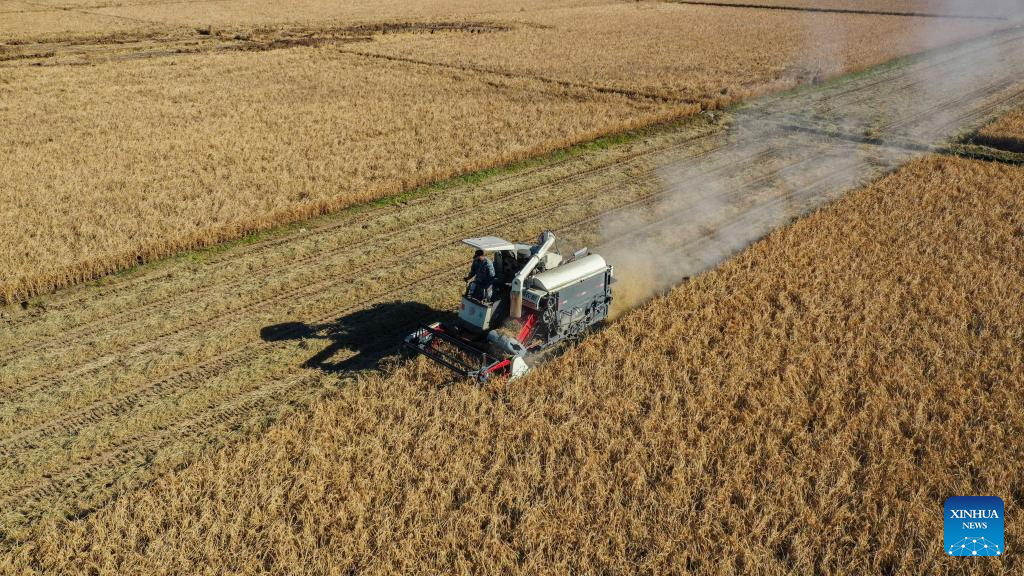
Canada, meanwhile, has a vast agricultural production capacity and an export-dependent farming sector that relies on access to global markets. China remains Canada's second-largest agricultural export destination, worth billions of dollars annually.
What makes this convergence particularly compelling today is the changed global environment. Trade uncertainty is no longer episodic, but structural. During crises, many countries imposed agricultural export restrictions — from India's rice export bans to grain restrictions by Argentina, Russia — to maintain domestic supply. Climate shocks, political upheavals and wars are disrupting supply chains with increasing frequency. In this volatile landscape, the past certainty of supply and market access is no longer certain. The recent loss of access to previously guaranteed Venezuelan oil is but one of a growing number of examples.
Only a few countries, including Canada, stand out in this regard. Unlike many major agricultural exporters, Canada has never weaponized agricultural trade. It imposed retaliatory tariffs against food imports from the United States, but has almost never banned or restricted food exports for domestic security or political purposes. Even during the difficult Cold War era, when the US pressured allies to join its embargo of grain sales to China, a different prime minister from the Canadian Prairies, John Diefenbaker, refused to bow to pressure. Canada instead chose to stick to its values and sold wheat to China during the 1950s — prioritizing food over geopolitical alignment.
This history matters for two reasons. First, for a nation where food security carries profound political and social significance, the reliability of supply partners is paramount. While China has access to agricultural imports from several countries, many have histories of restricting exports during domestic crises. Others have used food as leverage in diplomatic disputes. Canada's consistent commitment to maintaining agricultural trade flows regardless of political tensions represents genuine value. Second, as seen with the recent blockage of oil through coercion, history may be rhyming if not repeating itself.
Canada is also one of the world's few "swing" agricultural exporters — nations that consistently produce significant surpluses beyond domestic needs. This structural advantage means Canadian exports are less vulnerable to supply disruptions that plague countries where domestic consumption consumes most production, and food exports are restricted during crises.
The key to unlocking this potential is to guarantee certainty. This starts by removing food as a pawn on the chessboard of political negotiations. Two countries may have differences over politics, economic models and domestic governance. But these differences need not affect cooperation on one of humanity's most basic needs.
Carney's visit presents an opportunity to translate shared interests into concrete outcomes. Agriculture may seem a modest starting point compared to grand strategic partnerships. But modest beginnings built on genuine mutual benefit are more durable than ambitious frameworks that collapse under political strain. For China and Canada, the path to renewed relations runs through the prairies and the farms that feed the people of both nations.
The author is the director of International Policy and the New North America Initiative at the School of Public Policy at the University of Calgary and a member of the Mexican Council on Foreign Relations. He is the co-author of a 2020 study, When Interests Converge: Agriculture as a Basis of Re-engagement with China.
The views don't necessarily represent those of China Daily.
If you have a specific expertise, or would like to share your thought about our stories, then send us your writings at opinion@chinadaily.com.cn, and comment@chinadaily.com.cn.