


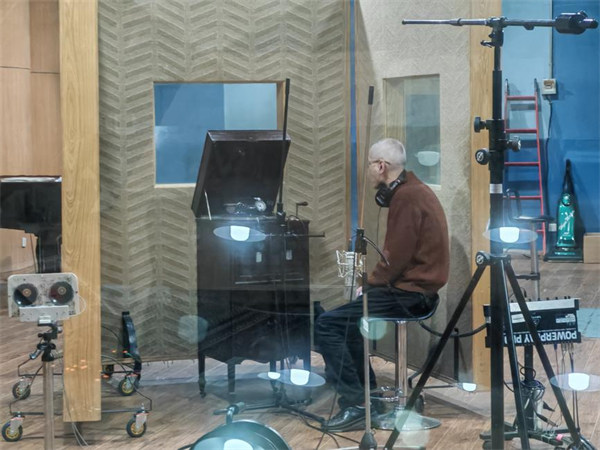
In the quiet stacks of the library of the National Academy of Chinese Theatre Arts, time was once stored on fragile discs — silent witnesses to centuries of history.
Between the grooves of nearly 2,000 old recordings, the world of traditional Chinese opera waited patiently to be heard again. These sound relics, pressed between 1907 and the 1970s, carry with them the voices of past masters, shaped by different eras and artistic sensibilities, their melodies now frozen in time.
These delicate recordings came back to life when the school's library completed the digitization of its first batch: 50 vinyl records recorded between 1907 and 1913. These records primarily feature Peking Opera, a 200-year-old art form listed on the UNESCO Representative List of the Intangible Cultural Heritage of Humanity.
The digitization of these Peking Opera records, including performances by legendary artists such as Tan Xinpei (1847-1917) and Wang Fengqing (1883-1956), has transformed these valuable audio documents into digital resources. Now, they are not only easier to preserve, but also more accessible to share and study.
"Nearly half of these recordings date back to the late Qing Dynasty (1644-1911) and the early 20th century," says Yin Xiaodong, president of the school. He describes these recordings as "sound fossils" — not just records of the songs, but a preserved glimpse into the artistic world of traditional Chinese opera.
One of the standout treasures in this collection is a recording of Wang Er Lou (The Tower Where One Awaits One's Son), performed by laodan (old woman's role) artist Luo Fushan (1865-1929), one of the most celebrated voices of the early 20th century.
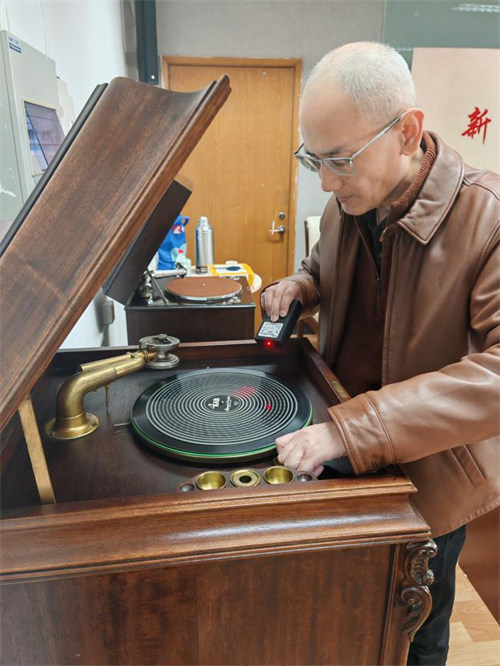
In Peking Opera, the laodan role is one of the most challenging and revered — a portrayal of an older woman with a deep and resonant voice. The recording captures Luo's distinctive vocal style and his spoken dialogue, which was shaped by oral tradition rather than institutional training — offering listeners a rare opportunity to hear what laodan roles sounded like before modern vocal reforms reshaped their style.
The story of Wang Er Lou itself is deceptively simple: an empress from the Tang Dynasty (618-907) longs for her son, who has been away on a military campaign for many years.
"Luo's recordings are rarely seen nowadays," says Chai Junwei, a retired TV show director and guest researcher on the project. "The power of this piece lies in restraint — the emotion comes through not with dramatic gestures but through the subtleties of the voice."
Chai continues: "Luo's singing preserves individualized ornamentation, and vocal habits passed down through generations of oral transmission. This gives us a rare window into how laodan roles once sounded, long before modern reforms reshaped vocal aesthetics."
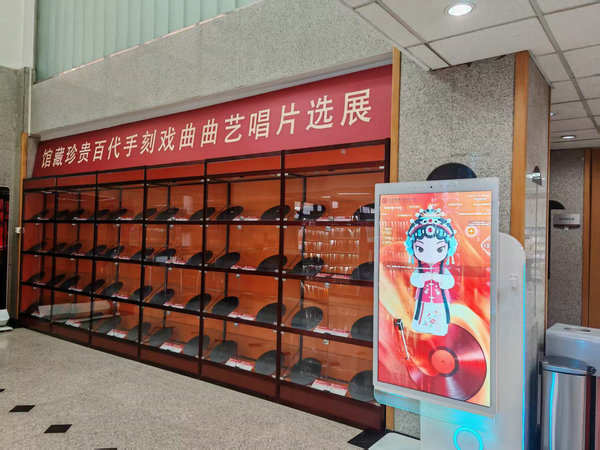
Among the archives are some hand-engraved recordings, created before 1915, which are some of the earliest versions of recorded music in China. The library currently holds 91 such hand-engraved records, including 80 Peking Opera recordings. As Yin says, digitizing these ancient records is no small feat.
"This is the most challenging aspect of record preservation. It requires advanced technology and an extraordinary amount of care to ensure these delicate sounds are preserved for future generations," he says.
This revival of traditional Chinese opera also holds global significance. According to Yin, Peking Opera is one of China's most eloquent cultural treasures — its influence transcends language, and its digitization allows scholars and artists from around the world to engage with and study its unique form.
"As the restored recordings play on," says Yin, "the past is no longer silent."








