China's visa-free policy is about more than tourism







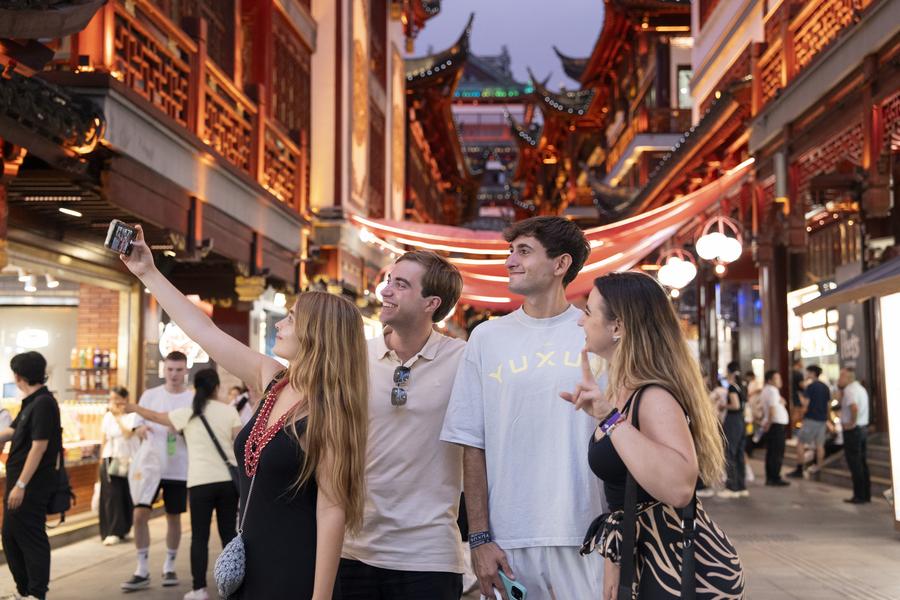
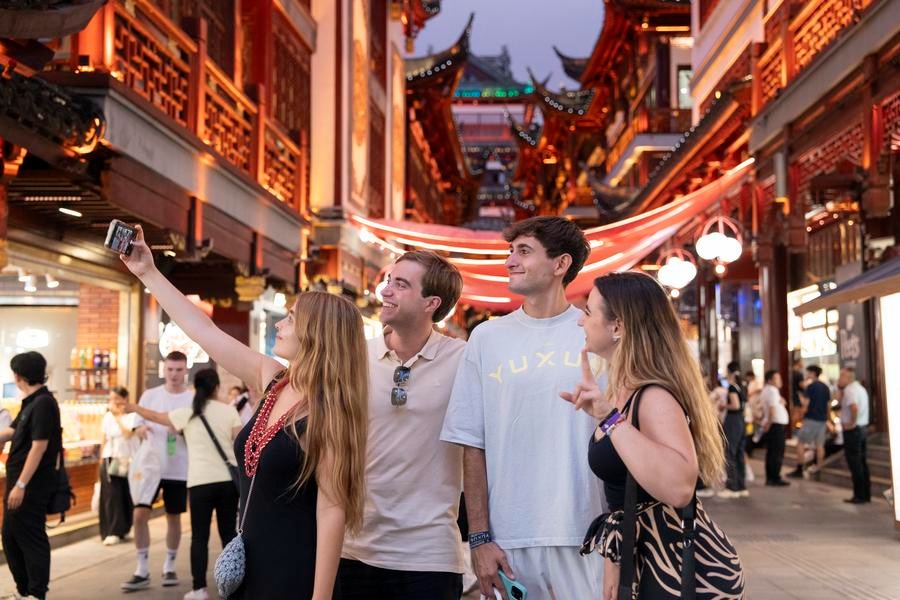
China's recent measures — expanding visa-free transit, enhancing duty-free shopping, streamlining tax-refund services, facilitating integration between international credit and debit cards and major mobile payment platforms such as Alipay and WeChat Pay, and launching English-language map services — are timely and strategically significant moves. While many countries are raising tariff barriers and tightening restrictions on trade and mobility, China is opening its doors wider, inviting the world to experience its market and culture firsthand. This deft policy shift has transformed a challenging global trade environment into domestic opportunities—stimulating consumption while bolstering economic resilience.
These measures reflect China's broader efforts to rebalance its economy, aiming to achieve consumption-led growth, reduce reliance on exports and heavy investment, while boosting the service sector, tourism, and domestic demand. By reducing travel friction and making shopping sufficiently attractive through tax rebates, price competitiveness, and a wide range of goods, China ensures that consumption can effectively offset the costs of airfare, accommodation, and other travel expenses. This way, it transforms consumption itself into a strategic instrument of attraction.
Consumption becomes the motivation for travel, rather than merely a byproduct. As geopolitical divisions deepen and border controls tighten elsewhere, this approach allows Beijing to project openness on its own terms. The allure of shopping, competitive pricing, and logistical convenience draw tourists without requiring political concessions. By repositioning itself from a guarded market to a global destination defined by value, accessibility, and experience, China demonstrates that economic engagement — rather than isolation — will be its preferred model of influence in an increasingly complex and fragmented global order.
This is not merely a boost for the tourism industry, but a carefully crafted economic strategy designed to make foreign tourists participants in China's economic rebalancing. By channeling international spending directly into retail, hospitality, and service sectors, the strategy directs growth toward areas that create jobs, boost confidence, and generate repeat spending. The payoff lies not only in increased tourist numbers but also in fostering an internally driven growth model — one less susceptible to export fluctuations and external political pressures, thereby strengthening the economy from the cash register inward.
The strategy also accelerates the global rise of Chinese brands. As international visitors encounter domestic brands — from fashionable athletic wear to consumer technology — in their local markets, they gain direct exposure to the innovation, design, and scale capabilities behind brands like Anta, Li-Ning, and Shein.
This firsthand exposure does more than drive sales; it reshapes perception. Labels once dismissed as "cheap" are reclassified through lived experience as competitive, reliable, and increasingly aspirational. Inbound travel thus becomes an independent brand promotion channel, enabling Chinese brands to bypass trade barriers, marketing skepticism, and geopolitical disruptions to directly showcase their value to global consumers.
The policy gains further resonance against a global backdrop in which some developed economies, constrained by aging infrastructure and strained public services, struggle to project renewal at home. In response, legacy media narratives often lean on familiar frames and selective storytelling that downplay or dismiss the scale of transformation unfolding elsewhere. By recycling outdated assumptions and privileging narrow snapshots over structural change, these narratives leave domestic audiences poorly informed about the pace, scope, and sophistication of development in countries like China. The result is not merely misperception, but a widening gap between lived reality and received wisdom in an increasingly multipolar world.
Visa-free travel and facilitated tourism effectively bypass this informational gatekeeping. International visitors engage directly with realities that rarely penetrate curated narratives. What they encounter is not stagnation or imitation, but high-speed rail networks, smart urban systems, and public infrastructure that in many cases rivals or surpasses that of long-established Western economies. This firsthand experience conveys a quiet yet powerful message: modernization, technological prowess, and dynamic growth are no longer the exclusive privilege of a few traditional powers. Instead, they are increasingly defined by those capable of large-scale construction, adaptation, and delivery of tangible results.
Beyond economics, this is a deliberate exercise in soft power. For decades, the international community's perception of China has largely been shaped through a mediated and often distorted lens shaped by geopolitical frameworks. Visa facilitation and simplified travel are now driving a shift in this dynamic toward people-to-people exchanges, enabling visitors to look beyond headlines and form their own judgments. What many discover is a country marked by modern infrastructure, digital convenience, advancing green development, and cultural depth. The cumulative effect is a powerful "value-for-money" revelation one that not only challenges preconceptions but frequently turns visitors into informal advocates, carrying home impressions shaped by experience rather than narrative.
Ultimately, these policies represent an investment in China's global image and long-term influence. A positive, affordable, and enriching travel experience encourages repeat visits and organic word-of-mouth promotion. Tourists become informal ambassadors, sharing stories no official campaign could replicate. This builds durable goodwill and reinforces China's position as a leading destination for culture, commerce, and tourism.
While some nations wield tariffs as blunt instruments, China is building bridges through hospitality, consumer value, and open engagement. It is a win-win approach stimulating the economy while quietly reshaping the global narrative of China's development and its role in a changing world.
Maya Majueran is the Founding Director of the Belt and Road Initiative Sri Lanka, a pioneering organization dedicated to research, dialogue, and engagement on China's Belt and Road Initiative.
The views don't necessarily represent those of China Daily.
If you have a specific expertise, or would like to share your thought about our stories, then send us your writings at opinion@chinadaily.com.cn, and comment@chinadaily.com.cn.