Global order faces new tilt away from law








If the 21st century has had a single "red line", it was supposed to be this: Sovereign borders cannot be redrawn, or sovereign governments "rerun", by force. Yet that line has been blurred repeatedly, often by the very powers that lecture others about a "rules-based order". The recent events in Venezuela have brought that contradiction to a breaking point.
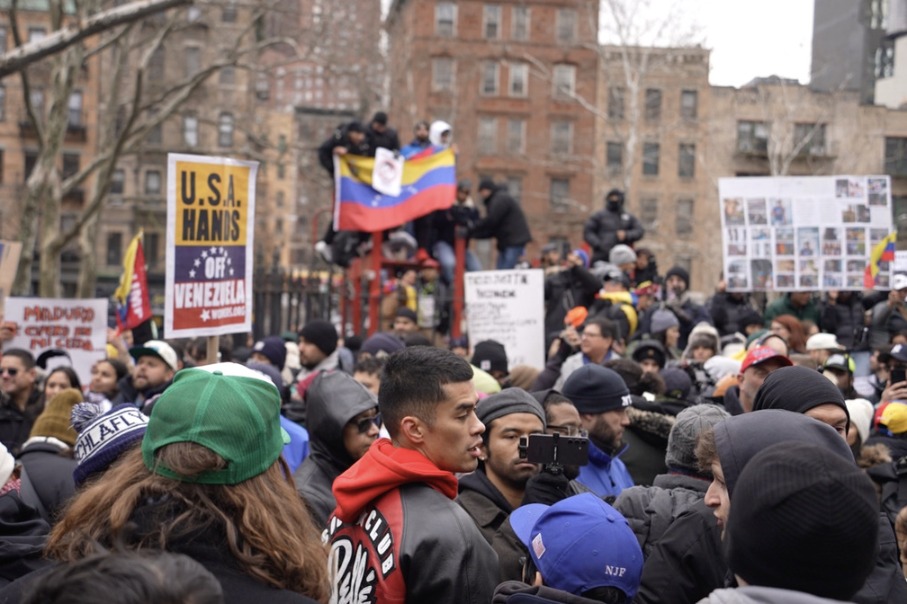
On Saturday, the United States carried out a special forces operation in Caracas that seized Venezuelan President Nicolas Maduro and his wife, and the president was held and questioned at a detention center in New York. The US administration publicly declared that Washington would "run" Venezuela, and US energy companies would play a central role in managing and rebuilding the country's oil sector.
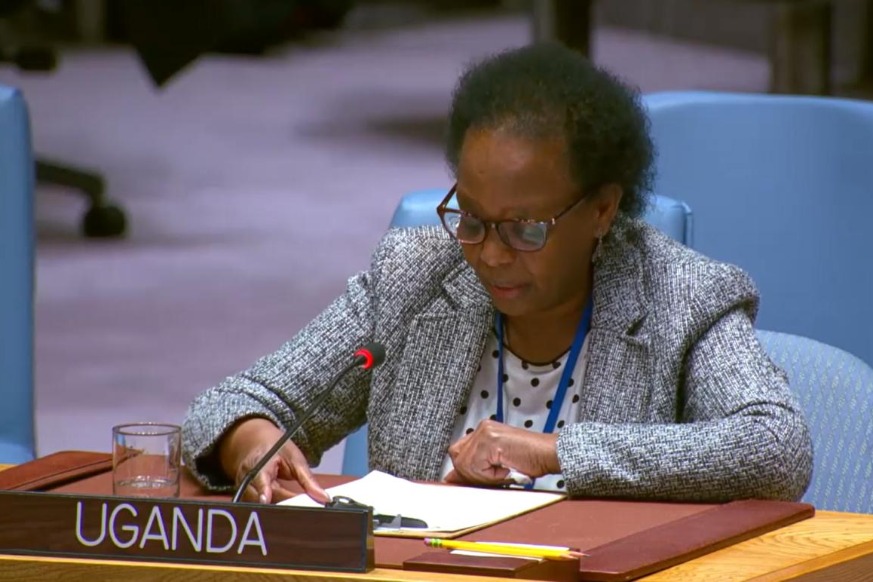
United Nations officials and many in the international community have said the US attack set an alarming precedent for international law and sovereignty.
Even if one dislikes Maduro's rule, method matters. In international politics, "how" is often more consequential than "who". The public framing from Washington matters, too. This was not presented merely as a narrow law enforcement action, but as an assertion of administrative authority over a country of nearly 30 million people.
The US government claimed that it was going to run the country, implying open-ended control until a transition meets US standards.
That phrasing is not the language of cooperation, nor of multilateral diplomacy. It is the vocabulary of protectorates, an older world that the UN Charter was designed to bury.
This is where the US' Monroe Doctrine returns, not necessarily as a historical document, but as a political instinct. The original 1823 Monroe Doctrine drew a line against European colonization in the Western Hemisphere. Over time, it was repeatedly reinterpreted as a license for US dominance in "America's backyard". In the discourse of the current US administration, that instinct has been resurfacing explicitly.
Senior US officials openly revived the idea during the first term of President Donald Trump, with then national security adviser John Bolton declaring the Monroe Doctrine "alive and well". More recently, commentary in US and international media has described an emerging "Donroe Doctrine", a US-style corollary that prioritizes coercion in the hemisphere.
Venezuela, of course, sits at the intersection of two obsessions in Washington: drugs and oil, although oil and its way of transaction, as some have argued, are the main concern of the US.
For years, US policy has combined sanctions, indictments and security framing targeting Venezuelan elites, while the country's immense reserves remain an unspoken gravitational pull in the background. In this episode, the subtext became text: The US president linked the seizure of a foreign head of state to a plan in which "major US oil companies" would "move into" Venezuela to refurbish infrastructure and restart production. When resource management is discussed as part of a military operation, the world hears an old message — regime change is the door; extraction is the room behind it.
Supporters of the operation argue that Washington is acting against a "narco-terrorist" state and that exceptional threats justify exceptional measures. But international law is designed precisely to prevent the strong from unilaterally deciding what counts as "exceptional".
The UN Charter's prohibition on the use of force is not a decoration; it is the foundation of modern interstate order. A claimed justification under self-defense is already contested in diplomatic debate, and many states see the operation as a breach of sovereignty, regardless of the target's reputation. If powerful countries can seize leaders abroad and then announce they will "run" the seized leader's country, what stops others from adopting the same logic elsewhere?
Defenders of the US administration may also insist that this is not "another endless war", and that it will be quick, meaning surgical, limited and efficient. Yet history warns that the first day of intervention is always the easiest. What does it mean to "run" Venezuela without "boots on the ground"?And if it does require boots, how does that square with the US administration's repeated messaging in recent years that the US would avoid ground deployments abroad?
In August, for instance, the US government publicly said there would be "no … boots on the ground" in Ukraine, aligning itself with a broader promise to reduce open-ended overseas entanglements. Even during earlier crises, Washington emphasized "no boots on the ground" as a principle. Now, by contrast, Trump has reportedly said he is "not afraid" of boots on the ground in Venezuela if necessary. The inconsistency is not merely rhetorical; it is strategic. It suggests policy driven by impulse and spectacle, two dangerous ingredients in a world of brittle alliances and nuclear-armed competitors.
The wider geopolitical fallout will not be confined to Caracas.
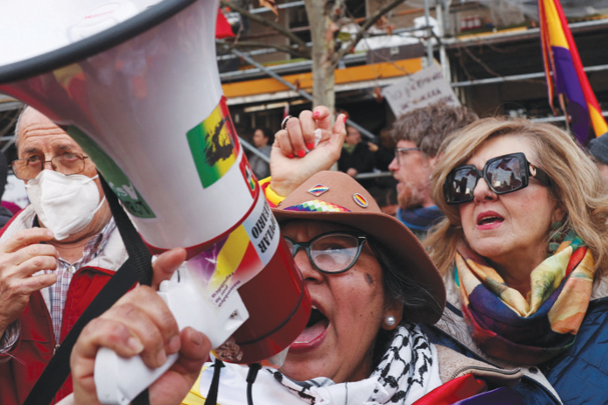
For Latin America, the episode revives memories of interventions justified as anti-communist or antidrug campaigns or for "restoring order", often leaving institutional wreckage in their wake. For the Global South, it reinforces the suspicion that international rules apply selectively; sovereignty is sacred until it obstructs the interests of the strong. For great-power competition, it hands rhetorical ammunition to those who argue that Western talk of legality is conditional and self-serving.
There is also a practical risk: destabilization. Removing or detaining a leader does not automatically produce a legitimate replacement, a functioning state or social reconciliation, especially when the intervening power openly claims managerial control. The immediate question is not only who governs next, but also who is seen as governing.
A transition branded as a US project may harden nationalist resistance, fracture the opposition and invite proxy competition. If Venezuela becomes the stage for a new cycle of sanctions, sabotage and external sponsorship, the result will not be order, but prolonged volatility spilling across borders through migration, energy shocks and criminal networks. So what should the world do?
Regional organizations and major developing states should push for a negotiated pathway that is Venezuelan-led and internationally monitored, but surely not administered.
In addition, any anti-drug cooperation should be rebuilt as multilateral law enforcement, not a pretext for occupation or resource control.
Finally, the global community should treat this as a precedent-setting moment: If it is normalized, the international system will tilt further from law and toward power.
A stable world order cannot survive on slogans, whether "America First" or "rules-based order", when actions contradict principles. The question posed by Venezuela is larger than the US leader, larger than Maduro, and even larger than oil. Will the world accept a return to hemispheric hierarchy dressed up as counternarcotics and "transition management"? Or will it insist that peace and stability require something more boring but more vital: law, restraint and genuine multilateralism?
The author is a scholar at the Department of Journalism of Hong Kong Baptist University in Hong Kong. The views do not necessarily reflect those of China Daily.