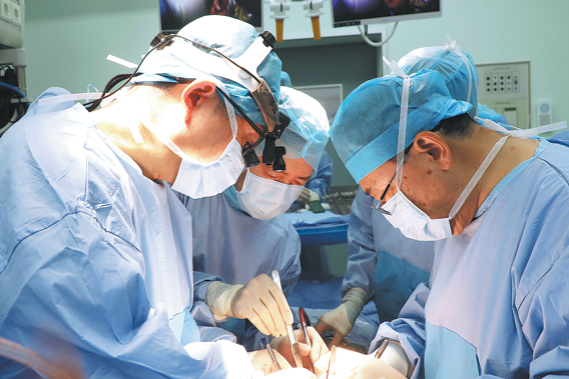
China's next-gen factories set to redefine manufacturing landscape
AI, robotics deep integration pillar of country's future plant transformation







BEIJING — In the heart of Guangdong province's Shenzhen — the southern engine room of China's tech boom — a spotless lab behind glass lacks the typical sounds of lathes whirring or conveyor belts moving.
Instead, a handful of technicians in white coats are quietly overseeing small-batch production of core components for photonic quantum computers, devices that most nations still keep locked in simulation labs.
This lab-factory hybrid, launched last month, is emerging as the country's latest bid to marry frontier breakthroughs with assembly-line scale, forging what engineers tout as a "future factory".
The 5,000-square-meter facility — China's first dedicated photonic quantum computing plant — fuses research, fabrication and testing under one roof. Designed to complete 200-plus ultra-precise manufacturing steps, it's aiming to fast-track quantum tech into drug discovery, artificial intelligence and beyond.
"The factory floor goes beyond a production line. It is a 'bridge' linking fundamental science to industrial deployment," said Jia Jinfeng, executive director of the Guangdong-Hong Kong-Macao Greater Bay Area Quantum Science Center.
Intelligent systems
China's manufacturing sector, a 15-year global leader, was once renowned for its systemic capacity to scale. The ongoing shift, however, is not merely about output volume, but begins with flexible manufacturing systems that can accommodate diverse, customized demands along the production line.
Inside Ipason's smart factory in Wuhan, Hubei province, flexible production lines assemble high-performance PCs to order. Simply place an online order, and your customized computer will be shipped within 24 hours, bringing mass personalization to a same-day reality.
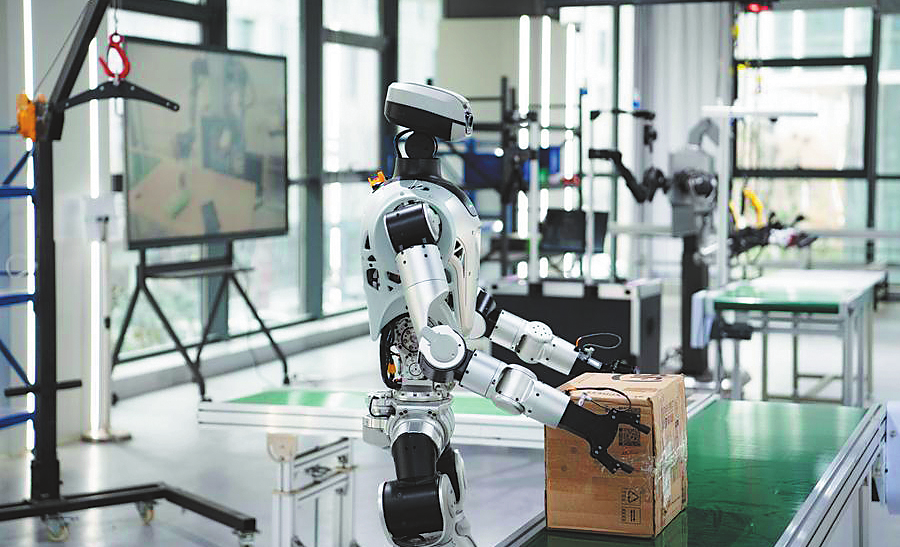
Another pillar of China's future factory transformation is AI and robotics integration. Across the country, an increasing number of factories are deploying intelligent systems that can think, adapt and optimize in real-time.
In August, Chinese authorities released a guideline on deepening the "AI Plus" initiative, outlining a comprehensive roadmap for the deep integration of AI with the real economy. This policy aims to achieve a penetration rate exceeding 70 percent for next-generation applications, such as intelligent terminals and AI agents, by 2027.
In Taizhou, Zhejiang province, the satellite superfactory of automaker Geely looks more like an automotive assembly line than a traditional aerospace plant. Automated guided vehicle robots glide between workstations, carrying satellite modules in a quiet, fluid process, an approach that has slashed the manufacturing cycle to just 28 days.
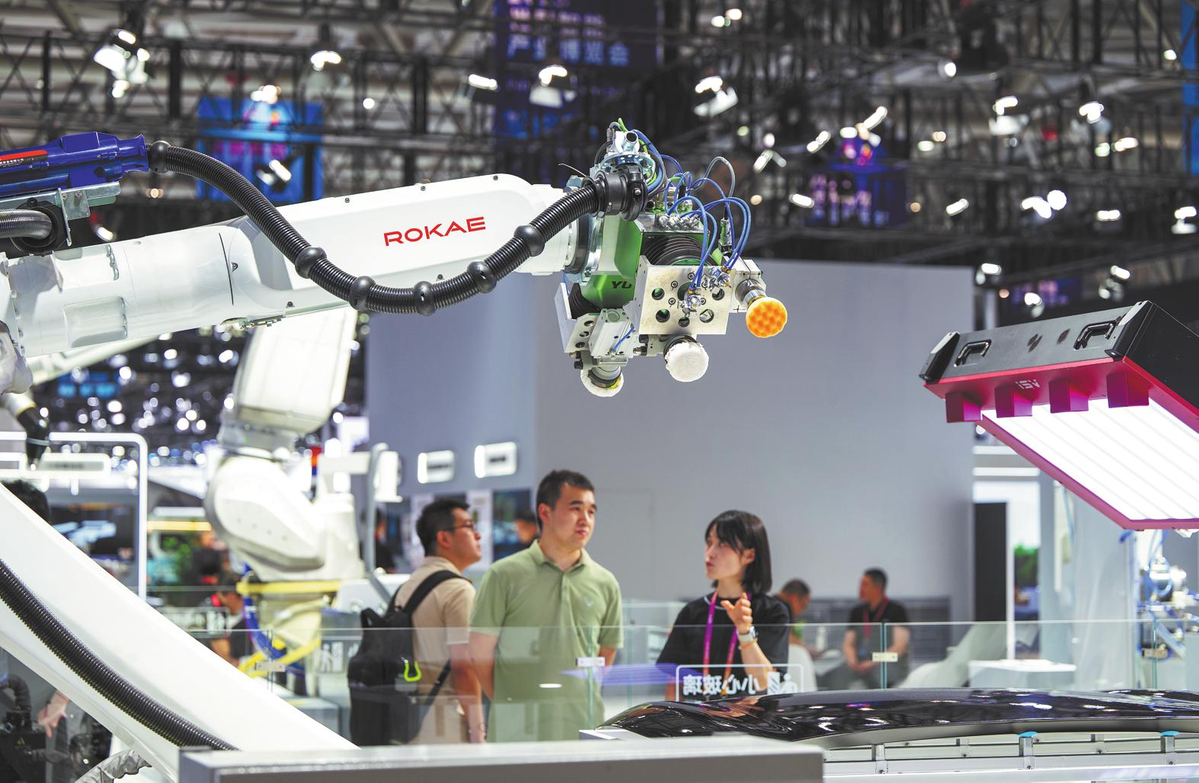
At Rokae Industrial Park in Shandong province, collaborative robots equipped with force and vision sensors have been endowed with human-like tactile and visual perception, allowing them to dynamically adjust angles and pressure levels to complete high-precision tasks — such as assembling a computer USB port — with micron-level accuracy.
China has implemented a tiered cultivation system for smart factories, categorizing them into four levels: basic, advanced, excellence and pioneer.
Latest data show the country now operates 35,000 basic-level, 7,000 advanced-level, over 230 excellence-level and at least 15 flagship smart factories. On average, these facilities have shortened research and development cycles by 29 percent, raised production efficiency by 22 percent and lowered carbon emissions by 20 percent.
Closing the loop
In recent weeks, a video of UBTECH humanoid robots marching in unison out of a Chinese warehouse has gone viral online. The scene not only provides a glimpse of the future, but also signals the robot manufacturer's push to integrate machines into real factory floors.
UBTECH's smart plant in Liuzhou, Guangxi Zhuang autonomous region, sits not far from automaker Dongfeng's assembly plants — one of the first places its robots clock in. Clustering suppliers and customers is stitching the country's new tech chain into a tight loop.
Shanghai has established a brain-computer interface technology incubator within walking distance of Huashan Hospital, one of China's top neurological clinics, turning scientists, entrepreneurs and neurologists into next-door neighbors.
Performing approximately 20,000 neurosurgical procedures annually, the hospital provides critical clinical support to accelerate the translation of BCI devices from the lab to real world medical applications.
"Shanghai's BCI ecosystem brings the full supply chain together. It's the ideal ground to scale fast," said Peng Lei, founder of Gestalt Life Technology, explaining why his ultrasound-based BCI startup chose to set up shop in the industrial park.
At an aerospace park in Wenchang, Hainan province, another satellite superfactory is being built on a "satellite out, launch ready" model.
The facility, which is designed to produce 1,000 satellites annually, is part of a comprehensive ecosystem that includes rocket development, satellite manufacturing and launch control — all within the same industrial cluster.
Wenchang is home to China's first commercial aerospace launch site and has drawn over 20 enterprises across the industry chain — ranging from rocket development and satellite manufacturing to launch monitoring and control — to establish operations in its industrial park.
These factories taking shape are more than production facilities, but also ecosystems that allow for rapid prototyping and scaling, bridging the gap between lab breakthroughs and commercial products faster than competitors.
China has already launched over 60 provincial-level future industry pilot zones and plans to add more frontier-tech clusters in the next five years — building not just factories, but whole new industrial chains.
Xinhua




Today's Top News
- Militarism revival efforts criticized
- Leadership highlights Party conduct
- Forging a human-centered future in era of smart machines
- Land-sea trade corridor key to regional progress
- Local rules to be reviewed to help disabled
- Stronger RMB points to resilience