Ancient rice-fish farming system thrives with new vitality







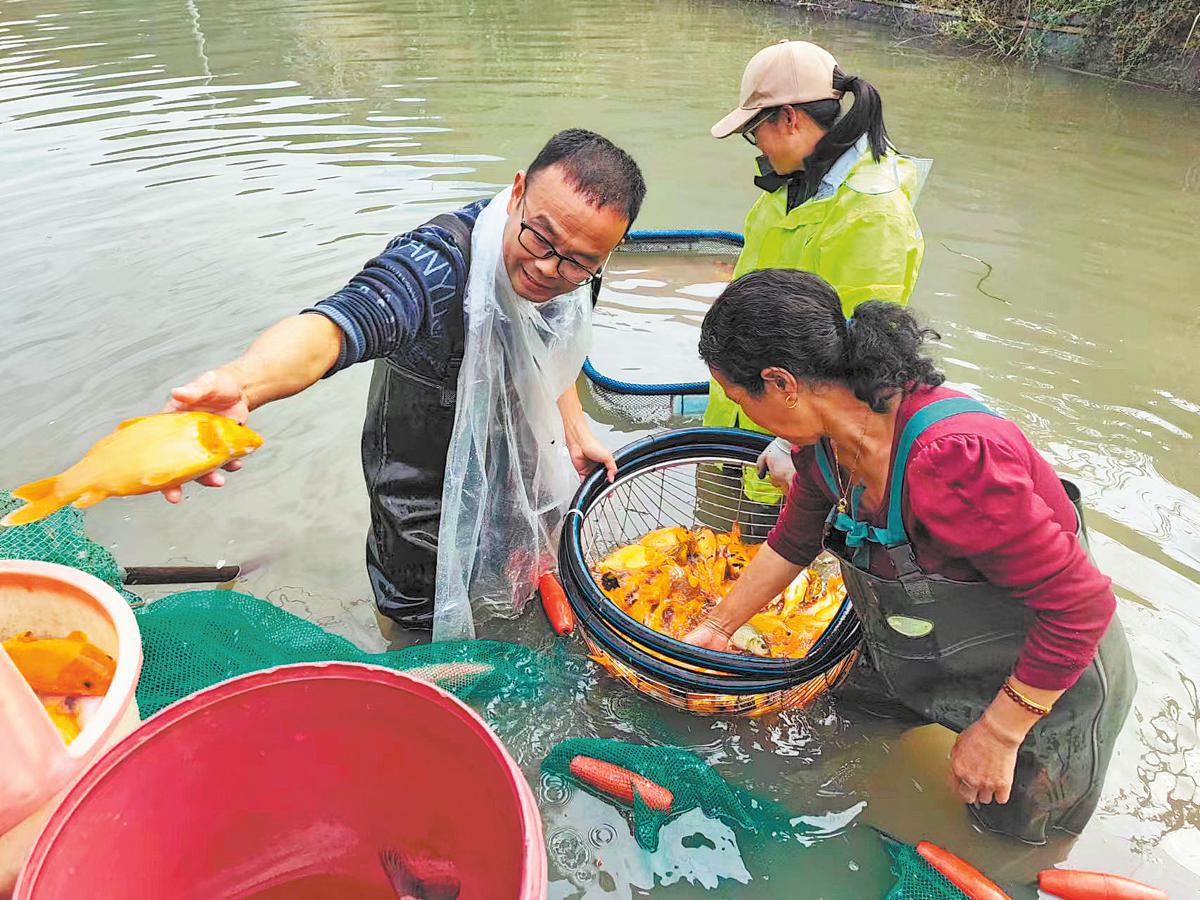
On the packaging of farmer Xu Guanhong's rice and fish products, an array of symbols and QR codes attest to their quality.
Among them is an Agro-product Geographical Indications label, marking the authenticity of a unique farming system practiced in Qingtian county, Zhejiang province, for over 1,000 years.
In Qingtian's terraced fields, fish and rice thrive in a symbiotic environment. The fish control pests and fertilize the rice fields, while the rice plants provide shade and a habitat for the fish.
Xu, a former physics teacher and a Qingtian native who has lived overseas, said the rice-fish system is not merely a farming method — it is a way of life and a vital part of his cultural identity. "I've always loved the tender texture and fresh taste of Qingtian's field-raised fish," he said. "Wherever I am, I feel a deep connection to my rural roots."
In 2005, the Qingtian system was designated by the Food and Agriculture Organization of the United Nations as one of the Globally Important Agricultural Heritage Systems, the first of its kind in China.
"When I heard the news, I knew I had to do something," recalled Xu, who returned to Qingtian from France in 2006 and started a ricefish co-culture ecological farm in 2011.
In the first three years, Xu suffered financial losses due to his lack of expertise in rice cultivation and fish breeding. However, a turning point came when he replaced the usual fish fry with larger fingerlings.
"Small fry are too vulnerable for paddy conditions," Xu explained. "Larger ones adapt better, resulting in improved survival rates and reduced losses. They feed on pests and weeds in the paddy fields, which in turn effectively controls insects and unwanted vegetation."
In addition, the fingerlings shorten the production cycle, enabling faster harvests and quicker market returns, he said.
Through practice and technical improvements over the years, a single mu (0.067 hectares) of Xu's field can now produce 350 kilograms of rice and 150 kg of fish a year, achieving an annual return of over 17,000 yuan ($2,390). His farm has expanded from the original 50 mu to 300 mu.
Xu has also pioneered an approach that eliminates the use of tillage, herbicides, fertilizers and pesticides, while ensuring a stable, high-yield model.
His efforts received a significant boost when both the rice and fish produced by the traditional farming method were granted geographical indication status. "The GI label is a 'golden name card'," Xu said. "It builds consumer trust and adds more value."
This status, along with green and organic certifications, has opened doors to premium markets, where Xu's organic rice can sell for up to 20 yuan per kg.
Local authorities have also introduced traceability systems and subsidies, ensuring the GI's credibility. In 2024, the rice-fish system covered over 70,000 mu in Qingtian, with a total output value of 340 million yuan.
Dacian Ciolos, a former European commissioner for agriculture, who was in Qingtian for a conference on China-EU cooperation on GIs, said, "This fish-rich co-culture system is not only of great interest from the point of view of the traditional culture of this region, but also from an environmental perspective."
The coexistence of the two species aligns closely with today's growing emphasis on ecological sustainability, he said, adding it is remarkable that the system has been maintained over many centuries.
Ciolos said he believes the farming methods, which have both cultural and scientific value, deserve to be promoted around the world as an example of sustainable agriculture.