China's Greater Bay Area builds world-class city cluster through connectivity, innovation







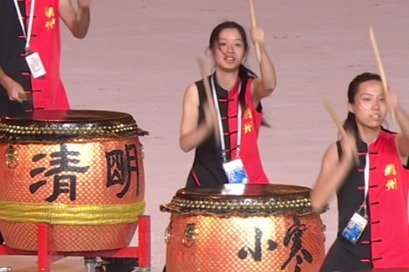
GUANGZHOU -- Just days ahead of the 15th National Games, set to open on Sunday in South China's Guangdong province, technicians conducted the final checks on communication facilities along the Hong Kong-Zhuhai-Macao Bridge, which will host the games' road cycling race.
"The road cycling race traverses all three regions via the bridge, and it is a symbolic event as it showcases the games' co-host model and pioneers a new model for major sports events in the Guangdong-Hong Kong-Macao Greater Bay Area (GBA)," said Yeung Tak-Keung, head of the 15th National Games Hong Kong coordination office.
The event will celebrate elite sports while also spotlighting the rise of the GBA, a world-class city cluster, which spans 56,000 square kilometers and is home to over 80 million people, driven by unprecedented connectivity and tech innovation.
REGIONAL CONNECTIVITY FUELS DEVELOPMENT
The 15th National Games will be a vivid showcase of the GBA's solidarity and collaboration, while fostering closer people-to-people bonds across the area, Yeung noted.
This growing cohesion is mirrored in the region's economic rise. According to the latest statistics, the GBA's economy expanded to 14.79 trillion yuan (about $2.09 trillion) in 2024, surpassing both the New York Bay Area and the San Francisco Bay Area, and positioning it among the world's leading bay areas. Its per capita GDP came in at about 170,200 yuan last year.
This progress aligns with China's broader development strategy, which aims to transform the GBA into a world-class city cluster, a global hub for technology and innovation, a livable and business-friendly location, an exchange hub for Eastern and Western cultures, and a world-class tourism destination.
Enhanced connectivity is the bedrock of this integration. The GBA now boasts several thousand kilometers of operational expressways, constituting a comprehensive transportation network that significantly increases efficiency in daily commutes and business travel across the bay.
Travel times within the GBA have been drastically shortened. A resident of Zhuhai, for example, can now commute to Shenzhen by car in just over an hour -- down from more than three hours previously.
Beyond infrastructure connectivity, greater institutional connectivity -- through aligned rules and standards -- is accelerating integration. To date, 262 "GBA standards" have been released, covering 36 fields, including transportation, water conservancy, ecological preservation, and elderly care.
These standards have been adopted by nearly 7,000 organizations. Over 500 entities from Hong Kong and over 300 from Macao participated in the standards-drafting process.
Experts said that these harmonized standards streamline cross-border cooperation and help create a more consistent business environment throughout the region.
Talent and business mobility are deepening this integration yet further. Nansha district of Guangzhou, capital city of Guangdong, has established 15 centers for young entrepreneurs from Hong Kong and Macao, incubating 1,178 projects and reporting an annual output value of 3 billion yuan since 2019.
The Qianhai Shenzhen-Hong Kong Modern Service Industry Cooperation Zone in the southern metropolis of Shenzhen saw a 99.6 percent surge in new Hong Kong-invested enterprises in the first half of 2025, over 40 percent of which were youth startups, supported by comprehensive incentives.
TECH INNOVATION BOOSTS GROWTH
On the morning of Sept. 16, the sound of a ship's horn echoed across Nansha Port as the Ocean Geology 2 research vessel set sail on an 800-kilometer voyage southwest, carrying Haima, a deep-sea remotely operated vehicle (ROV).
Its destination was the Haima Cold Seep area, which is located at a depth of about 1,500 meters. The area is a site for methane hydrate collection, and the source of the flame for the 15th National Games was obtained from its ultra-deep seabed.
The Haima ROV was developed by the Guangzhou Marine Geological Survey Bureau and is capable of replacing humans on underwater operations at depths of up to 4,500 meters.
This involvement in China's National Games represents significant innovation and offers a glimpse into the GBA's technological innovation.
Liu Chenli, director of the Shenzhen Institute of Advanced Technology at the Chinese Academy of Sciences, told Xinhua that as an important node in the GBA's innovation system, the institute has produced an average of 4.7 patents per day over the last five years.
Liu noted that through collaborations with institutions such as the Shenzhen Stock Exchange and university technology transfer centers, the institute has been unlocking the full market potential of intellectual properties.
Behind this achievement is a leap in the technological innovation capacity of the GBA. China has established nine major pieces of technological infrastructure in the area. The China Spallation Neutron Source is open to scientists around the world, while labs such as the Pengcheng Laboratory and the Guangzhou Laboratory are operating steadily.
A total of 31 Guangdong-Hong Kong-Macao joint labs have been established, forming the foundation for the GBA's technological innovation.
Research institutions and personnel in Hong Kong and Macao can share and utilize major sci-tech infrastructure on the Chinese mainland, and universities and research institutions in the two special administrative regions can participate in Guangdong's provincial sci-tech programs.
Impressive results have been delivered. The number of unicorn enterprises in the GBA rose from 33 in 2020 to 70 in 2024.
Improved infrastructure and regulations are helping talent and money flow faster, creating a collaborative environment, according to Li Zhijian from the Asia-Pacific Innovation Economic Research Institute of Guangdong.
This allows Hong Kong, Shenzhen and Guangzhou to combine their strengths, creating a cycle of R&D, financial support and commercialization, Li said.


- China's Greater Bay Area builds world-class city cluster through connectivity, innovation
- Guangzhou foresty and fruit expo to showcase Xinjiang's specialty products
- Xi's special envoy to attend inauguration of Bolivia's president
- Tianjin's Hangu Salt Field marks 1,100th anniversary
- Explainer: What does China's 2035 per capita GDP goal of 'mid-level developed country' status mean
- Hebei emerges as global sci-tech hub during 14th Five-Year Plan period