AI can boost energy security in APEC








The two fundamentals of energy security are stability in supply and demand, and affordable prices. A sharp decline in supply or a sudden increase in demand can push up energy prices, triggering inflation and disrupting economic growth. The oil shocks of the 1970s, which led to stagflation in Western economies, are a reminder of the impact of energy prices on international politics and economics.
The Asia-Pacific Economic Cooperation economies have traditionally been net importers of energy. But this changed when the United States reemerged as a major fossil fuel producer and exporter in 2019. The Asia Pacific Energy Research Centre reports that the share of net energy imports in Asia-Pacific's total supply dropped from around 12 percent in 2000 to approximately 3 percent in 2022.
The US' return as a net energy exporter in 2019 has had far-reaching consequences. Energy trade was a key component of the 2020 China-US phase-one trade deal. Many regional economies may now source their energy imports from within the APEC, thus reducing their reliance on supplies from the Middle East while enhancing resilience and price stability.
Recognizing this shift, APEC has intensified efforts to deepen regional energy cooperation. The 2025 APEC Energy Ministerial Meeting reaffirmed commitments to knowledge sharing, capacity building and regional interconnectivity — from subsea power cables and storage networks to improving energy efficiency. These efforts aim to ensure regional energy security and economic resilience, thereby advancing the APEC's Energy Security Initiative.
Meanwhile, artificial intelligence is emerging as a new driver for advancing energy cooperation. The APEC Economic Leaders' Meeting in Gyeongju in the Republic of Korea has put AI at the center of discussions, while energy ministers have emphasized the need to integrate AI innovation into energy systems to improve safety and efficiency.
AI's growth has increased electricity consumption and pushed up prices. Data from the US Energy Information Administration show that the average retail electricity price rose to 14.38 cents per kilowatt-hour in June, an increase of about 3 cents since early 2022. This 26 percent surge in three years is more than the cumulative rise in electricity prices in the past two decades. Residential electricity saw the steepest rise, followed by commercial and industrial electricity.
The price differential is an opportunity for integrating AI in the energy system to enhance efficiency. AI-driven technologies can develop virtual power plants, perform predictive maintenance and run smart power grids that smooth demand peaks and optimize energy distribution.
For APEC economies, the potential is enormous. The region accounts for 37 percent of the world's population and 61 percent of global GDP. According to the Asia Pacific Energy Research Centre, in 2022 APEC economies accounted for 56 percent of the world's energy demand, 58 percent of global supply and 68 percent of the total electricity generated on the planet. The way APEC manages its energy transition will significantly influence the global energy landscape. With their strengths in high technology, many APEC economies are well placed to lead the application of AI in the energy sector.
The use of AI in manufacturing can also contribute to energy security. In 2011, APEC economies pledged to reduce their aggregate energy intensity by 45 percent by 2035 from 2005 levels. By 2022, energy intensity had already fallen by 28 percent and the 45 percent reduction target could be met ahead of schedule by 2032.
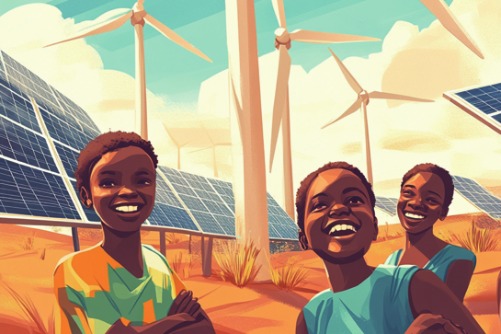
AI's potential can also be harnessed for the development of renewables. In 2010, renewable energy accounted for 6 percent of the total energy generated in the region. APEC had set a goal of doubling this share by 2030. By 2022, the share of renewable energy had already risen to 11 percent.
The 32nd APEC Economic Leaders' Meeting also placed special emphasis on the development of AI. Besides, the APEC Artificial Intelligence Initiative (2026-30) also proposed encouraging AI development and adoption by leveraging energy and efficient technologies and fostering resilient AI infrastructure investment.
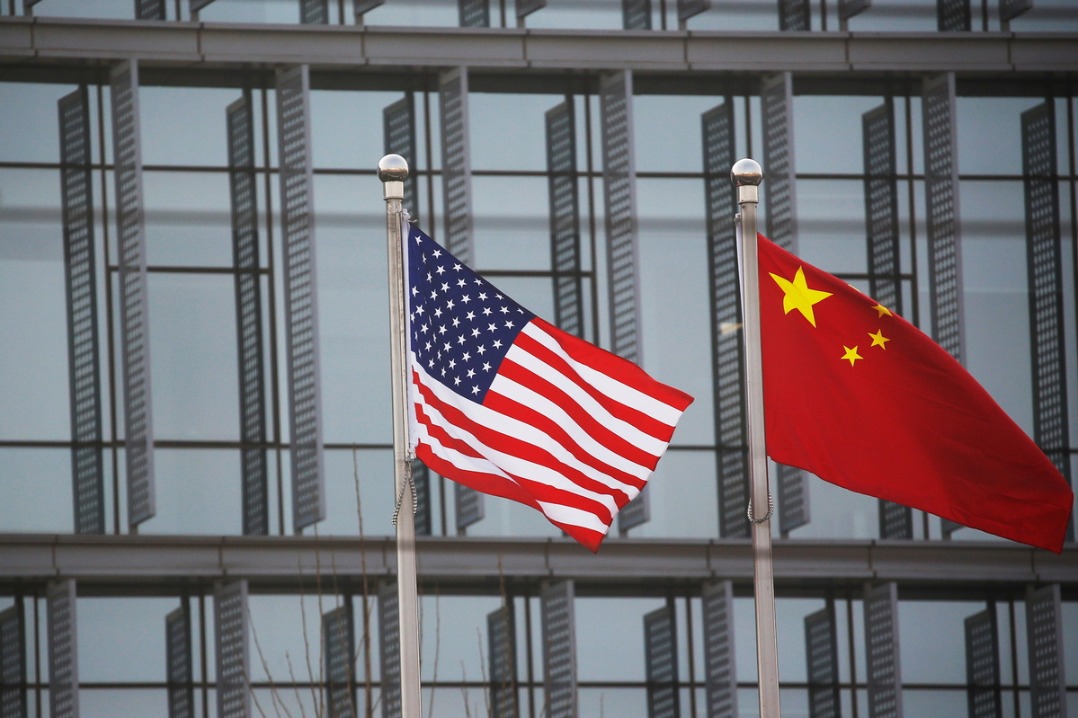
Although there is immense potential in cooperation in AI, the competition between China and the US — the two leading AI powers — has intensified. If both countries can put their competition aside and cooperate in the energy sector by applying advanced AI technologies to energy development, they can significantly boost energy efficiency and enhance regional energy security. By working together on AI-driven energy solutions, China and the United States could set a benchmark for sustainable, high-tech energy collaboration that benefits the entire Asia-Pacific region.
The author is a professor at the School of International Politics and Economics, University of Chinese Academy of Social Sciences.
The views don't necessarily represent those of China Daily.
If you have a specific expertise, or would like to share your thought about our stories, then send us your writings at opinion@chinadaily.com.cn, and comment@chinadaily.com.cn.