Historical fact of Taiwan's return irrefutable







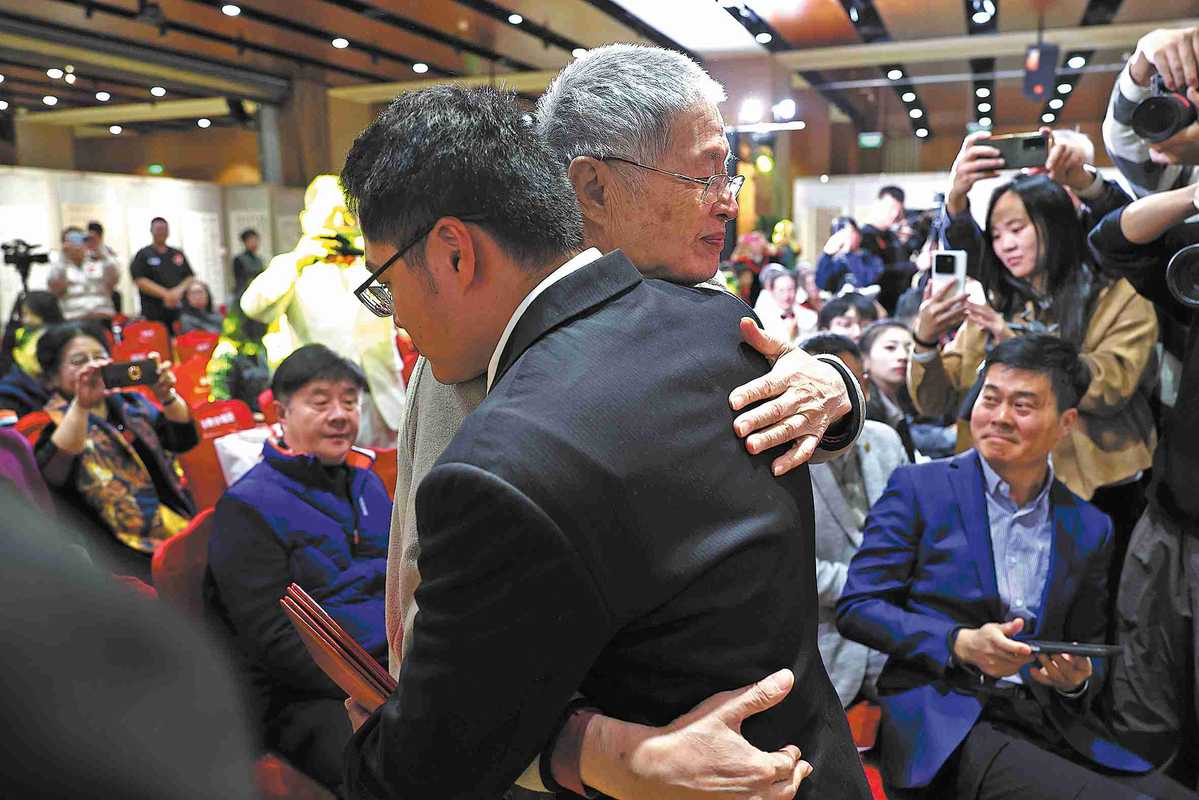
The Chinese People's War of Resistance Against Japanese Aggression (1931-45) was the longest, largest-scale and costliest national liberation struggle in modern Chinese history. It was also the first national liberation struggle with a complete victory, which held great significance for China and the Chinese nation. China's victory in the war ended 50 years of Japanese colonial occupation of Taiwan and returned the island to the motherland. The restoration of Taiwan was both a major outcome of China's victory in the war of resistance and an integral part of the international order after World War II. This achievement is a proud chapter in the collective memory of all Chinese people. For 80 years, Taiwan's status as an inalienable part of China has not changed — and never will.
However, the Democratic Progressive Party authorities are attempting to sever Taiwan from China and pursue "independence". They deliberately distort history and deny the facts of the Chinese People's War of Resistance Against Japanese Aggression and Taiwan's restoration. Aug 15 this year marked the 80th anniversary of Japan's surrender, but DPP leader Lai Chingte avoided mentioning Japanese aggression or China's victory and referred to it merely as the "end of World War II".
In an attempt to achieve its goal of "Taiwan independence", the DPP has also fabricated the claim that "Taiwan is already a sovereign and independent country", constructing various arguments around this falsehood. This claim and the various arguments have been seriously refuted. In the first of his so-called "10 lectures on unity", Lai declared that "Taiwan is a sovereign and independent country". His tactics were extremely clumsy. The DPP authorities are trying to erase every historical fact that proves Taiwan has always been part of China.
One of the DPP's favorite distortions is its interpretation of the "San Francisco Peace Treaty". It claims that the treaty states that Japan renounces all rights, titles and claims to Taiwan, but does not specify the return of the island to China. Clutching desperately to this omission, "Taiwan independence" forces argue that "Taiwan is a sovereign independent country", or at the very least, that Taiwan's status is "undetermined". But this claim is historically groundless because Taiwan's return to China after World War II is an undeniable legal and historical fact.
In China's formal declaration of war on Japan of Dec 9, 1941, the Chinese government announced that all treaties, agreements and contracts between China and Japan, including the Treaty of Shimonoseki, had been abrogated. It also declared that China would recover Taiwan, the Penghu Islands and Northeast China. The 1943 Cairo Declaration explicitly stated that all the territories Japan had stolen from China such as Northeast China, Taiwan and the Penghu Islands should be restored to China. The 1945 Potsdam Proclamation reaffirmed that "the terms of the Cairo Declaration shall be carried out". Japan's Instrument of Surrender of Aug 15, 1945 stated clearly that Japan would fulfill the obligations laid down in the Potsdam Proclamation. On Oct 25, 1945, Taiwan was formally restored to Chinese administration, marking its full return to Chinese sovereignty.
Why, then, did the "San Francisco Peace Treaty" later omit explicit mention of Taiwan's return to China? The answer lies in postwar manipulation by the United States. Although the wartime agreements required the four major Allied powers — China, the Soviet Union, the US, and the United Kingdom — to jointly draft a "peace treaty" with Japan, the US sought unilateral control over postwar Japan. The Soviet Union objected, insisting on four-power negotiations, but the US refused. After 1949, with the founding of the People's Republic of China, the outbreak of the Korean War and the emergence of the Taiwan question, Washington accelerated its separate "peace plan" and decided to omit any reference to Taiwan's return to China. Japan dutifully followed suit. Consequently, when the San Francisco Conference was held in September 1951 with the US pulling the strings, China — the nation that had made the greatest sacrifices and contributions in the war — was deliberately excluded. The resulting "treaty" declared that Japan renounces all rights to Taiwan and the Penghu Islands but did not specify their return to China, thereby failing to fulfill the obligations stipulated in the Cairo Declaration and the Potsdam Proclamation.
The Chinese government immediately denounced the "treaty" as illegal and invalid, issuing statements on Sep 18, 1951, and May 5, 1952. Indeed, while the treaty failed to address Taiwan's status, Taiwan had already legally and practically returned to China in 1945. Later developments completely rectified this omission. In the 1972 Joint Communique between China and Japan, Tokyo stated that it fully understands and respects the position of the Chinese government that Taiwan is an inalienable part of the territory of the People's Republic of China, and reaffirmed its adherence to the Potsdam Proclamation. In 1978, the China-Japan Treaty of Peace and Friendship reaffirmed that the principles of the 1972 Joint Communique constitute the basis of the friendly relations between the two countries and must be strictly observed. These steps legally and politically confirmed that Japan had abandoned any ambiguity left by the "San Francisco Treaty", acknowledging unequivocally that Taiwan is part of China.
Thus, the "undetermined status of Taiwan" fallacy is nothing but a fabrication and an attempt to deny established history. The "San Francisco Treaty" neither created nor altered Taiwan's status. The subsequent China-Japan agreements, both in principle and in practice, thoroughly corrected and superseded it.
Commemorating the 80th anniversary of Taiwan's restoration holds profound meaning in two respects. First, it reaffirms the historical truth that Taiwan is part of China. From its forced cession in 1895 to its recovery in 1945, Taiwan's story is one of temporary separation and eventual reunification, which is a clear proof of its enduring connection to China. Second, it strengthens the ongoing struggle against separatism. "Taiwan independence" separatists deliberately deny the reality of Taiwan's restoration. Marking this anniversary is therefore an act of historical defense, a rejection of false narratives and an affirmation of the truth shared by all Chinese people on both sides of the Strait.
In essence, commemorating Taiwan's restoration is about safeguarding and reinforcing Taiwan's legal and historical status as part of China. This principle is the foundation of the Chinese government's policy toward Taiwan and the ultimate goal of national reunification. All work related to Taiwan — including academic and historical research — must solidify the recognition that Taiwan is part of China, foster peaceful cross-Strait relations and serve to create the conditions necessary for the full realization of national reunification.
The author is vice-chairman of the Association for Relations Across the Taiwan Straits.
The views don't necessarily reflect those of China Daily.
If you have a specific expertise, or would like to share your thought about our stories, then send us your writings at opinion@chinadaily.com.cn, and comment@chinadaily.com.cn.